Leave Your Message

China Best The Sun Simulator Heliodon Manufacturer?

Choosing China’s Best The Sun Simulator Heliodon Manufacturer requires more than comparing prices or polished product photographs. A reliable manufacturer should combine optical engineering, architectural experience, safety awareness, and responsive technical support. The system must reproduce solar movement accurately across different seasons, latitudes, and times of day. It should also provide stable illumination, precise angle adjustment, and a clear testing area for physical models.

Christoph Reinhart, a recognized daylighting researcher, has said, “Daylight is dynamic, and design tools must help us understand its changing character.” This principle explains why The Sun Simulator Heliodon remains valuable in architectural education, façade development, and climate-responsive design. A strong manufacturer should demonstrate the equipment with real model studies. Look for visible sun paths across a miniature room. Check whether shadows remain sharp at different angles. Ask how often lamps, lenses, control systems, and calibration records are reviewed.

Manufacturing capability matters, but so does evidence. Request technical drawings, performance data, installation photographs, and customer references. Confirm whether engineers can support calibration after delivery. A useful supplier should explain limitations honestly. No simulator perfectly represents every outdoor condition. That point is easy to overlook.

Some manufacturers may offer attractive specifications without proving long-term stability. Buyers should remain careful. The best choice is usually the company that connects precise hardware with practical architectural knowledge. China has capable manufacturers in this field, yet quality can vary between suppliers. A thoughtful evaluation should compare accuracy, customization, documentation, service, and total operating value before making a final decision.
China Best The Sun Simulator Heliodon Manufacturer?

What Is a Heliodon and How Does It Simulate Sunlight?

China Best The Sun Simulator Heliodon Manufacturer?

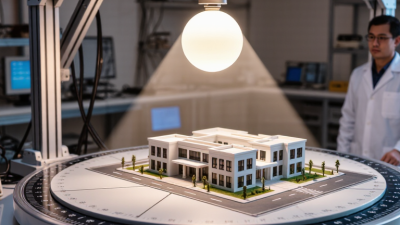
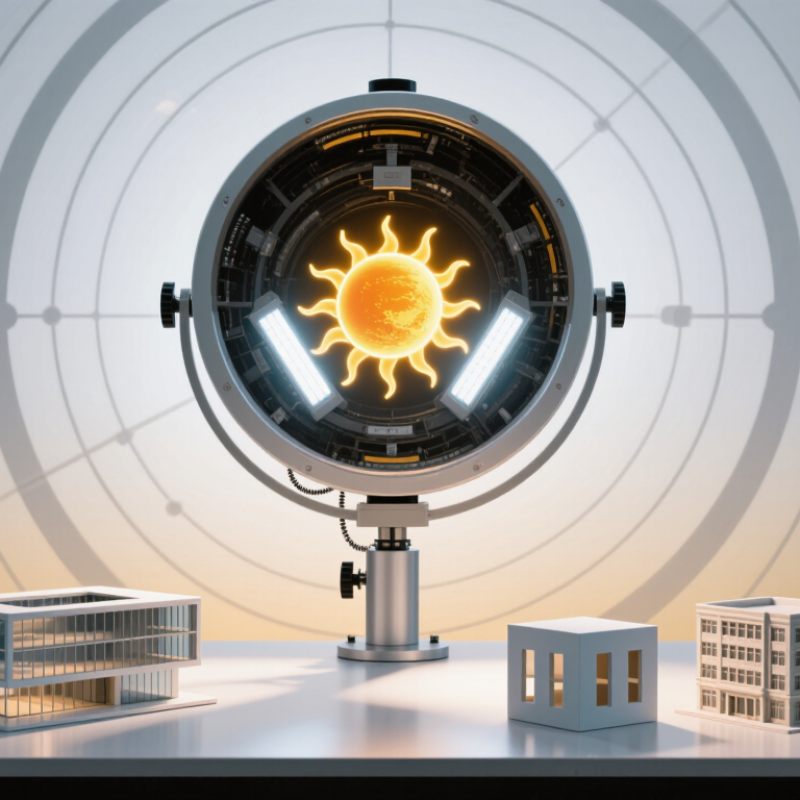
A heliodon is a physical daylight simulation system. It uses a movable light source to reproduce the sun’s angle across seasons, hours, and locations. Designers place a scaled building model beneath it. They then observe sunlight on floors, walls, windows, and courtyards.

The process feels simple. It is not. A small angle error can shift a sun patch across a model room. A reliable system should control latitude, solar altitude, azimuth, date, and time. It should also provide repeatable measurements, not only attractive visual effects. Lux meters, shadow photographs, and calibrated scale models improve the evidence. CIE guidance on daylight evaluation supports measured conditions rather than casual observation.

The need is practical. The International Energy Agency’s 2023 Global Status Report for Buildings and Construction states that buildings use about 30% of global final energy and create roughly 26% of energy-related emissions. Better solar studies can reduce unwanted heat, glare, and artificial-light demand before construction begins. Yet a heliodon cannot perfectly represent clouds, reflective glass, dust, or nearby buildings. That limitation matters. Users should record assumptions, compare several sky conditions, and question impressive results. A credible manufacturer should explain calibration, optical accuracy, service support, and test procedures clearly. Sometimes, the model is precise. The real building remains unpredictable.
Key Features of a High-Quality Heliodon Manufacturer

China Best The Sun Simulator Heliodon Manufacturer?

Key Features of a High-Quality Heliodon Manufacturer

A reliable heliodon manufacturer should understand architectural daylight, not only sell rotating equipment. In real project reviews, accurate sun angles make a visible difference. The system should reproduce seasonal paths, hourly positions, latitude, and orientation with consistent control. Clear scales help students, designers, and researchers read results without guessing.

Mechanical precision matters every day. A stable platform should rotate smoothly and hold heavy physical models safely. Strong materials reduce vibration during demonstrations. The light source needs even intensity, realistic color, and controlled shadows. Adjustable brightness is useful when testing balconies, louvers, courtyards, or deep interiors. A practical manufacturer also provides calibration records, operating guidance, and responsive technical support.

Details reveal manufacturing quality.

Good control software should be simple enough for classroom use, yet precise enough for professional studies. The manufacturer should explain accuracy limits instead of promising perfect simulation. That honesty builds trust. Installation support, replacement parts, and clear maintenance instructions also protect long-term value. Safety features deserve attention, especially around heat, wiring, and moving components.

One weakness can still matter. A highly accurate system may become difficult to operate if its interface feels crowded. I have seen users avoid advanced settings because the controls were unclear. Better manufacturers listen to this feedback and improve the design. Testing should include daylight models, different materials, and repeated operating cycles before delivery. This hands-on approach supports dependable results and more credible architectural decisions.

How China’s Heliodon Systems Are Designed and Manufactured

How China’s Heliodon Systems Are Designed and Manufactured

A reliable heliodon begins with project requirements, not a catalog image. Chinese engineering teams usually define latitude range, solar altitude, azimuth, model scale, and testing distance before fabrication. A typical system combines a rigid steel frame, programmable lamps, rotation controls, and a calibrated measurement grid. The lamp must reproduce solar movement accurately. Small angular errors can change a façade’s shadow by several centimeters.

Manufacturing normally follows a practical sequence. Engineers create the frame with CAD models, cut structural parts, and machine adjustable joints. Electrical technicians then install motors, sensors, control panels, and emergency stops. Light output requires testing, not assumptions. CIE 171:2006 recommends careful evaluation of daylight simulation quality, including distribution and measurement conditions. Factory teams should record repeatability, positioning error, and lamp stability. That evidence matters more than polished photographs.

The application is increasingly important. The UNEP Global Status Report for Buildings and Construction 2023 states that buildings represented about 37% of global energy and process-related carbon emissions in 2022. Physical solar studies can reveal overheating, glare, and poor shading before construction. I have found that model accuracy often depends on simple details, such as matte surfaces and correct window geometry. The weak point is calibration drift. It is easy to overlook. A manufacturer should provide calibration records, operating instructions, replacement guidance, and user training. No system is perfect; even a well-built heliodon needs periodic verification against simulation results and real site conditions.

How China’s Heliodon Systems Are Designed and Manufactured

Solar-noon altitude used as a core reference for heliodon calibration at 40°N latitude

The values are calculated from the solar-altitude relationship altitude = 90° − |latitude − solar declination|. At 40°N, the solar-noon altitude is approximately 73.4° at the June solstice, 50.0° at the equinoxes, and 26.6° at the December solstice. These reference angles help heliodon designers configure the sun-source position, rotation mechanism, scale, and structural clearances during system manufacturing and calibration.

Applications of Heliodons in Architecture and Environmental Research

Heliodons help architects study sunlight before construction begins. A physical model sits inside a controlled chamber, while a moving light source represents the sun’s changing position. Researchers can observe shadows across walls, courtyards, windows, and public spaces. This makes solar behavior visible within minutes.

In architecture studios, heliodons support decisions about building orientation, roof overhangs, window placement, and shading devices. A small model can reveal glare risks on a desk or excessive heat near a south-facing facade. Environmental researchers also use heliodons to examine daylight access, seasonal shadow patterns, and the relationship between buildings and streets. These tests are useful for comparing design options under consistent conditions. However, scale models can simplify surface texture, glass performance, and local weather. The results should support digital simulation and field measurements, not replace them.

Tips:

Use accurate site latitude and seasonal solar angles. Keep the model scale consistent. Test morning, noon, and late-afternoon conditions. Record each setup with photographs and written notes. Check light intensity regularly. Small errors matter. A poorly aligned model may produce convincing but unreliable shadows. Experienced teams should repeat critical tests and compare observations with measured data. A well-designed heliodon offers practical evidence, yet careful interpretation remains essential.

How to Evaluate China’s Best Heliodon Manufacturer

How to Evaluate China’s Best Heliodon Manufacturer

Choosing a heliodon manufacturer requires more than comparing prices or viewing polished factory photographs. Check how accurately the system reproduces sun paths, daylight angles, and seasonal changes. Ask for technical drawings, test records, and calibration procedures. A dependable manufacturer should explain lamp or LED performance, color temperature, illuminance, rotation accuracy, and model-scale compatibility in clear language.

Request a live demonstration with a physical architectural model. Watch the shadow edge on a small window, wall, or courtyard. It should move smoothly, without visible stepping or sudden brightness changes. Confirm the working range for latitude, date, and time. Inspect the frame, drive system, wiring, emergency stop, and heat management. These details reveal practical engineering quality. Factory experience matters. So does documentation.

Do not rely only on claimed laboratory results. Ask whether calibration can be traced to recognized measurement standards, and request recent inspection records. Speak with previous users from universities, design studios, or research laboratories. Their feedback may expose service delays or difficult software. Installation support, operator training, spare parts, and response time deserve written confirmation. A low quotation can become expensive when replacement components are unclear.

I would also examine the manufacturer’s weaknesses. Can they admit measurement limits? Can they adjust the design for an unusual model size? Some suppliers offer impressive specifications but provide vague answers during technical discussions. That is a warning sign. The best evaluation combines observed performance, engineering evidence, transparent communication, and realistic after-sales support.