How to Choose a Top Sun Simulator Heliodon from China?
Choosing a reliable Sun Simulator Heliodon from China requires more than comparing prices and product photos. The right system must reproduce solar angles, daylight movement, and seasonal conditions with measurable accuracy. It should also match your project scale, from a tabletop architectural model to a large urban-planning study.
Professor Marilyne Andersen, a respected daylighting researcher, describes daylight as “a dynamic material in architecture.” This idea matters when evaluating a heliodon. A convincing system should show how sunlight changes across walls, windows, roofs, and interior surfaces. Ask for beam uniformity data, angular control specifications, lamp details, calibration records, and real installation photographs. A transparent manufacturer should explain its testing process without hiding technical limitations.
China offers capable suppliers, but quality can vary. Look beyond polished brochures. Check the supplier’s engineering experience, export history, material durability, and after-sales response. Request a live demonstration if possible. Watch the model’s shadow line move across a small façade. Does the transition appear stable, or does it flicker and drift? Small defects can become serious research errors.
No supplier is perfect. Your own requirements may also be incomplete. A basic heliodon may suit classroom demonstrations, but not accredited research or commercial validation. Confirm the control software, safety features, replacement parts, warranty terms, and installation support before ordering. A thoughtful decision may take longer. That delay can prevent expensive redesigns later. The best Sun Simulator Heliodon is not simply the brightest or cheapest option. It is the system that produces repeatable evidence for your specific daylighting questions.
Define Heliodon Types and Their Applications
How to Choose a Top Sun Simulator Heliodon from China?
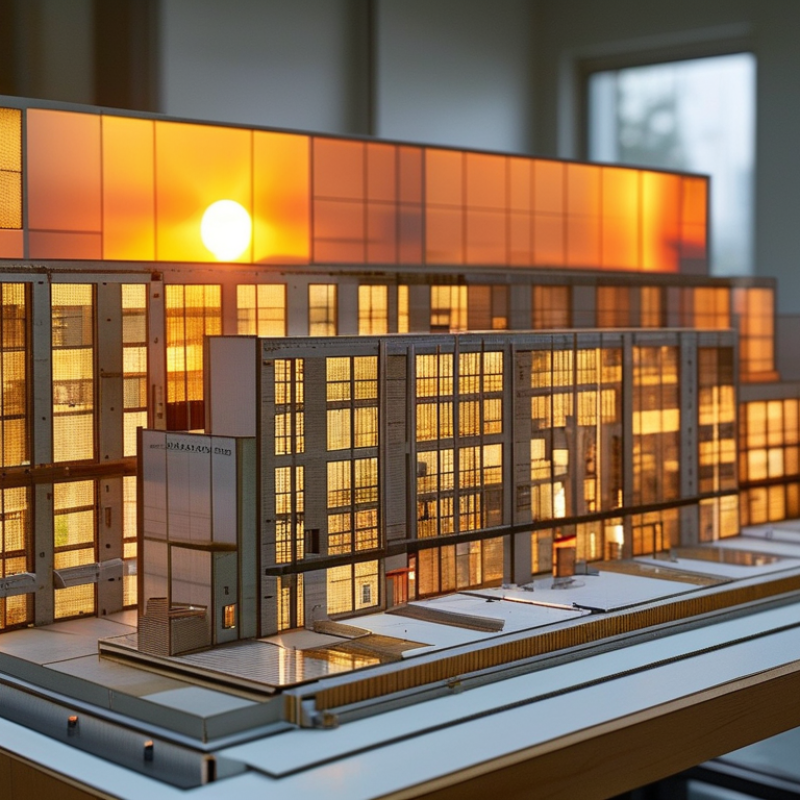
A heliodon is not simply a bright lamp. It reproduces solar position, shadow movement, and daylight penetration for architectural studies. A mechanical heliodon uses a fixed light source and an adjustable model platform. It suits sun-path demonstrations and early building design. A mirror-based heliodon redirects light across different seasonal angles. It supports façade, courtyard, and shading analysis. LED heliodons offer programmable intensity and sun positions. They work well for repeated experiments and teaching laboratories.
A solar simulator serves a different purpose. It evaluates photovoltaic modules, coatings, and thermal materials under controlled irradiance. IEC 60904-9:2020 classifies simulators by spectral match, spatial non-uniformity, and temporal instability. Class AAA performance is important for precise photovoltaic testing. IEA PVPS reported more than 400 GW of new photovoltaic capacity in 2023. That growth increases demand for repeatable laboratory measurements. Still, many buyers confuse illumination strength with measurement quality.
When sourcing from China, request test records, calibration intervals, and angular accuracy. Check whether the system covers the required latitude and seasonal range. Ask for shadow-edge visibility at the actual model scale. A compact room setup may suit education, but large models need greater beam distance. In my experience, controls often look impressive, yet poor calibration weakens the result. The real test is repeatability. ASTM E927 also provides useful guidance for photovoltaic simulator performance. A supplier’s documentation should match the intended application, not merely list attractive specifications.
How to Choose a Top Sun Simulator Heliodon from China?
Heliodon Types and Their Typical Applications
The chart compares common heliodon categories using an indicative 1–5 suitability index across practical design applications.
Mechanical heliodons are useful for physical models and direct solar-angle studies, while mirror-based systems support compact architectural
demonstrations. LED and digital heliodons provide flexible lighting control for daylight, shading, and presentation studies. Actual performance
depends on latitude adjustment, solar-angle accuracy, light-source spectrum, model scale, and control software.
Set Performance Criteria for a Reliable Sun Simulator
Choosing a top sun simulator heliodon from China starts with measurable performance criteria, not attractive photographs.
Define the test area, solar angle range, irradiance level, and operating distance before contacting suppliers. A reliable system should maintain stable light across the full test plane. Measure irradiance at several points, including corners and the center. Small differences matter.
Check spectral quality, spatial uniformity, temporal stability, and repeatability under actual working conditions. For photovoltaic testing, request calibration records with traceable instruments and relevant international test classifications. For architectural studies, examine shadow sharpness, beam alignment, and seasonal angle control. Ask how quickly the system reaches stable output. A ten-minute warm-up may be acceptable, but unexplained fluctuations are not.
Practical evaluation should include a live demonstration with your own reference sensor. Review lamp replacement procedures, cooling performance, emergency shutoff, software access, and maintenance records. Technical documents should state tolerances clearly, rather than using vague terms like “high precision.” Speak with engineers who can explain measurement uncertainty. That detail often reveals real expertise.
Do not trust one successful test. Repeat it.
A supplier should provide training, spare-part guidance, and responsive after-sales support. Check whether calibration can be performed locally or requires shipping the unit abroad. I would also question overly perfect claims. No heliodon performs identically in every environment, and room temperature can affect results. A dependable choice makes those limitations visible and manageable.
Compare Customization Options, Technical Support, and Total Cost
How to Choose a Top Sun Simulator Heliodon from China?
A reliable heliodon should match your model scale, room size, and research purpose. Ask whether the supplier can adjust solar angles, latitude, dates, and time settings. Custom options may include chamber dimensions, LED or lamp systems, control software, sensors, and model platforms. Request drawings before production. A small mismatch can affect an entire daylight study.
Technical support deserves equal attention. Confirm installation guidance, operator training, calibration procedures, and remote troubleshooting. Ask for measured illuminance data and calibration certificates, not only attractive specifications. Check response times and spare-part availability. Clear manuals matter. So does practical training. One easy mistake is choosing advanced controls that local staff rarely use.
Total cost extends beyond the purchase price. Include packaging, shipping, taxes, installation, electrical work, training, maintenance, and future lamp or component replacement. Compare energy consumption over several years. Request a detailed quotation with warranty limits and service exclusions. A lower initial offer may become expensive after delivery. I would also ask for test records from similar projects, although these records may not reveal every operating problem. Visit a reference site when possible. Touch the controls. Observe the light distribution. Then judge whether the equipment fits daily research work, not just the specification sheet.
Verify Testing Results, Delivery Terms, and After-Sales Service
How to Choose a Top Sun Simulator Heliodon from China?
Verify Testing Results, Delivery Terms, and After-Sales Service
A dependable heliodon should arrive with complete, traceable test data. Request irradiance uniformity, temporal stability, spectral distribution, and temperature records. Ask which instruments were used, when they were calibrated, and whether calibration certificates are included. A polished PDF is not proof. Request raw measurements and test conditions. For larger equipment, consider a live factory acceptance test before shipment. It can reveal uneven lighting that photographs often hide.
Delivery terms need equal attention. Confirm the exact configuration, production schedule, shipping method, insurance responsibility, and customs documents. Clarify whether installation support is included or charged separately. Ask for crate dimensions, power requirements, and unloading instructions. A delayed control module can stop an entire laboratory. The contract should define inspection procedures, acceptance criteria, and remedies for nonconforming performance. Vague promises create expensive misunderstandings.
After-sales service is where many purchasing decisions become uncomfortable. Get written response times for technical questions, replacement parts, software updates, and remote troubleshooting. Confirm warranty coverage for lamps, sensors, controllers, and mechanical components. Ask whether local technicians or trained service partners are available. Keep a spare-parts list with realistic prices and delivery times. I have seen buyers focus on optical performance and overlook maintenance access. That was a costly mistake. Leave room for uncertainty, too: test the support team with a specific technical question before signing. Their response often shows more than a sales presentation.

 Sensor
 Measuring Instruments
 Measurement Systems
 Architectural Physics Laboratory