Leave Your Message

2026 Top The Sun Simulator Heliodon Suppliers Guide

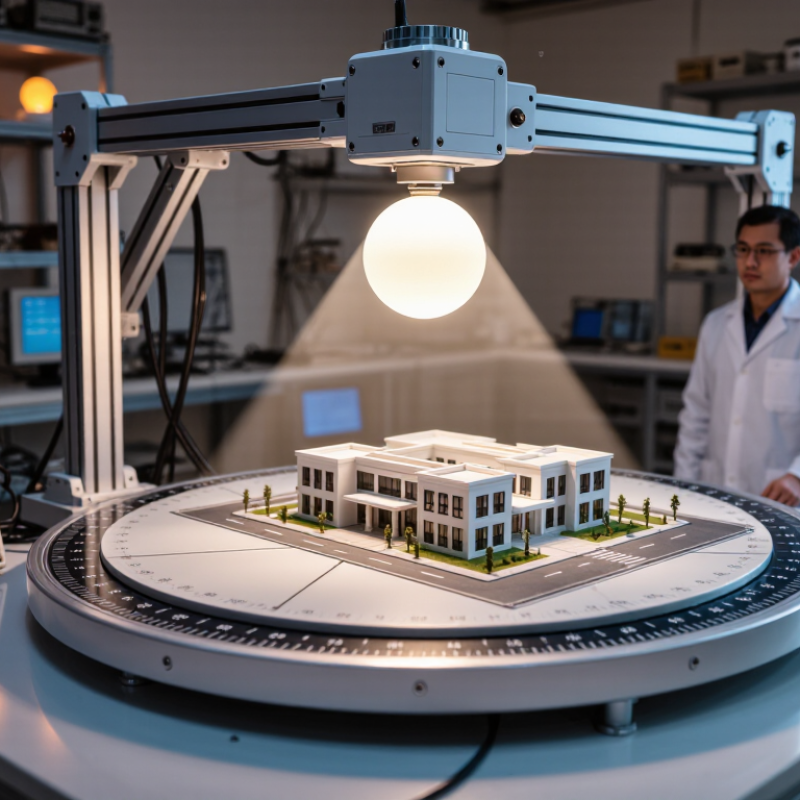
The 2026 Top The Sun Simulator Heliodon Suppliers Guide examines the equipment behind reliable solar and daylight research. A heliodon can turn an abstract sun path into a visible, measurable experience. In a laboratory, a model building rotates beneath controlled light. Shadows move across miniature walls, windows, streets, and courtyards.

This guide focuses on supplier competence, not attractive brochures. Important questions include lamp stability, solar-angle accuracy, model capacity, calibration records, and control software. A dependable The Sun Simulator Heliodon should reproduce seasonal sun positions with repeatable settings. It should also support clear documentation for universities, architects, engineers, and testing teams. Christoph Reinhart, a respected daylighting researcher, offers a useful principle: “Daylight is a changing condition, not a fixed number.” That reminder matters when suppliers present impressive technical specifications.

Details reveal quality. Look for smooth rotation, low vibration, readable angle scales, and consistent illumination across the model plane. Ask whether technicians provide installation training and scheduled calibration. Review warranty terms, replacement lamps, software updates, and response times. Local service can matter more than a slightly lower purchase price.

No supplier is perfect.

Even a sophisticated The Sun Simulator Heliodon has limits. Reflective materials, model scale, camera exposure, and operator judgment can influence results. A supplier should explain those weaknesses instead of hiding them. This guide therefore compares technical performance, practical usability, evidence, and long-term support. Its goal is not to name one universal winner. It is to help readers choose equipment that remains credible when real design decisions depend on its findings.
2026 Top The Sun Simulator Heliodon Suppliers Guide

Understanding Sun Simulators and Heliodon Systems

Understanding Sun Simulators and Heliodon Systems

A heliodon is a controlled daylight study system for evaluating how sunlight moves across a building model. It combines an adjustable light source, a rotating platform, and accurate angle settings. Designers can examine shadows at different hours, seasons, and site orientations. A sun simulator serves a related purpose, but it usually focuses on repeatable solar radiation for testing materials, surfaces, or photovoltaic components. The two systems overlap, yet they should not be treated as identical tools.

In practice, a reliable heliodon supplier should explain lamp spectrum, light uniformity, calibration methods, and model-scale accuracy. Ask how the system represents latitude, solar altitude, and seasonal changes. A good setup should include clear control software, measurement records, safety instructions, and responsive technical support. Inspect the working area, too. A small model may need a compact table, while urban studies require longer distances and stronger shadow definition.

No setup is perfect.

Even a carefully aligned model can produce misleading results when its surface texture, glazing, or surrounding reflectance is ignored. I have found that simple physical checks often reveal problems faster than software screens. Place a marked reference point on the platform. Compare its shadow with a calculated position. Record the difference and repeat the test. Suppliers that welcome this kind of verification usually demonstrate stronger technical credibility. Still, every project needs judgment, because simulated daylight remains an approximation of a changing sky.
Key Features to Compare When Choosing a 2026 Supplier

2026 Top Sun Simulator Heliodon Suppliers Guide

Choosing a 2026 sun simulator heliodon requires more than comparing lamp brightness or catalog prices. Experienced teams examine spectral accuracy, adjustable solar angles, chamber size, and irradiance stability. Ask how the supplier validates output across the working area. A strong system should provide calibration records, measurement uncertainty, and clear operating limits. These details support reliable daylight, façade, material, and thermal studies. They also reveal whether specifications are practical or merely promotional.

Mechanical precision matters. Check the angle adjustment range, movement repeatability, shadow control, and sample mounting options. Inspect the interior finish, ventilation path, and access around the test platform. A compact chamber may suit scale models, but it can restrict future projects. Software should store test settings and export usable data.

Service response, replacement parts, installation training, and warranty terms deserve equal attention. My own comparison mistake was focusing on optical output first. Maintenance time later mattered more.

Tips: Request a live demonstration with your typical model size. Measure brightness at several table positions, not only the center. Confirm calibration intervals and service costs in writing. Ask for references from facilities performing similar tests. Also, discuss delivery conditions, electrical requirements, and operator safety features before signing. A supplier that welcomes technical questions usually provides better long-term support. Still, no system is perfect. Document the compromises your team can accept.

Leading Supplier Types and Their Typical Product Ranges

2026 Top The Sun Simulator Heliodon Suppliers Guide

Leading supplier types include research-equipment manufacturers, architectural education suppliers, portable demonstration vendors, and custom laboratory integrators. Their typical ranges differ considerably. Research-grade systems often include adjustable solar angles, calibrated lamps, rotating platforms, digital controls, and measurement sensors. Education-focused suppliers usually offer compact models with clear scales, simple controls, and replaceable light sources. Portable units may use lightweight frames, folding platforms, and basic shadow-study accessories.

Custom integrators can design larger heliodons for universities, design studios, and environmental research facilities. Their packages may include climate chambers, daylight sensors, data logging, protective enclosures, and installation training. Reliable suppliers should provide photometric data, calibration records, operating limits, and maintenance instructions. Ask how often the lamp output requires verification. That detail is easy to overlook. In practice, a beautiful demonstration unit may provide less repeatable data than expected.

Tips: Match the heliodon to your testing purpose, room size, and user skill level. Request a live demonstration before purchasing. Check platform accuracy, lamp replacement costs, control response, and after-sales support. Leave space around the equipment for ventilation and safe access. A lower price is not always economical. Some basic systems feel intuitive at first, but their limited adjustment range can frustrate serious daylight studies.

2026 Top The Sun Simulator Heliodon Suppliers Guide - Leading Supplier Types and Their Typical Product Ranges

Supplier Type Typical Product Range Common Model or Test Area Typical Heliodon Size Sun-Path Adjustment Typical Light Source Best-Fit Users
Educational laboratory equipment suppliers Tabletop and floor-standing heliodons supplied with a rotating model platform, sun-path arc, scale markers, and basic operating instructions. Building orientation, seasonal shadow studies, solar access, and introductory daylight demonstrations. Model platforms commonly range from approximately 0.6 m × 0.6 m to 1.5 m × 1.5 m. Manual or assisted adjustment of solar altitude and azimuth; latitude scales are commonly included. LED or compact directional lamps designed to produce a visible beam and clear shadows. Architecture schools, design studios, technical colleges, and teaching laboratories.
Architectural daylighting laboratory suppliers Medium-scale heliodons with calibrated angular settings, interchangeable lamps, measurement grids, and provisions for physical building models. Window placement, façade shading, courtyard design, overhangs, fins, and urban massing studies. Common working areas range from approximately 1.0 m × 1.0 m to 2.5 m × 2.5 m. Adjustable solar altitude and azimuth, often covering a broad annual range for selected site latitudes. High-intensity LED arrays or controlled directional luminaires with replaceable optical components. University research groups, architectural practices, and building-performance laboratories.
Custom engineering and laboratory-integration suppliers Project-specific systems combining a structural frame, motorized positioning, lighting control, model support, sensors, and laboratory safety features. Large physical models, façade prototypes, shading devices, solar penetration, and repeatable comparative testing. Often configured above 2.0 m × 2.0 m, with dimensions determined by the required model scale and laboratory space. Motorized or computer-assisted positioning with programmable altitude, azimuth, and latitude settings. Multi-lamp LED or high-output directional lighting systems selected for beam uniformity and controllability. Research institutions, testing centers, large architecture firms, and public-sector laboratories.
Portable and demonstration-system suppliers Compact, foldable, or modular heliodon kits with a small platform, adjustable light arm, simple angle scales, and transport cases. Classroom demonstrations, workshops, site-planning exercises, and rapid concept testing. Typical platforms are approximately 0.3 m × 0.3 m to 1.0 m × 1.0 m. Usually manual adjustment with simplified seasonal and daily sun-position scales. Low-voltage LED lamps or compact collimated light units. Schools, training providers, traveling exhibitions, and small design studios.
Digital and hybrid solar-simulation suppliers Software-linked physical heliodons, projection-based systems, or hybrid tools combining a physical model with digital sun-path visualization. Early-stage design comparison, interactive presentations, solar access studies, and physical–digital workflow validation. Physical model platforms commonly range from approximately 0.5 m × 0.5 m to 2.0 m × 2.0 m. Software-driven date, time, latitude, altitude, and azimuth selection; physical movement may be manual or motorized. Programmable LED arrays, projection light, or directional luminaires synchronized with software. Design consultancies, universities, visualization teams, and multidisciplinary planning groups.
Research-grade measurement-system suppliers Heliodons integrated with illuminance meters, luminance cameras, data loggers, reference targets, and repeatable test procedures. Daylight distribution, glare-related observations, solar penetration, shading performance, and comparative research. Often approximately 1.0 m × 1.0 m to 3.0 m × 3.0 m, depending on the model and instrumentation. Fine manual or motorized angular control with documented repeatability and test-position records. Controlled LED or other directional sources selected for stable output and measurement compatibility. Environmental research laboratories, building-science departments, and funded testing programs.
Architectural model-making and fabrication suppliers Heliodon frames paired with custom physical models, interchangeable façade components, removable roofs, and scaled site-context boards. Concept design, site massing, façade iteration, and client-facing solar-impact demonstrations. Commonly configured between approximately 0.8 m × 0.8 m and 2.5 m × 2.5 m. Manual solar-position adjustment using marked arcs, rotating bases, or adjustable lamp supports. Directional LED or halogen-type lamps, selected according to the required beam and model scale. Architectural practices, planning teams, model workshops, and property-development design groups.

Note: Dimensions and configurations shown are indicative typical ranges for supplier categories. Actual specifications vary with model scale, laboratory space, control requirements, lighting design, and measurement objectives.

How to Evaluate Performance, Compliance, and Technical Support

When evaluating a sun simulator heliodon supplier in 2026, request measured evidence, not attractive photographs. Ask for irradiance uniformity data across the model area, spectral distribution, angular accuracy, and repeatability. A practical trial should test a real façade mock-up, with readings taken at several heights and orientations. Check whether the controls reproduce seasonal solar paths without visible stepping. Small errors matter. A five-degree deviation can change shading results and daylight conclusions.

Compliance should be documented at both equipment and installation levels. Review electrical safety records, photobiological risk assessments, mechanical guarding, emergency stops, and applicable regional standards. Request calibration certificates with dates, traceable references, and stated uncertainty. Also examine heat output, noise, ventilation needs, and access clearances. These details affect laboratory safety and usable testing time. I would not accept “compliant” as a complete answer. The supplier should identify the exact standard, test scope, and exclusions.

Technical support often determines the system’s real value. Ask who commissions the heliodon, how quickly remote support responds, and whether engineers can visit during setup. Request training for path programming, sensor alignment, fault diagnosis, and routine calibration. Spare lamps, controllers, and safety components should have clear availability terms. Speak with recent users, but verify their operating conditions. Their experience may not match yours. A supplier can seem responsive before purchase, then become vague after installation. Build acceptance tests, software updates, and service intervals into the contract. Leave room for doubt, and record every assumption.

Purchasing, Installation, and Maintenance Considerations

Choosing a heliodon in 2026 requires more than comparing lamp power. Define the project’s latitude range, seasonal angles, model scale, and required illuminance before contacting suppliers. Ask for calibration records, photometric data, control-system specifications, and service response times. A low purchase price can become expensive when replacement lamps or software support are unclear.

Installation needs a stable floor, accurate leveling, and enough clearance for rotating models. Confirm ceiling height and electrical capacity before delivery. The light source should align with the simulator’s angular reference, not merely the room’s walls. Use a calibrated inclinometer during setup. Measure twice. A short commissioning test should check shadows, beam uniformity, rotation accuracy, and emergency shutoff access. One practical concern is often missed: users need training on seasonal settings and model positioning.

Maintenance should follow a written schedule. Clean lenses and reflective surfaces with approved materials, then inspect cables, hinges, fasteners, and ventilation paths. Record lamp hours, calibration dates, faults, and corrective actions. Recalibrate after major repairs or relocation. Keep records. Dust can quietly distort results. Even careful teams may overlook software updates or thermal drift. That weakness deserves review, not concealment. Select suppliers that provide manuals, technician training, spare-part availability, and documented calibration procedures. Independent verification is valuable when research findings depend on repeatable sunlight simulation.

2026 Top The Sun Simulator Heliodon Suppliers Guide: Purchasing, Installation, and Maintenance Considerations

This supplier-neutral reference chart shows the approximate solar-noon elevation for each month at 40°N latitude. The values are derived from standard solar-declination calculations and can help buyers verify a heliodon’s angle range, installation calibration, and maintenance checks. Actual project locations require latitude-specific solar data.