Leave Your Message

7 Best Sun Simulator Heliodon Systems for Global Buyers

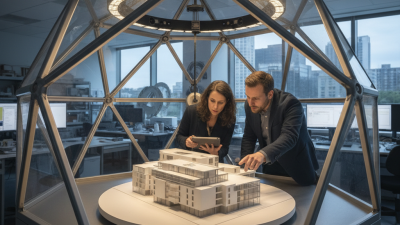
Architect Louis Kahn once said, “The sun never knew how great it was until it hit the side of a building.” His observation captures why designers study sunlight before construction. A Sun Simulator Heliodon makes those studies tangible, revealing how sunlight moves across a physical model as the sun’s angle changes. Watch the shadow cross a miniature window. That small detail can reshape a room’s design.

Choosing a system takes more than comparing product names. Buyers should examine the simulator’s location range, adjustment precision, model capacity, light-source consistency, and ease of operation. A school may need a robust teaching setup, while an architecture firm may prioritize repeatable demonstrations and detailed project reviews. Global buyers should also confirm installation support, training options, replacement-part access, and compatibility with their local power supply. These practical checks matter. A persuasive demonstration cannot replace dependable service.

This guide compares seven Sun Simulator Heliodon systems for buyers with different budgets, workflows, and project needs. It considers what each system appears best suited for, along with the trade-offs buyers should investigate before ordering. No single model fits every studio. And product specifications alone can leave questions unanswered. A careful shortlist should include a live demonstration, clear warranty terms, and a conversation with the supplier about actual projects. Even then, some uncertainty remains; lighting conditions and model materials can affect what users observe. That is worth acknowledging. The best choice is the system that supports credible testing, not merely an impressive showroom display.
7 Best Sun Simulator Heliodon Systems for Global Buyers

What a Heliodon System Simulates and How It Works

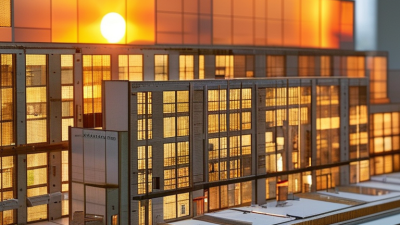
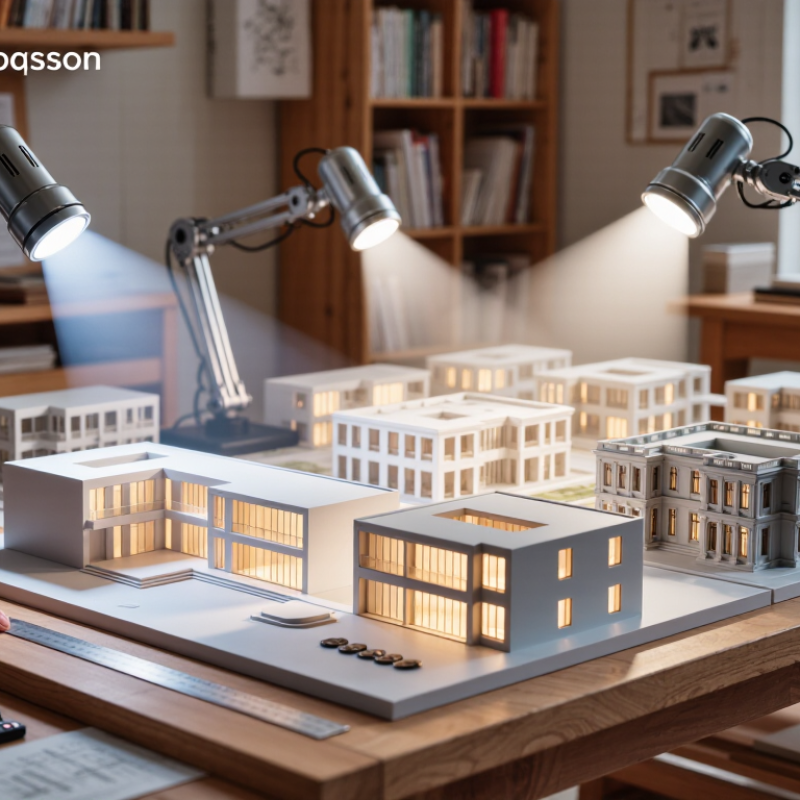
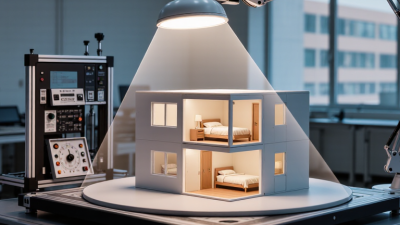
A heliodon is a physical daylight-testing system used to study how sunlight reaches a building or site model. A movable light source represents the sun, while adjustments to the model and light position reproduce different times, seasons, and locations. As the light moves, sharp shadows trace across miniature walls, windows, and courtyards. This makes solar exposure visible before construction. The setup is useful, but it is not the sky.

The International Energy Agency’s Buildings report (2023) estimates that buildings use about 30% of global final energy and generate 26% of energy-related emissions. Solar access and shading decisions therefore deserve careful testing. A heliodon can reveal when an overhang shades a window or when a nearby block casts a shadow. However, it cannot fully reproduce changing cloud cover, diffuse daylight, or indoor thermal comfort. A small scale or alignment error can also shift the apparent shadow timing. Easy to miss.

Tips: Set the model’s orientation and scale before testing. Record the chosen location, date, and time for each run. Compare several sun positions, not just one attractive result. Check critical findings with local climate data; the model is helpful, but imperfect.

Key Criteria for Evaluating Heliodon Systems

Key Criteria for Evaluating Heliodon Systems

Choosing a sun simulator heliodon starts with the sun path, not the lamp. Check whether latitude, date, time, solar altitude, and azimuth can be adjusted independently. This lets teams test a winter-noon shadow or a low western beam on a physical model. Small details matter. Ask for documented angular accuracy, calibration procedures, and repeatability. A sample test using your own model can reveal soft or misleading shadow edges.

The IPCC’s 2022 Sixth Assessment Report estimates that buildings produced about 21% of global greenhouse gas emissions in 2019, including direct and indirect emissions. This is not a heliodon performance measure, but it highlights why daylight and shading decisions deserve careful testing. Compare shadow positions with a known solar-angle calculation, and check whether the light source illuminates the model evenly. Reflections from model surfaces can still distort results.

Evaluate model clearance, setup time, safety features, maintenance, and lamp replacement. Global buyers should also confirm power compatibility, clear controls, and accessible technical support. A heliodon does not reproduce cloud cover, atmospheric scattering, or every glazing behavior. Treat it as a controlled design aid, then verify important findings with climate-based analysis. No setup is perfect.

7 Best Sun Simulator Heliodon Systems for Global Buyers - Key Criteria for Evaluating Heliodon Systems

The comparison below describes common heliodon and sun-simulation configurations, rather than specific products. Capabilities depend on the light source, control system, model scale, room setup, and accessories; verify specifications with the system supplier before purchase.

System configuration Sun-position control Typical strengths Key limitations Best suited to Evaluation checks
1. Manual arc heliodon A light source or model is positioned manually along an arc; the setup represents selected sun angles. Simple operation, direct visual demonstrations, and relatively low system complexity. Repeatability depends on operator technique; changing dates, times, or locations can require manual recalculation and adjustment. Teaching, concept reviews, and basic shadow studies. Check angle scales, locking mechanisms, working area, model mounting, and whether the light source produces useful, consistent shadows.
2. Motorized single-axis heliodon Motorized movement controls one principal angular axis; the second angle is set separately or constrained by the design. Faster and more repeatable movement than manual adjustment along the controlled axis. Does not provide fully independent control of both sun azimuth and altitude unless the system includes another adjustment mechanism. Repeated demonstrations or studies with a limited range of prescribed sun paths. Confirm travel range, motion smoothness, positioning repeatability, control interface, and safe travel limits.
3. Motorized two-axis heliodon Independent adjustment of two angular coordinates can represent different combinations of sun altitude and azimuth. Flexible sun-position studies and repeatable repositioning when properly calibrated. More moving parts, calibration requirements, and potential collision or cable-management constraints. Architecture and daylight studies that require multiple sun positions. Ask for documented angular ranges, positioning accuracy or repeatability, calibration procedure, load limits, and control-software support.
4. Fixed-source, moving-model heliodon The light source remains fixed while the model or its platform is adjusted to reproduce selected relative lighting directions. Can simplify source mounting and keep lighting equipment stationary during a study. Rotating the model may complicate orientation references, viewing, and comparison with the real site context. Compact laboratories and studies where relative sun direction is more important than keeping the model fixed. Check platform rotation range, model stability, reference markings, access for observers, and alignment with project orientation.
5. Mirror-based sun simulator A mirror redirects sunlight or a directed beam toward the model; mirror orientation determines the incoming light direction. Can provide a directed beam and can be configured for large-scale or outdoor testing. Alignment, mirror size, reflections, and illumination uniformity require attention; natural sunlight is weather dependent. Outdoor demonstrations and larger models where a redirected beam is practical. Evaluate mirror tracking or adjustment, beam coverage, glare control, structural stability, and operating conditions.
6. Artificial-source heliodon A lamp or other artificial source is repositioned mechanically to represent selected sun directions. Indoor operation supports scheduled, repeatable studies without relying on available sunshine. Source size, beam spread, heat, spectrum, and illumination uniformity may differ from natural sunlight and affect results. Controlled indoor demonstrations and comparative shadow studies. Review source characteristics, beam coverage, dimming, heat management, replacement requirements, and repeatability between sessions.
7. Hybrid sun-and-sky simulation system Combines a directional sun source with a separate diffuse-light component; the components may have independent controls. Can support both direct-beam shadow studies and broader diffuse-light demonstrations. Requires more space, setup, and calibration; matching a particular sky condition depends on the system design. Research, design reviews, and facilities that need more than a single directional light source. Check independent controls, direct-to-diffuse adjustment, model coverage, calibration documentation, and the sky conditions the system can represent.

Key criteria for global buyers

  • Geographic coverage: Confirm that the system can represent the sun positions needed for the project's latitudes, seasons, and times of day.
  • Scale and workspace: Match the working area, mounting arrangement, and source distance to the physical model and intended viewing distance.
  • Repeatability: Request clear definitions and test documentation for positioning accuracy, repeatability, and calibration.
  • Lighting quality: Assess beam coverage, shadow clarity, illumination uniformity, glare, and whether diffuse light is required.
  • Software and usability: Check how users enter location, date, and time, and whether the controls support the team's preferred workflow.
  • Installation and support: Verify local electrical compatibility, safety requirements, training, spare parts availability, shipping, and service arrangements.

Seven Leading Sun Simulator Heliodon Systems

Seven leading sun simulator heliodon systems are best viewed as practical configurations, not a universal ranking.

A tabletop manual heliodon suits small models and classroom demonstrations.

A floor-standing manual system accommodates larger architectural maquettes.

Motorized sun-path systems move the light source along preset seasonal and hourly arcs, reducing repetitive adjustments.

Precision helps.

A rotating-platform heliodon keeps the lamp fixed while the model turns to represent changing solar angles.

Collimated-light systems produce more parallel rays, which can make shadow studies easier to interpret.

Adjustable multi-source systems offer flexibility for testing different sun positions, though lamp alignment takes care.

Camera-linked systems record shadow movement and illumination changes for later review.

Not always.

Buyers should compare model size, usable latitude range, light-source consistency, and calibration procedures. Ask how the system handles seasonal paths and whether its controls allow repeatable settings.

Check the working distance, too: a lamp placed too close may create uneven illumination across a large model. Keep a simple log of date, angle, lamp position, and test conditions.

There is no perfect setup; even careful measurements can miss real-world reflections from nearby surfaces.

Small errors matter.

Matching System Capabilities to Global Project Needs

A heliodon system should match the project’s location range, model size, and daily workflow. Design teams working across latitudes need adjustable sun angles and clear settings for seasonal studies. Check the usable model area against actual site models, including tall façades and nearby context. Small rooms need compact frames. Scale matters.

For international projects, practical details matter as much as optical performance. Confirm power compatibility, installation requirements, and access to replacement lamps or other components. Ask for calibration procedures and documentation that staff can repeat after moving the system. A bright light is not enough if angle settings are difficult to verify. That is easy to overlook.

The right choice depends on what teams need to observe: shadows, daylight penetration, or façade exposure. A basic setup may suit quick design reviews, while larger models and more adjustable controls can support detailed studies. Compare demonstrations using a model similar in size and complexity to your own. Watch how quickly users can set a date, time, and sun angle. Some systems will still require manual adjustments, and that can slow reviews. No simulator replaces careful site analysis, but a well-matched one can make design discussions more concrete.

Matching Heliodon Capabilities to Global Project Needs

Solar-noon altitude targets at seven northern latitudes illustrate why global daylight studies need adjustable sun angles. Values are geometric calculations for the June and December solstices, not ratings of specific systems.

Solar-noon altitude is calculated as 90° minus the absolute difference between latitude and solar declination (±23.44° at the solstices). Negative values indicate the Sun is below the horizon at solar noon. For broader project coverage, a heliodon should also support the required azimuths and hourly sun paths.

Installation, Calibration, and Ongoing Operation

Installation begins with the room, not the instrument. Measure ceiling height, available floor space, and the distance between the simulator and test surface. A stable, level base helps prevent alignment drift during long test sessions. Before unpacking, check doorways and access routes; some frames are awkward to move once assembled. Keep the light path clear of shelves, cables, and reflective surfaces. A loose cable can matter. It is easy to overlook.

Calibration should match the intended task and the room’s actual conditions. Set the simulator’s position and angle using the manufacturer’s procedure, then verify the illuminated area at several points on the target surface. Record readings, distance, angle, and ambient conditions, so later checks have a useful reference. Repeat measurements after moving the system or changing its setup. Keep a log. It need not be elaborate. During operation, allow the equipment to reach its specified warm-up state, and watch for flicker or uneven output. Clean optics with suitable materials, and inspect mounts and connections on a schedule. Real rooms are rarely perfect; documenting glare or small inconsistencies is better than pretending they do not exist.