Leave Your Message

2026 Best Principles Of A Heliodon For Global Buyers

In 2026, global buyers need more than a bright lamp and a rotating model. A reliable heliodon should reproduce solar movement with measurable accuracy. It should help architects, educators, and researchers study daylight before construction begins. The Principles Of A Heliodon provide a practical framework for evaluating these systems. They cover sun-path accuracy, model scale, lamp alignment, seasonal settings, and safe operation. A well-designed unit can show how sunlight reaches a bedroom at 9 a.m. in winter. It can also reveal glare across a classroom desk during a summer afternoon.

Accuracy begins with documented testing. Buyers should request calibration records, technical specifications, and clear information about latitude settings. The device should support local solar angles rather than assume one universal climate. Adjustable brightness, stable mounting, and visible controls improve repeatable experiments. Durable materials matter too, especially when universities transport equipment between laboratories. Service support, replacement parts, training, and warranty terms deserve equal attention. Small details matter. A loose hinge can distort an entire demonstration.

However, no heliodon replaces professional judgment or real-world monitoring. Weather, glazing, surrounding buildings, and reflective surfaces can change actual conditions. This is where many product comparisons become too confident. A better approach combines heliodon studies with daylight simulation software and measured site data. Buyers should record assumptions, compare results, and question unexpected outcomes. Sometimes the model looks convincing, yet the room performs differently. That uncertainty is useful. It encourages careful verification, transparent reporting, and more responsible design decisions across international projects.
2026 Best Principles Of A Heliodon For Global Buyers

What a Heliodon Is and How It Simulates Solar Movement

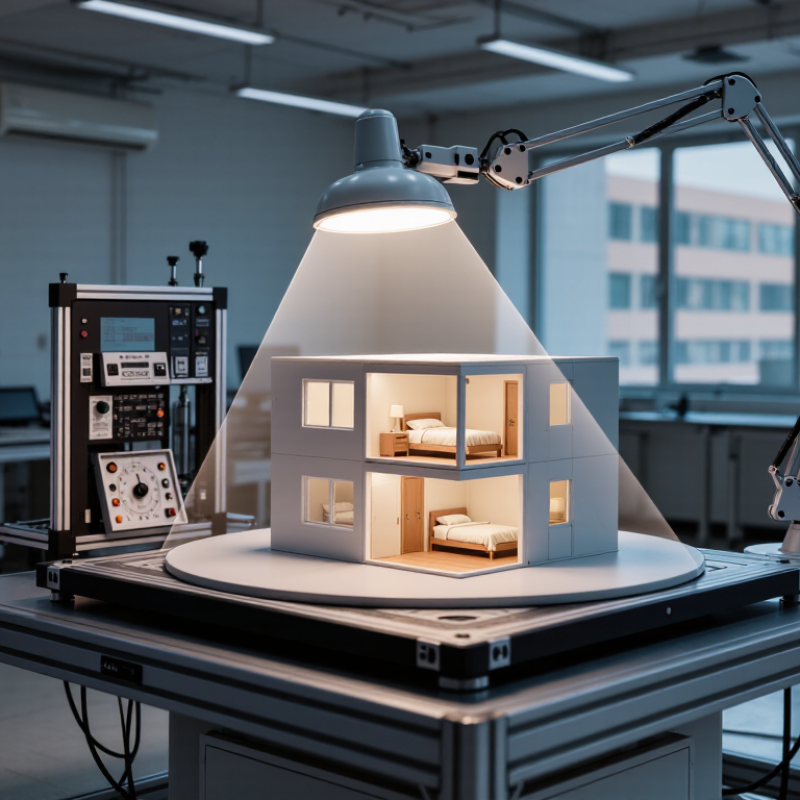
For global buyers, a heliodon is a practical tool for studying sunlight before construction. It uses a movable lamp, rotating platform, or controlled solar simulator to reproduce the sun’s apparent movement. By entering latitude, date, and time, users can inspect how light reaches a scaled building model. Shadows become visible on façades, courtyards, rooms, and outdoor spaces. This is more tangible than reading a sun-path chart. It also supports decisions about window placement, shading depth, roof form, and building orientation.

The 2023 Global Status Report for Buildings and Construction reports that buildings consume about 30% of global final energy. They also create roughly 26% of energy-related emissions. Better solar analysis can therefore influence comfort and energy demand.

A reliable heliodon should allow accurate adjustment of latitude, seasonal dates, solar angles, and model scale. Buyers should request calibration information and test results. A small alignment error can produce misleading shadows. That detail is easy to miss. Physical testing shows solar geometry, but it does not reproduce clouds, glare, reflected heat, or local weather. Designers should compare results with climate data and digital daylight analysis. The method is powerful, yet incomplete. That limitation deserves honest attention.

Tips: Test morning, noon, and afternoon conditions. Include summer and winter dates. Photograph each result from eye level. Check the model’s north direction twice. When results conflict with climate data, investigate instead of forcing agreement.
Core Principles of Sun Paths, Seasonal Angles, and Shadow Behavior

A heliodon is most useful when it turns solar geometry into visible evidence. For global buyers, the model should match site latitude, orientation, and local time. Sun paths shift across seasons, so one midday test cannot represent a building’s yearly exposure. At equinox, the sun follows a balanced path. Summer brings higher solar angles and shorter shadows. Winter lowers the sun and stretches shadows across rooms, courtyards, and nearby streets.

Seasonal angles deserve careful measurement. A south-facing opening may receive useful winter sunlight, yet suffer strong summer glare without shading. East and west windows often create difficult morning and afternoon heat. Near tropical latitudes, the sun can pass almost overhead. At higher latitudes, low winter angles may reach deep into interior spaces. These differences influence glazing, roof overhangs, gardens, and outdoor comfort.

Shadow behavior should be observed at several hours, not only at noon. Marking shadows on a physical heliodon reveals where trees, balconies, and neighboring buildings interfere. My first study was too optimistic; I ignored reflected light from a pale wall. That mistake changed the perceived brightness. It also showed why reliable testing needs real materials, accurate scale, and repeated observations. Small model errors can distort decisions. A useful record includes date, time, latitude, orientation, obstruction height, and shadow length. Some results remain uncertain, especially under cloudy conditions. That uncertainty should be noted, not hidden.

Key Features That Define a High-Quality Heliodon in 2026

In 2026, a high-quality heliodon should make solar studies precise, repeatable, and easy to verify. It needs a stable frame, accurate latitude settings, and smooth controls for date and time. Clear scales help users reproduce the same lighting condition across different locations. That matters when architects compare daylight performance for buildings in London, Dubai, or Singapore.

Calibration is a serious feature, not a decorative detail. A reliable unit should include an adjustable light source, consistent beam intensity, and a clear working surface. The model area must remain level during testing. Small shifts can change shadow length by several millimeters, especially around narrow windows or deep balconies. In practical workshops, I also value quiet motors and simple controls. They reduce interruptions during repeated studies.

It should be easy to inspect.

Good construction supports long-term use. Corrosion-resistant materials, replaceable components, and accessible calibration points improve ownership value for global buyers. Digital controls can save time, but they should not hide basic settings behind complicated software. A manual reference scale remains useful when power fails or systems need checking. No instrument is perfect. Even a well-built heliodon can produce misleading results if the model is inaccurate or the operator rushes alignment. Buyers should request test records, user guidance, and service information before purchase. That extra step feels slow, yet it often prevents expensive design decisions based on weak shadow data.

2026 Best Principles of a Heliodon for Global Buyers

Key solar-geometry references that define the foundation of a high-quality heliodon for architectural daylight and shadow studies.

A reliable heliodon should reproduce these established Earth–Sun relationships: global latitude coverage, the Earth’s 23.44° axial tilt, seasonal solar declination from −23.44° to +23.44°, apparent solar movement of approximately 15° per hour, and the 365.2422-day tropical year. These references help buyers evaluate positioning accuracy, seasonal simulation capability, and long-term usability without relying on company or brand comparisons.

How to Evaluate Accuracy, Usability, and Compatibility

2026 Best Principles Of A Heliodon For Global Buyers

A reliable heliodon begins with measurable solar geometry. Check latitude, date, time, solar altitude, and azimuth before reviewing design results. ISO 52010-1:2017 provides a recognized framework for handling external climatic and solar data. The device should reproduce those inputs consistently. Use a calibrated light meter when possible. Visual judgment alone is risky.

Accuracy is only useful when operation remains practical. A clear scale model, stable mounting surface, adjustable light source, and readable angle markings reduce testing errors. The model should also support different building orientations and local climate scenarios. This matters because the UNEP Global Status Report for Buildings and Construction 2023 reported that buildings used about 34% of global energy demand in 2022. Small shading decisions can influence real energy outcomes.

Compatibility deserves equal attention. Confirm the heliodon accepts common physical model scales and connects with digital solar studies or exported drawings. Check lamp movement, table dimensions, power requirements, and replacement parts before purchase. Simple interfaces help international teams train faster. They also reduce operator mistakes.

Do not overtrust the result. A perfect shadow line can still hide poor model materials or incorrect glazing assumptions. I have found that quick tests sometimes expose more than polished presentations. Record settings, photographs, and repeated measurements. Then compare the physical result with simulation data. Disagreement is not failure; it is evidence that deserves investigation.

Global Buying Factors: Standards, Installation, Support, and Cost

For global buyers, a 2026 heliodon should be judged by standards, installation, support, and cost. Its sun-path accuracy matters, but compliance matters too. Check electrical safety, voltage, frequency, and electromagnetic requirements for the destination country. Ask for calibration records and clear test procedures. A technically attractive unit can still create delays at customs or during site approval.

Installation needs practical planning. The room should provide a stable, level surface and controlled lighting conditions. Confirm the required footprint, ceiling clearance, ventilation, and access for large components. A supplier should explain model placement, latitude settings, seasonal angles, and safe operation. No model is perfect. Scale errors, reflective materials, or careless alignment can distort results. I would request a commissioning checklist and a short operator training session.

Support often separates a useful purchase from an expensive exhibit. Look for multilingual manuals, remote troubleshooting, spare light sources, sensor replacement, and stated response times. Local service partners can reduce downtime, but their skills should be verified. Cost should include freight, insurance, import charges, installation, training, calibration, and annual maintenance. The lowest quotation may exclude essential items. That assumption can fail. Compare total ownership cost over five years, then record every inclusion in the purchase contract.