7 Best Air Flow Meters for Accurate Readings
Choosing an Air Flow Meter is not simply a matter of picking the most expensive model. The right instrument depends on what you need to measure, where you will use it, and how precise the reading must be. A technician checking airflow at a supply vent may need a different tool from an engineer testing flow inside a large duct. Small details count.
This guide explores seven air flow meters designed for dependable readings across common inspection and testing tasks. It considers practical factors such as measurement range, accuracy specifications, display clarity, portability, and compatibility with different measurement methods. A clear screen can help in a dim mechanical room. A compact probe may be easier to position between crowded ductwork. Yet convenience alone does not guarantee a reliable result.
Correct technique matters. Readings can vary with probe placement, airflow turbulence, duct shape, and the instrument’s condition. Check the manufacturer’s instructions, use the stated measurement units, and follow recommended calibration intervals. No meter is perfect. A useful comparison should make its limits visible, not just highlight appealing features. Even then, the “best” choice may depend on your workspace and budget. These seven options offer a starting point for comparing tools, so you can match an instrument to the job rather than rely on a headline or a single specification.
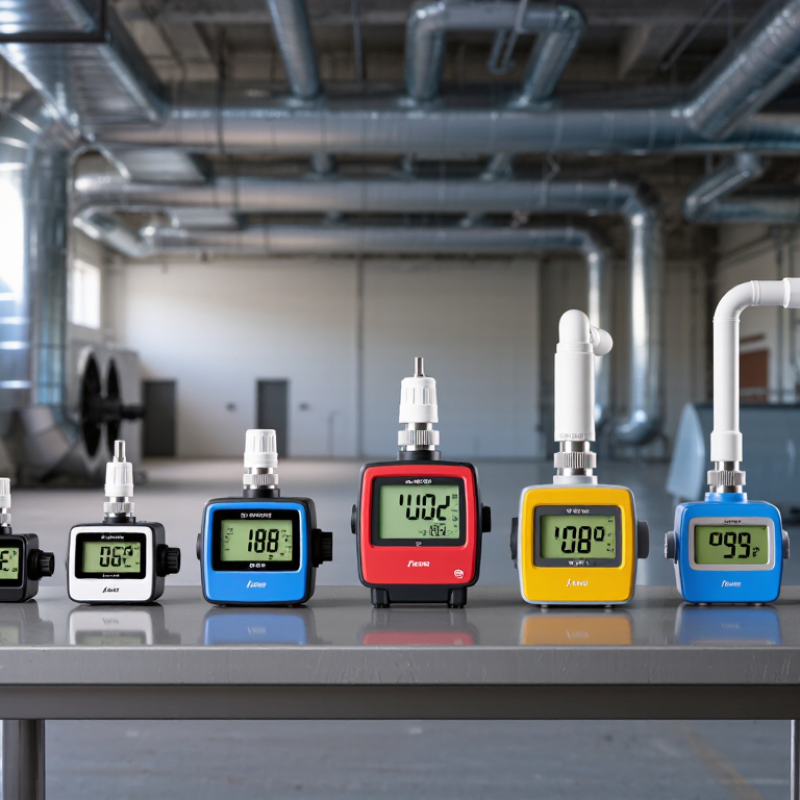
How Air Flow Meters Measure and Report Air Movement
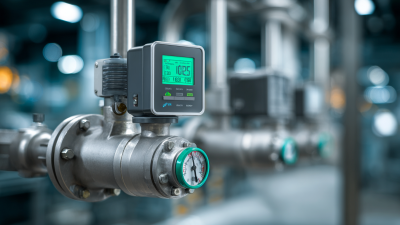
An air flow meter estimates how much air passes a point or how quickly it moves. Different instruments sense that movement in different ways. A vane meter uses a small rotating impeller, while a thermal meter measures heat carried away from a sensor. Differential-pressure meters compare pressure readings across a probe, then use the pressure difference to estimate velocity. The instrument may report air speed in metres per second or volume in litres per second, cubic metres per hour, or cubic feet per minute. Units matter. A volume reading also depends on the duct area entered into the meter.
Tips: Place the probe in a straight duct section when possible, away from bends, dampers, and fans. Let the reading settle, and note the units and measurement location. A blocked grille or uneven airflow can skew results. Even careful measurements have limits.
A stable display does not guarantee a representative reading. Air near a duct wall may move differently from air at its centre, and swirling flow can confuse some sensors. Check calibration guidance and repeat measurements at several points when accuracy matters. It is easy to trust a tidy number too much; recording conditions makes the result easier to assess later.
Seven Air Flow Meters for Different Measurement Needs
Air-flow meters suit different jobs, and no single instrument handles every duct equally well.
A vane anemometer measures air speed with a rotating blade, making it useful at accessible vents.
A hot-wire anemometer uses a fine heated sensor to detect low-speed air, though drafts and dust can affect readings.
A Pitot tube compares pressure at points in the airflow and works well in larger ducts. It needs careful alignment.
Differential-pressure meters estimate flow from pressure changes across a restriction, but installation details matter.
Thermal mass meters measure moving air by tracking heat transfer, which can help in controlled process systems.
Ultrasonic meters use sound signals to assess flow without placing a probe directly in the stream; wall thickness and turbulence may complicate setup.
A flow hood captures air at a grille and is practical for balancing room supplies and returns.
Check the range, duct size, and calibration status before choosing. Small details matter. Record airflow at several points when the duct profile is uneven, and note room conditions.
I have seen a neat single reading create false confidence; measurement technique still deserves a second look.
How to Compare Meter Types, Ranges, and Accuracy
Choosing an air flow meter starts with the duct, not the display. A vane meter suits broad, accessible outlets; a hot-wire probe can detect slower flow in a small grille. A Pitot-static tube works well in straight ducts, but needs a careful velocity traverse. EPA Method 2 describes this traverse approach for measuring gas velocity in stacks. In practice, elbows and uneven flow can distort readings. That detail matters.
Compare each meter’s working range with the actual airflow, then check accuracy across that range—not only at its best point. A stated range such as 0.2–20 m/s is useful only if the instrument maintains its specified accuracy where your readings fall. ASHRAE’s 2021 Handbook—Fundamentals gives dry-air density as about 1.204 kg/m³ at 20°C and 1.164 kg/m³ at 30°C, near standard pressure. That roughly three-percent change can affect density-based calculations. Temperature compensation matters. Check whether the meter supports it, and note the conditions during testing. Calibration dates, probe orientation, and repeat readings belong in the record; I would not treat one clean-looking number as proof. For a fair comparison, test the same duct location and record the meter type, range, stated accuracy, and airflow conditions.
Setup and Calibration Practices for Reliable Readings
Reliable air-flow readings begin before the meter is switched on. Choose a location with steady flow, away from elbows, dampers, filters, and fans whenever possible. Follow the meter’s specified straight-run distances; turbulence can distort readings even when the display looks stable. Check that the flow direction, probe depth, and mounting angle match the instrument instructions. Keep it level. A loose fitting or small leak near the test point can skew results.
Let the meter and air stream settle to room conditions, then inspect the sensor for dust or damage. Zero the instrument in still air, not inside a moving duct. For calibration, compare it with a traceable reference under similar temperature, pressure, and flow conditions. Test multiple flow points, including the range used most often. Record the date, location, units, and readings. Small errors matter. Rushed setup is often the real problem, though sensors can still drift between scheduled checks.
Tips: Mark the probe depth with tape, seal the access opening, and repeat each reading three times. If values jump, check for vibration, changing fan speed, or a blocked inlet. Keep a simple log to spot gradual drift. Don’t force a neat result. Recheck it.

 Sensor
 Measuring Instruments
 Measurement Systems
 Architectural Physics Laboratory