China Top Air Flow Meter Brands and Their Features Explained?
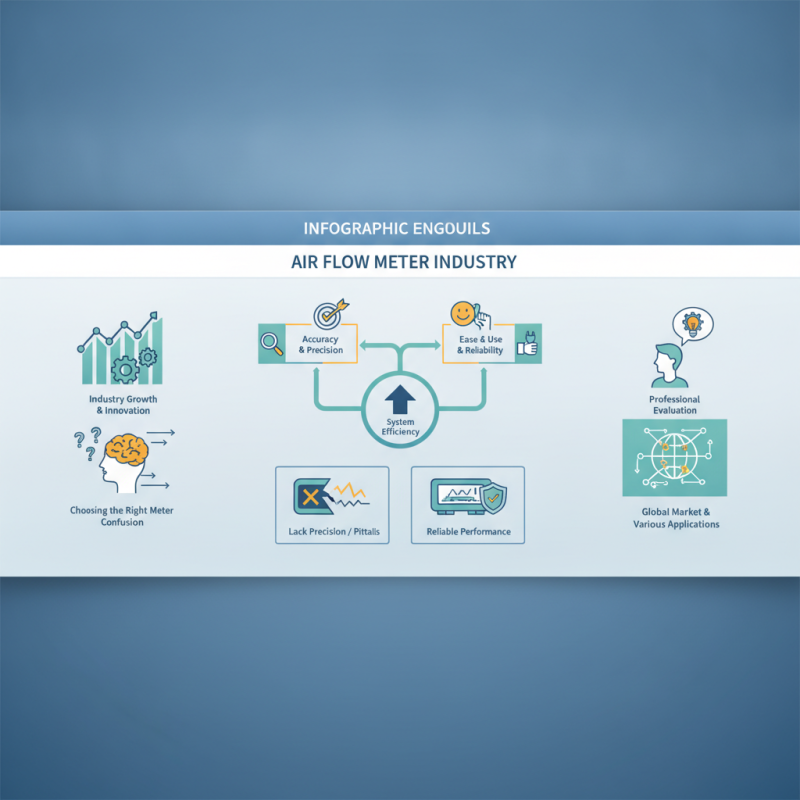
In the ever-evolving landscape of the Air Flow Meter industry, understanding the top brands is crucial for professionals. Renowned expert Dr. Michael Tran emphasizes, "Choosing the right Air Flow Meter can significantly affect system efficiency." This highlights the importance of reliable meters for various applications.
Many brands dominate the market, each offering unique features. Some prioritize accuracy, while others emphasize ease of use. The right choice often depends on specific requirements. However, it’s essential to recognize that not all meters are created equal. Some may lack the necessary precision for critical tasks.
As the industry grows, innovation continues. New technologies are emerging, providing more options. Yet, this influx can lead to confusion. Professionals must carefully evaluate products, avoiding common pitfalls. In this competitive field, the right Air Flow Meter can make a world of difference in performance and reliability.
Overview of Air Flow Meters and Their Importance in China
Air flow meters play a crucial role in various industries across China. They measure the volume or mass of air moving through a system. Accurate readings are essential for optimizing processes in HVAC, automotive, and manufacturing sectors. According to recent industry reports, the market for air flow meters in China is projected to grow by 9% annually through 2025. This growth reflects their increasing importance in energy efficiency and environmental compliance.
In many applications, air flow meters help monitor air quality and ensure proper ventilation. The reliable data they provide can prevent equipment failures and reduce energy waste. However, not all meters deliver consistent results. Some may suffer from calibration issues, impacting their accuracy. It's important for companies to regularly evaluate their meter performance. Additionally, advancements in technology introduce new challenges. Some users may find it difficult to keep up with the latest features and specifications.
The integration of smart technologies has enhanced the versatility of air flow meters. IoT connectivity allows for real-time monitoring and analysis. Yet, this complexity might overwhelm some users. Training and support become essential to maximize the benefits of these devices. Companies must address these issues to ensure effective usage in their operations.
Key Features of Top Air Flow Meter Brands in China
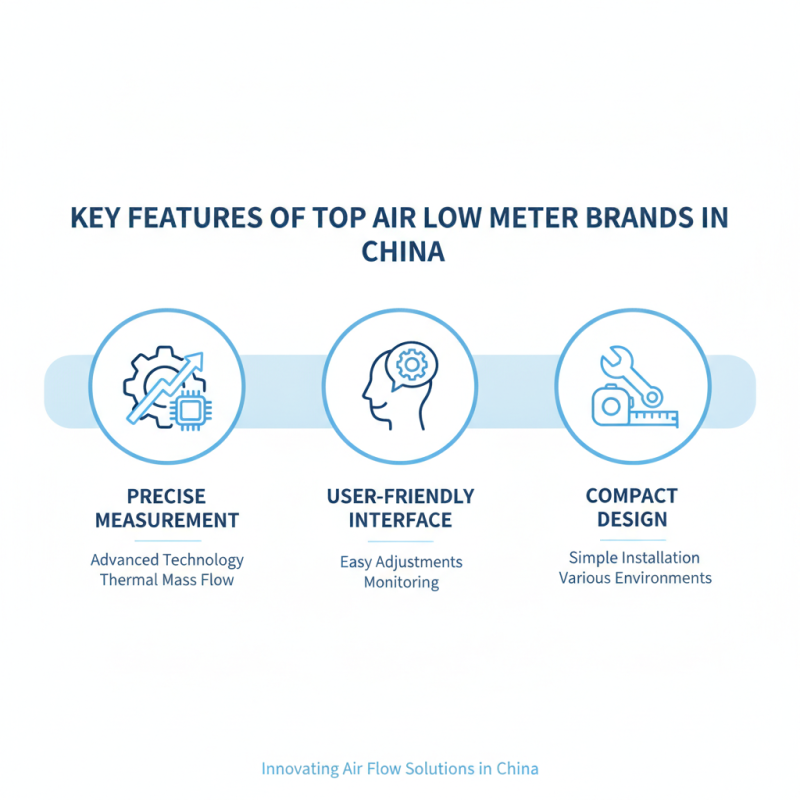
When considering air flow meters in China, several key features stand out. These meters often incorporate advanced technology for precise measurements. Many models utilize thermal mass flow principles, ensuring accurate readings regardless of temperature changes. Additionally, a user-friendly interface is common, facilitating easy adjustments and monitoring. Compact designs make installation straightforward in various environments.
Durability is another critical aspect. The best air flow meters are built with robust materials to withstand harsh conditions. Many units are designed to resist corrosion, enhancing longevity. Real-time data logging is also a valued feature, allowing users to track performance over time. This capability helps identify trends and potential issues early, contributing to efficient operations.
Despite these advancements, some consumers express concerns. Calibration processes can be inconvenient. Regular maintenance may require specialized knowledge. These challenges highlight the importance of training for users. Overall, while there are strong options in the market, thoughtful consideration of both features and user capability is essential.
Comparative Analysis of Leading Air Flow Meter Brands
In the realm of air flow measurement, diverse brands offer a range of features tailored to various applications. During 2023, the global airflow meter market was valued at approximately $1.2 billion, with an annual growth rate projected at around 5.5%. This growth reflects the increasing demand across industries like HVAC, manufacturing, and environmental monitoring.
Leading brands distinguish themselves through several key features. Some prioritize accuracy, boasting measurement precision within 0.5% of full scale. Others focus on ease of integration with digital systems, enhancing data collection efficiency. Moreover, user-friendly interfaces have become standard. They enhance operational efficiency, especially in complex environments. However, not every product offers exceptional durability. Certain models struggle under extreme conditions, which can lead to frequent replacements.
**Tips:** When choosing an air flow meter, assess the required accuracy. Understand the environment in which it will be used. Always factor in long-term maintenance costs.
Comparative analyses indicate that while some devices excel in range, others perform better in consistency. Before making a purchase, it's worthwhile to reflect on these variances. This thoughtful choice can significantly impact operational reliability.
Innovations and Technologies in Chinese Air Flow Meters
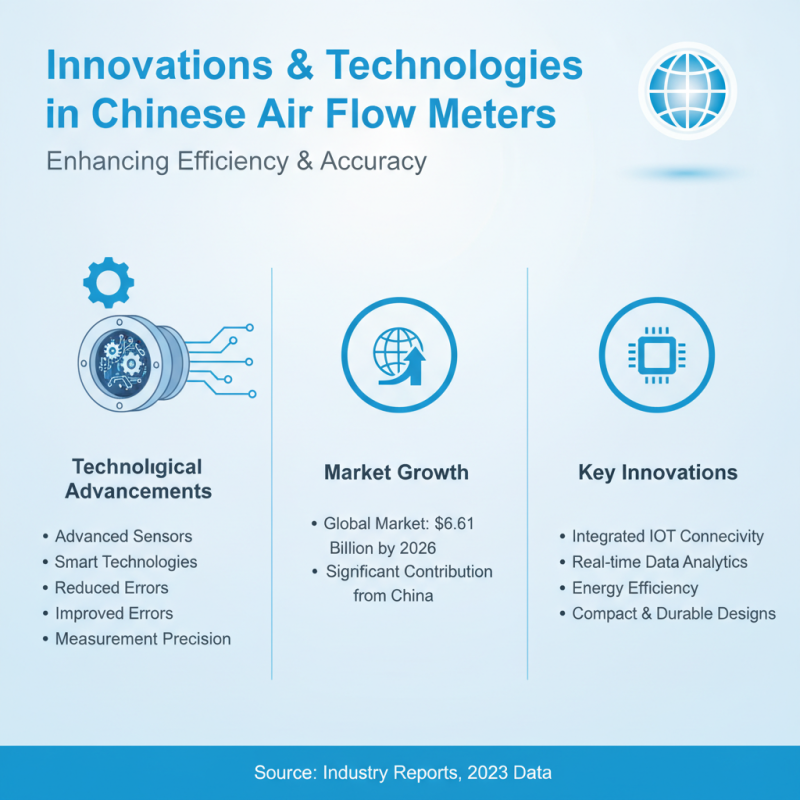
Chinese air flow meters are witnessing significant advancements in technology, enhancing their efficiency and accuracy. Recent data indicates that the global air flow meter market is expected to reach USD 6.61 billion by 2026, with a substantial contribution from Chinese manufacturers. These innovations often incorporate advanced sensors and smart technologies that reduce errors and boost measurement precision.
One notable trend is the integration of IoT capabilities in air flow meters. This allows for real-time data monitoring and remote management. Research shows that these smart meters can reduce operational costs by up to 30% due to better efficiency. Moreover, some manufacturers are adopting energy-saving features, which optimize power consumption and result in more sustainable operations.
However, challenges remain. Not all manufacturers focus equally on quality and reliability. Some products may have inconsistent performance, leading to mixed user experiences. The emphasis on rapid innovation sometimes overshadows thorough testing, raising questions about long-term reliability. Continuous improvement and rigorous quality control are essential for maintaining trust in these advanced technologies.
Market Trends and Future Directions for Air Flow Meters in China
The air flow meter market in China is evolving rapidly. As industries prioritize efficiency, accurate measurement becomes crucial. New technologies are emerging to enhance precision. Manufacturers are exploring advanced materials to improve durability. The focus is not solely on efficiency but also on user-friendly designs.
One notable trend is the integration of IoT systems. Smart meters provide real-time data, allowing for better decision-making. However, the transition to smart technology poses challenges. Many users struggle with understanding complex interfaces. Education and training are necessary for effective implementation.
Additionally, sustainability concerns rise alongside market growth. Manufacturers face pressure to develop eco-friendly products. This raises questions about balancing cost and environmental impact. The industry is still figuring out how to achieve this harmony. As the market expands, continuous innovation and feedback loops from users will guide future developments.
Air Flow Meter Market Trends in China
This bar chart illustrates the projected growth rate of the air flow meter market in China from 2020 to 2025. It indicates a consistent upward trend, reflecting the increasing demand and technological advancements in air flow measurement.

 Sensor
 Measuring Instruments
 Measurement Systems
 Architectural Physics Laboratory