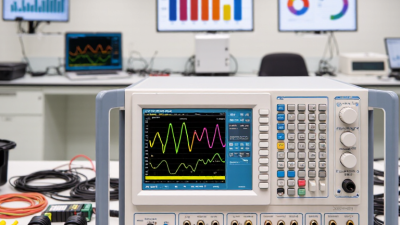
Choosing the right Multi-Channel Measuring Instruments in 2026 requires more than comparing channel counts and display sizes. Buyers must examine accuracy, sampling speed, channel isolation, synchronization, software support, and calibration traceability. A crowded test bench can expose weaknesses that product brochures rarely mention.
William Thomson, Lord Kelvin, a pioneer in measurement science, stated, “If you cannot measure it, you cannot improve it.” That principle still guides modern testing. A reliable instrument should capture temperature, voltage, current, vibration, or pressure without confusing one signal with another. It should also preserve clean data when several sensors operate together. Small details matter. A loose terminal, noisy cable, or unclear interface can distort valuable results.
This 2026 buyer-focused guide evaluates Multi-Channel Measuring Instruments through practical engineering needs. It considers laboratory validation, factory monitoring, renewable-energy systems, automotive testing, and research applications. Real-world experience matters here. Instruments may perform differently after long operating hours, repeated thermal changes, or software updates. No buying guide is flawless. Specifications cannot predict every installation. Buyers should verify calibration certificates, warranty terms, integration options, and local technical support before committing. The strongest choice is not always the instrument with the most channels. It is the system that delivers dependable, understandable data when conditions become difficult.
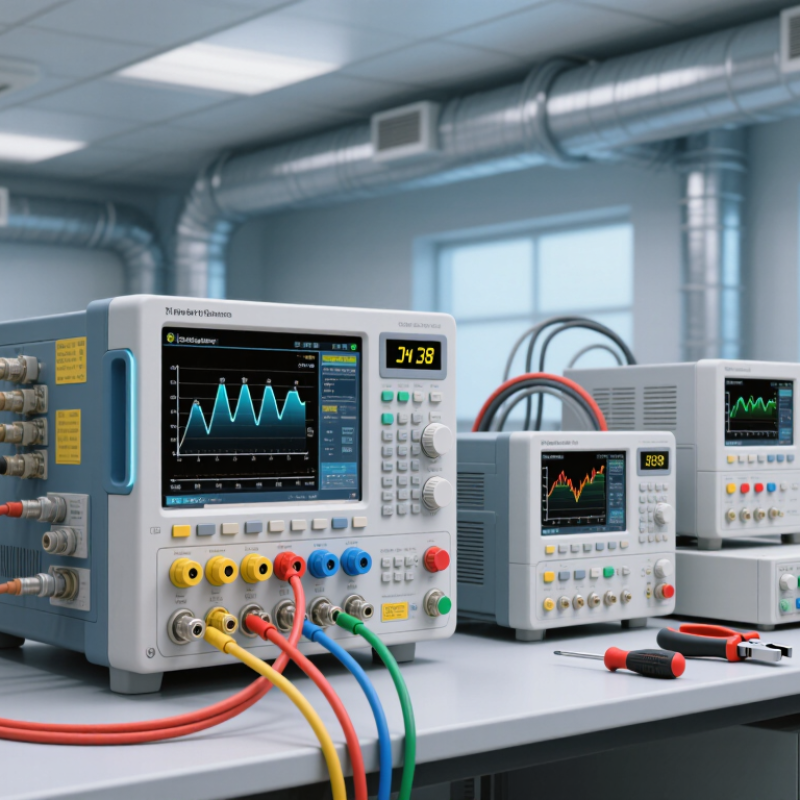
Multi-channel measuring instruments collect data from several inputs at the same time. Each channel may monitor voltage, temperature, pressure, current, vibration, or another physical value. Instead of checking sensors one by one, technicians can view synchronized readings on one display. This makes changing conditions easier to compare.
In practical testing, a four-channel instrument might track motor current, casing temperature, shaft vibration, and supply voltage. The operator can spot whether rising heat follows an electrical fluctuation. Clear channel labels, adjustable sampling rates, and isolated inputs improve measurement quality. Isolation matters. It reduces unwanted interaction between connected signals. Before testing, confirm the sensor range, connection type, and calibration status. A wrong setting can produce precise-looking but unreliable data.
Good instruments also record timestamps and preserve measurement files for later review. This supports maintenance decisions and gives engineers traceable evidence. However, more channels do not automatically mean better results. Crowded screens can hide a small warning, and excessive sampling may create unnecessary files. I have found that simple channel names often prevent more mistakes than advanced features. That deserves more attention. Buyers should assess accuracy, input protection, software usability, and service documentation together. Field conditions are rarely perfect, so the instrument should remain readable with gloves, electrical noise, and changing light. Calibration still needs regular verification, even when the device appears stable.
Multi-channel measuring instruments capture several signals at the same time. Each channel receives input from a sensor, probe, or test point. Internal signal conditioning filters noise and adjusts voltage levels. An analog-to-digital converter then changes each signal into numerical data. That timing matters. The instrument records samples with shared clocks, timestamps, or synchronized triggers. Engineers can compare temperature, pressure, vibration, and current during one event.
In practical testing, this arrangement reveals relationships that separate meters often miss. For example, a motor may show rising temperature shortly after vibration increases. A synchronized display makes that sequence visible. Some instruments use isolated channels to prevent one electrical path from affecting another. Others share a ground, which can create unwanted loops or measurement errors. I have found that channel count alone is not enough. Sampling speed, resolution, bandwidth, and input protection deserve equal attention.
Buyers should examine how the instrument handles real sensors, not only ideal laboratory signals. Check connector types, calibration records, trigger settings, storage capacity, and software export formats. Ask whether every channel samples simultaneously or scans them in rotation. That difference can distort fast events. Review uncertainty specifications under actual temperatures and cable lengths. No instrument is perfect. Even careful setups can suffer from loose connections, electromagnetic interference, or poorly placed sensors. A short trial with known reference signals can expose these weaknesses before full deployment.
2026 Best Multi Channel Measuring Instruments for Buyers
When comparing multi-channel instruments, accuracy is only one decision point. Channel count, sampling rate, bandwidth, and input isolation affect real testing results. MarketsandMarkets’ 2024 Test and Measurement Equipment report projects steady market growth through 2029, driven by connected manufacturing and electronics testing. That trend increases demand for synchronized channels and reliable data export.
Check the specifications closely. A 16-channel unit may share one sampling system, reducing timing accuracy between signals. Independent sampling is better for vibration, power, and temperature studies. Confirm the stated accuracy across the full operating range, not only at room temperature. NIST guidance on measurement uncertainty also stresses calibration traceability and documented error sources. For laboratory work, ISO/IEC 17025 accreditation can strengthen confidence in calibration records. Practical details matter too: bright displays, protected connectors, removable storage, and software that exports open file formats.
Tips: Test the instrument with your real sensors before buying. Bring a noisy cable. Watch for signal drift after thirty minutes. Compare warranty terms, calibration intervals, and repair support. A higher sample rate is not automatically better. It may create larger files and slower analysis. I have seen buyers overlook grounding requirements, then blame the instrument for unstable readings. That mistake is easy to repeat. Ask for a demonstration report containing raw data, uncertainty information, and channel-to-channel timing results.
Simultaneous channel capacity is a practical first-screening metric when comparing multi-channel measuring instruments. Higher channel counts support broader system monitoring, but buyers should also verify synchronization, input compatibility, isolation, accuracy, sampling rate, and software support.
Representative channel configurations: four-channel oscilloscopes, eight-channel bench data-acquisition units, sixteen-channel temperature data loggers, and thirty-two-channel modular data-acquisition systems. Actual configurations vary by application and measurement module.
Choosing the best multi-channel instrument depends on the application, not channel count alone. A digital multimeter suits maintenance teams measuring voltage, resistance, and current across control panels. For fast switching circuits, a multi-channel oscilloscope reveals timing errors, ripple, and brief voltage spikes. A four-channel model is not automatically better.
Data acquisition systems fit laboratories, factories, and environmental monitoring. They can record temperature, pressure, vibration, and strain simultaneously. This matters when process changes occur within seconds. Grand View Research estimates the global electronic test equipment market reached about USD 21 billion in 2023, with steady growth expected through 2030. That trend reflects wider measurement needs across connected equipment and industrial automation.
Power-quality analyzers are valuable in facilities with sensitive drives, servers, or renewable-energy systems. The International Energy Agency reported that data-center electricity consumption could exceed 1,000 TWh globally by 2026. Engineers therefore need instruments that capture harmonics, transients, and phase imbalance, not only RMS values. Spectrum analyzers support wireless and radio-frequency testing, while network analyzers characterize signal paths and impedance. In real projects, setup errors still distort results. Poor grounding can imitate noise. Calibration records, sample rate, isolation, and software compatibility deserve equal attention. More channels help, but only when the sensors and measurement method are equally reliable.
| Instrument Type | Typical Input Channels | Common Measurement Functions | Typical Input Signals | Typical Accuracy | Sampling or Scan Capability | Best-Fit Applications | Key Buying Considerations |
|---|---|---|---|---|---|---|---|
| Multiplexer / Data Acquisition Unit | 8–128 channels, depending on module configuration | DC voltage, resistance, temperature, continuity, digital I/O | Thermocouples, RTDs, thermistors, voltage, current through shunts, contact closures | Approximately ±0.05% to ±0.2% of reading, depending on function and range | Usually sequential scanning; approximately 10 to 1,000 channels per second is common | Automated test, environmental monitoring, production inspection, laboratory logging | Channel isolation, switching speed, thermocouple support, software drivers, expansion options |
| Temperature Data Logger | 4–64 temperature channels | Temperature recording, alarms, minimum/maximum tracking, trend analysis | Thermocouples, RTDs, thermistors | Approximately ±0.2 °C to ±1.0 °C, excluding sensor error | Typical interval settings from 1 second to 24 hours | Cold-chain checks, HVAC commissioning, storage validation, industrial process monitoring | Sensor compatibility, memory capacity, battery life, alarm outputs, calibration certificates |
| Multi-Channel Oscilloscope | 2–8 analog channels; optional digital channels | Waveform analysis, frequency, phase, rise time, pulse width, serial decoding | Analog voltage, differential voltage, current probe outputs, digital logic | Vertical accuracy commonly around ±2% to ±3% | Approximately 50 MS/s to several GS/s, with bandwidth from tens of MHz to multiple GHz | Power electronics, embedded systems, communications, automotive electronics, research | Bandwidth, sample rate, memory depth, probe compatibility, trigger functions, channel isolation |
| Power Quality Analyzer | 3 voltage channels and 3 current channels are common | RMS voltage/current, active power, reactive power, apparent power, energy, harmonics, power factor | AC voltage, flexible current probes, clamp sensors, neutral-current inputs | Voltage and current accuracy commonly within ±0.5% to ±1.0% of reading | Waveform sampling typically tens of kS/s to hundreds of kS/s per channel | Three-phase systems, energy audits, motor testing, harmonic surveys, commissioning | Safety category, current range, harmonic bandwidth, logging duration, flexible probes, reporting software |
| Vibration Monitoring System | 4–32 accelerometer channels | Acceleration, velocity, displacement, FFT, envelope analysis, bearing condition indicators | IEPE accelerometers, charge-output accelerometers, velocity sensors | Amplitude accuracy commonly within ±5% to ±10%, depending on frequency range and sensor | Often 10 kS/s to 100 kS/s per channel for condition monitoring | Rotating machinery, pumps, motors, fans, gearboxes, structural testing | Sensor power, frequency range, simultaneous sampling, anti-alias filtering, mounting method, analytics |
| Strain and Load Measurement System | 4–64 bridge channels | Strain, force, torque, pressure, displacement, fatigue and load-cycle analysis | Quarter-, half-, and full-bridge strain gauges; load cells; bridge transducers | Approximately ±0.1% to ±0.5% of full scale after calibration | From static measurement to several kS/s per channel for dynamic tests | Materials testing, structural validation, vehicle testing, industrial force measurement | Bridge excitation stability, gauge completion, shunt calibration, channel synchronisation, signal conditioning |
| Mixed-Signal Data Acquisition System | 8–64 analog channels plus digital I/O | Voltage, current, temperature, timing, digital-state and event recording | Analog voltage/current, thermocouples, RTDs, counters, encoders, digital signals | Approximately ±0.05% to ±0.5%, depending on module and signal type | From low-speed logging to hundreds of kS/s per channel | System integration, prototype validation, automation, test benches, research laboratories | Modular architecture, clock synchronisation, API support, trigger routing, real-time processing |
| Environmental Monitoring Station | 4–32 sensor channels | Temperature, humidity, pressure, light, air quality, rainfall and wind measurements | Voltage-output, current-loop, pulse, digital and wireless sensors | Sensor-dependent; commonly ±0.2 °C for temperature and ±2% to ±5% RH for humidity | Typical recording intervals from 1 minute to 1 hour | Buildings, agriculture, laboratories, clean areas, warehouses and outdoor monitoring | Ingress protection, communication method, solar or battery power, cloud access, sensor calibration |
| RF / Spectrum Monitoring Receiver | 1–4 synchronized RF inputs | Power level, frequency occupancy, interference detection, modulation and spectrum analysis | RF signals through coaxial inputs or calibrated antennas | Amplitude accuracy commonly around ±1 dB to ±2 dB after calibration | Real-time bandwidth commonly from a few MHz to hundreds of MHz | Wireless testing, electromagnetic interference surveys, spectrum management, antenna evaluation | Frequency range, dynamic range, phase coherence, noise floor, measurement bandwidth, preselection |
Choosing the right multi-channel measuring instrument in 2026 starts with the measurement task, not the product catalogue. Define the channels, signal types, bandwidth, sampling rate, and required accuracy. A temperature process may need stable long-term logging, while vibration testing demands synchronized, high-speed acquisition. Mixing both without checking timing can create misleading results.
Deloitte’s 2024 smart manufacturing research reported that 92% of surveyed manufacturers viewed smart manufacturing as important for future competitiveness. This supports connected measurement, but connectivity alone is not quality. Check calibration records, sensor compatibility, isolation, noise performance, and software export options. For regulated or safety-critical work, calibration linked to ISO/IEC 17025 laboratories adds stronger evidence. In practice, I have seen teams overvalue channel count and underestimate setup time. That choice can become expensive.
Tips: Compare the complete workflow. Test the instrument with real sensors, cables, and environmental conditions. Ask whether readings remain reliable when every channel operates simultaneously. Review data security and five-year ownership costs, not only the purchase price. Leave spare channels for future expansion. A perfect specification sheet may still fail on a crowded test bench. Reflect on the result after a pilot, because the first selection is not always the right one.