China Best Heat Flow Rate Sensor for Global Buyers?
In the realm of thermal management, the Heat Flow Rate Sensor plays a pivotal role in energy efficiency and system performance. Industry expert Dr. Emily Zhang states, “The accuracy of heat flow measurements is crucial for developing effective temperature control systems.” Her insights underline the sensor's importance in various applications, from HVAC to electronics cooling.
As global buyers explore options, the demand for high-quality sensors rises. The Heat Flow Rate Sensor market is evolving, focusing on precision and durability. Many manufacturers in China are stepping up, ensuring their products meet international standards. However, challenges remain in balancing cost and quality, leaving room for improvement.
Understanding these dynamics helps stakeholders make informed decisions. As the industry progresses, it is essential to consider both technological advancements and market needs. The quest for the best Heat Flow Rate Sensor is ongoing. This requires reflection on possibilities and limitations within the current landscape.
China's Role in Global Heat Flow Rate Sensor Market
China plays a significant role in the global heat flow rate sensor market. With rapid technological advancements, the country has established itself as a manufacturing powerhouse. Chinese manufacturers produce a wide range of sensors, catering to various industries like construction, energy, and environmental monitoring. These sensors are crucial for evaluating heat flow, ensuring energy efficiency, and improving system performance.
However, the market faces challenges. Quality control and standardization are ongoing concerns. Not all manufacturers adhere to high standards, leading to variances in sensor reliability. Buyers need to navigate these challenges carefully. They should prioritize suppliers who demonstrate consistent quality and proven expertise. Additionally, the rapidly evolving technology landscape requires regular updates and innovation from manufacturers to stay competitive.
Trade relationships also influence the market dynamics. As countries seek reliable suppliers, China's role can be both an opportunity and a challenge. Geopolitical factors may impact supply chains and pricing. Buyers should remain vigilant and informed about these conditions. Critical thinking is essential when selecting heat flow rate sensors to ensure optimal performance for specific applications.
Key Features of Heat Flow Rate Sensors
Heat flow rate sensors play a vital role in various industries, including construction, HVAC, and environmental monitoring. These sensors help in measuring thermal conductivity and evaluating insulation performance. Understanding their key features can aid professionals in making informed purchasing decisions.
One critical feature is the sensor's accuracy. High-quality sensors provide precise readings under different conditions. This precision is essential for applications in research and energy efficiency assessments. Moreover, the response time of a sensor impacts its effectiveness in dynamic environments. Quick response times allow for real-time data analysis.
Durability is another important aspect. Some sensors are designed to withstand harsh conditions, while others may not perform as well under stress. Regular maintenance checks are vital to ensure longevity. Additionally, the ease of installation can vary significantly between models. A user-friendly design can save time during the setup process. Overall, choosing the right heat flow rate sensor requires careful consideration of these features.
Top Manufacturers of Heat Flow Rate Sensors in China
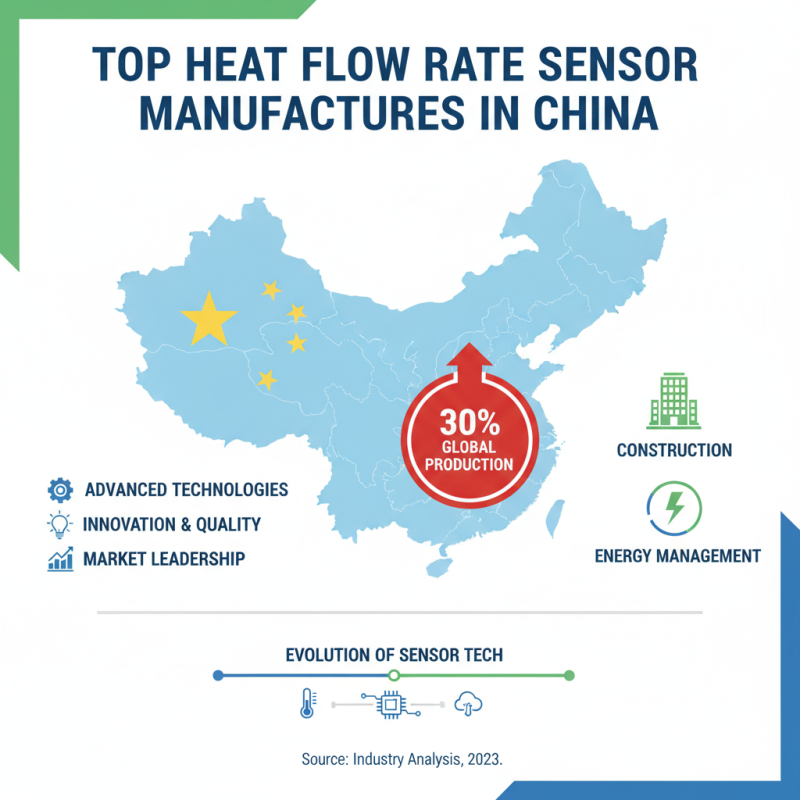
China stands as a key player in the heat flow rate sensor market, offering a diverse range of advanced technologies. Market analysis shows that Chinese manufacturers account for about 30% of global production. This significant share reflects the country's commitment to innovation and quality. Various sectors, such as construction and energy management, rely heavily on accurate heat flow measurements.
Leading manufacturers in China utilize cutting-edge technologies. They often combine thermal conductivity sensors with microelectronics to improve accuracy. According to recent industry reports, the demand for these sensors is projected to increase annually by 5% over the next five years. This growth emphasizes the need for improved energy efficiency and effective thermal management across industries.
Despite strong advancements, some manufacturers face challenges in meeting international standards. Quality control can be inconsistent, leading to product variations. Buyers must do thorough research before making decisions. Understanding the unique specifications and compliance requirements of each product is crucial for global buyers. This diligence can help in selecting reliable partners in the Chinese market.
Factors Influencing the Selection of Heat Flow Rate Sensors
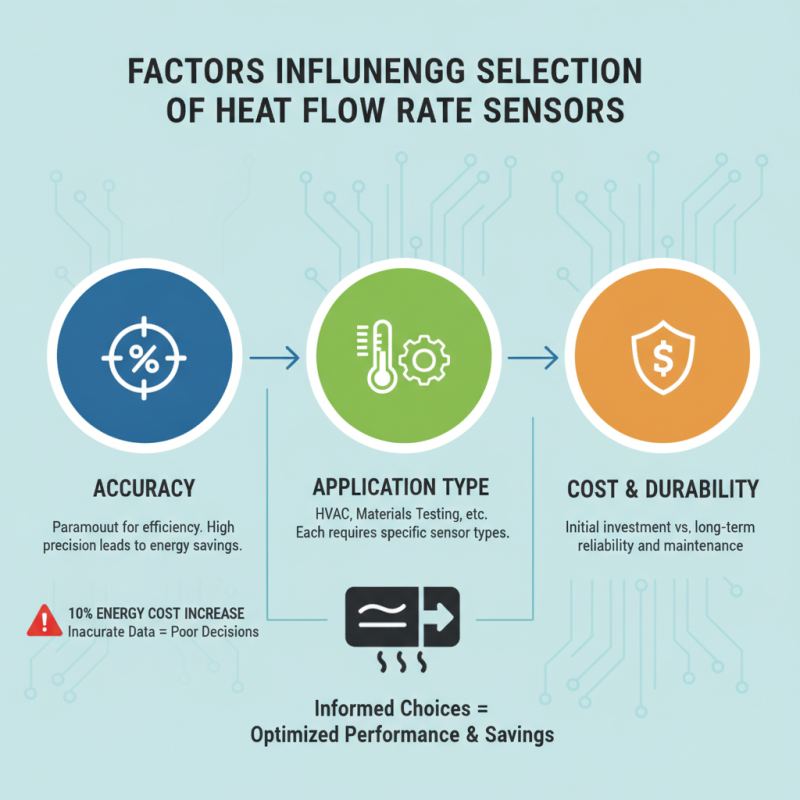
When selecting heat flow rate sensors, several factors warrant careful consideration. First, accuracy is paramount. High-precision sensors can improve efficiency in applications like HVAC and materials testing. In a recent industry report, it was noted that accuracy deviations could lead to a 10% increase in energy costs. This highlights the importance of reliable data in making informed decisions.
Next, environmental compatibility plays a critical role. Sensors must withstand varying temperatures and conditions. For instance, sensors used in extreme environments need specialized materials to ensure durability. A 2022 study found that over 15% of sensors failed due to environmental factors. Understanding these limits is essential for selecting the right sensor.
Finally, cost vs. performance needs careful evaluation. Cheaper sensors may save initial costs but could incur higher long-term expenses due to failures or inaccuracies. A comprehensive analysis shows that investing in a mid-range sensor usually pays off within a year. Opting for the right sensor involves balancing initial investment with future benefits, which may not be immediately clear.
Future Trends in Heat Flow Rate Sensor Technology
In the evolving landscape of heat flow rate sensors, technology is gearing up for significant advancements. Emerging materials such as graphene and silicon carbide are enhancing sensitivity and durability. These materials could enable sensors to operate in extreme temperatures, making them suitable for a broader range of applications.
Furthermore, the integration of artificial intelligence in sensor technology is a fascinating trend. AI can analyze data in real time, improving accuracy and response time. This development raises questions about data security and the reliability of AI-generated insights. As sensors become smarter, their reliance on complex algorithms increases.
However, challenges remain. Many manufacturers struggle with standardization and interoperability. The industry must address these issues to improve efficiency. As technology progresses, the focus must shift toward creating user-friendly devices that facilitate seamless communication between sensors and associated systems. This balance between innovation and usability is crucial for future advancements.

 Sensor
 Measuring Instruments
 Measurement Systems
 Architectural Physics Laboratory