- Home
- Product Center
- Application
- Support
- JT Cloud
- About Us
- Contact Us
 Sensor
 Measuring Instruments
 Measurement Systems
 Architectural Physics Laboratory
Leave Your Message
A Wind Speed Sensor turns moving air into a reading that people can use to make decisions. In 2026, the leading options include cup, ultrasonic, propeller, hot-wire, and remote-sensing instruments. Each measures wind differently, so a high specification alone does not make one the best choice. The site matters.
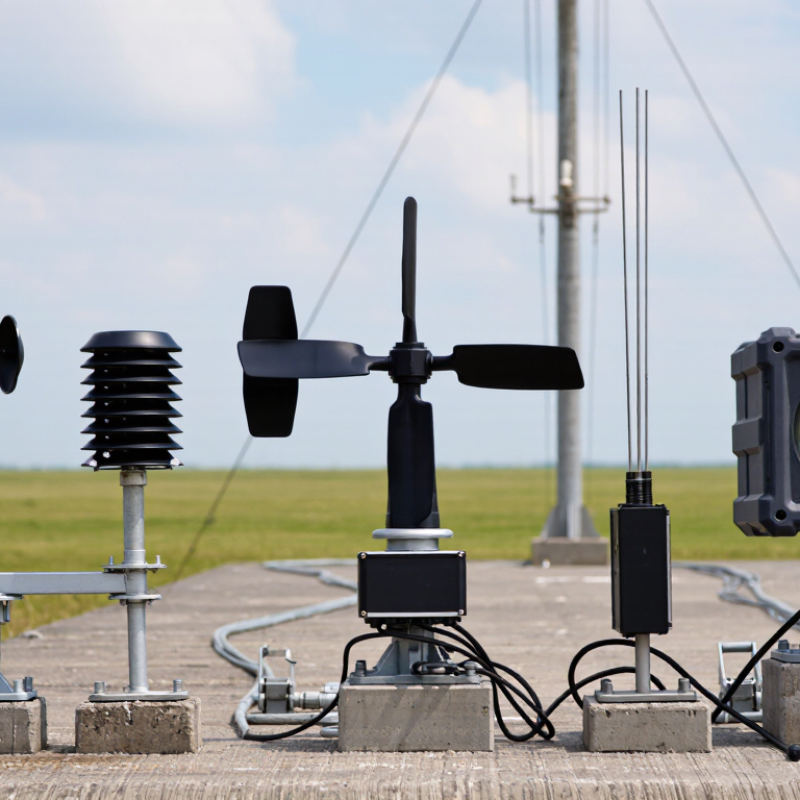
Cup anemometers remain familiar on weather stations and exposed masts. Their rotating cups are easy to understand, though bearings can wear and require inspection. Ultrasonic sensors calculate wind speed from sound moving between transducers. They have no moving parts, which can reduce routine maintenance, but icing and installation geometry still matter. Propeller sensors respond well to airflow direction, making them useful for some field and industrial measurements. Hot-wire instruments can detect rapid changes in controlled tests, yet dust, moisture, and delicate probes may limit their suitability outdoors.
Remote-sensing systems, including lidar-based instruments, estimate wind at a distance and can support larger-scale assessments. They are more complex and costly than many point sensors. A neat ranking can mislead. The best Wind Speed Sensor depends on the required accuracy, measurement range, weather exposure, response time, and budget. Check calibration procedures, output compatibility, and mounting guidance before comparing models. A sensor mounted near a wall may report disturbed airflow, however advanced it is. No sensor is perfect. Real sites are messy, and specifications do not capture every practical trade-off.
What Are the Top Wind Speed Sensor Types in 2026?
How Wind Speed Sensors Measure Airflow
Wind speed sensors do not all “see” moving air the same way. Cup anemometers convert rotor turns into speed; bearings and starting thresholds can affect light-wind readings. Ultrasonic sensors compare sound travel times along crossed paths, with no moving parts to wear. Hot-wire sensors estimate airflow from how quickly air cools a heated wire, making them useful in controlled indoor testing. Each method has trade-offs.
At a mast, turbulence, nearby trees, and poor alignment can distort readings. The World Meteorological Organization’s Guide No. 8 specifies a 10-minute averaging period for surface wind observations. A brief gust and a sustained mean are not interchangeable. IEC 61400-12-1:2022 also addresses anemometer calibration and measurement uncertainty in wind-turbine power-performance testing. Even careful setups are not perfect; an exposed rooftop can still create misleading turbulence.
Tips: Mount the sensor clear of obstructions, level it carefully, and record raw readings alongside calculated averages. Check calibration records and inspect for dust, salt, or damaged cups. Keep a note of exceptions.
| Sensor Type | How It Measures Airflow | Key Advantages | Limitations | Common Applications |
|---|---|---|---|---|
| Cup Anemometer | Wind turns cups mounted on a rotating shaft. The rotation rate is calibrated to calculate wind speed. | Simple, robust, and widely used for continuous outdoor measurements. | Moving parts can wear or require maintenance; icing and contamination can affect readings. A separate direction sensor is generally needed to measure wind direction. | Meteorological stations, wind resource assessment, and general outdoor monitoring. |
| Propeller or Vane Anemometer | Airflow turns a propeller. The rotation rate indicates speed; a vane or directional mounting helps align the instrument with the wind. | Provides direct, responsive measurements and can be used for spot checks or fixed installations. | Readings depend on orientation to the airflow, and the moving parts may need maintenance. | Building ventilation checks, HVAC commissioning, and outdoor weather monitoring. |
| Hot-Wire Anemometer | Airflow cools an electrically heated wire. The sensor relates the change in wire temperature or electrical power to air speed. | Highly responsive and useful for measuring low-speed airflow and small changes in velocity. | Requires calibration and can be affected by dust, moisture, temperature changes, or contact with the delicate sensing element. | Laboratory testing, cleanrooms, duct surveys, and airflow research. |
| Ultrasonic Anemometer | Measures how airflow changes the travel time of sound between transducers. Multi-path instruments can calculate wind speed and direction, and some measure three-dimensional wind components. | No moving parts; supports fast measurements and can capture changing wind direction. | Performance may be affected by precipitation, icing, acoustic obstruction, or installation geometry. | Weather stations, wind energy monitoring, and environmental research. |
| Pitot-Static Probe | Compares total pressure with static pressure. Air speed is calculated from the pressure difference and air density using the flow equations. | Useful for measuring airflow in ducts and other controlled flows; the probe has no rotating parts. | Must be aligned with the airflow. Accuracy depends on pressure measurement and air-density inputs, and low-speed readings can be less reliable. | Aircraft airspeed systems, wind tunnels, and HVAC duct testing. |
| Doppler Lidar | Sends laser pulses into the atmosphere and detects the frequency shift of light scattered back by airborne particles to estimate wind velocity along the beam. | Measures wind remotely without placing a sensor at every measurement point. | Measures velocity along the laser beam; results depend on available atmospheric scatterers and instrument setup. | Wind energy site assessment, atmospheric research, and remote wind profiling. |