Leave Your Message

How to Choose the Best Thermal Environment Chamber?

Choosing the right thermal environment chamber is less about buying the largest unit and more about matching it to the test. A chamber must reproduce the temperatures, transitions, and operating conditions your product will actually face. Small mismatches matter. A slow temperature ramp can hide a failure that a rapid cycle would reveal. Uneven conditions near the door may also affect larger or densely loaded samples.

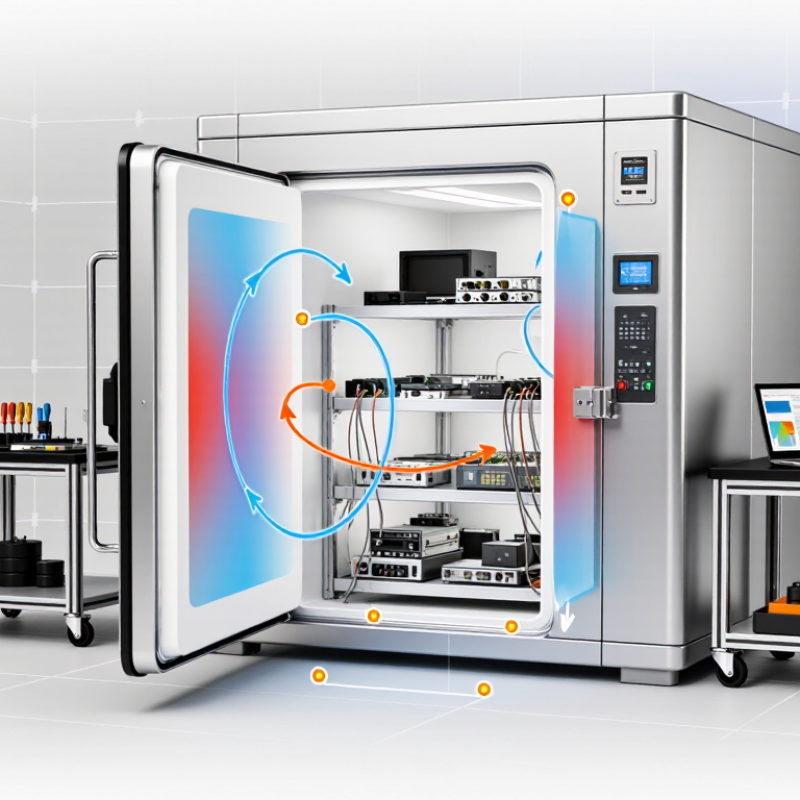
Thermal Environment testing is only useful when the chamber’s performance can be checked and documented. Look beyond the temperature range on a product sheet. Ask about uniformity, stability, ramp rates, sensor placement, and calibration records. Consider the sample’s size, heat output, fixtures, and wiring; each can influence conditions inside the chamber. Leave enough space for air to circulate. It sounds obvious, but it is often overlooked.

Before comparing models, write down the test profile and typical load. Then ask suppliers to explain how their specifications were measured and whether those results apply to your setup. Request a demonstration or relevant performance data when practical. Also compare service access, control software, alarms, and maintenance needs. These details affect daily use, not just purchase price. No chamber is perfect. I would still question any claim that ignores load conditions or measurement uncertainty. A careful selection begins with clear requirements, realistic verification, and a willingness to revisit assumptions as testing needs change.
How to Choose the Best Thermal Environment Chamber?

Define Testing Requirements and Environmental Conditions

Define the product’s real exposure before comparing chamber specifications. List minimum and maximum temperatures, humidity, ramp rates, dwell times, cycle count, and whether the specimen is powered during testing. IEC 60068-2-1 and IEC 60068-2-2 include cold and dry-heat severities such as −40°C, −55°C, 85°C, and 125°C. These are test points, not automatic requirements. Small details matter.

Build the profile around the specimen, not merely the chamber’s display. A loaded chamber may respond differently from an empty one, and the product’s internal temperature can lag behind chamber air. Record where sensors will sit, how quickly temperatures must change, and how long the product must remain at each condition. IEC 60068-2-14 provides guidance for temperature-change testing; align its procedure with your product specification. This part is easy to overlook.

For field-exposed products, use credible local climate data to set realistic test boundaries. ASHRAE Handbook—Fundamentals (2021) presents cooling design conditions at 0.4%, 1%, and 2% annual exceedance levels. These values help frame outdoor extremes; they do not replace a product-specific test profile. Specify humidity only when relevant, and state whether condensation is expected. Then check usable workspace, sensor accuracy, and recovery between cycles. The first draft of a test profile is rarely perfect. Revisit assumptions before purchasing.

Match Chamber Capacity to Samples and Workload

Match chamber capacity to the samples you test, not just their combined volume. Measure the usable interior, then leave space around each specimen for airflow, sensors, racks, and cables. A tightly packed chamber can develop temperature gradients, even when its display reaches the set point. For example, a bulky fixture may obstruct circulation more than several small samples. Leave room for air to move. Also include routine workload: peak batch size, extra fixtures, and the time needed between test runs. Oversizing can waste floor space and energy; undersizing can force split tests that change loading conditions.

Check performance under a representative load before committing. IEC 60068-3-5:2018 describes methods for confirming temperature-chamber performance, including temperature variation across the working space. ASTM D4332-22 specifies a standard conditioning atmosphere of 23 ± 1 °C and 50 ± 2% relative humidity for applicable packaging tests. These values are not universal chamber requirements; they illustrate how closely controlled conditions can matter. Ask suppliers for usable-volume drawings and loaded test data, then verify the warmest and coolest points with sensors. A simple trial load helps. One detail is easy to miss: cables and shelves also occupy space and may affect airflow. Recheck the layout when sample shapes or batch sizes change.

How to Choose the Best Thermal Environment Chamber

Match chamber capacity to sample volume and workload. The examples below compare estimated sample volume with chamber internal volume.

How to use this chart: These illustrative examples show sample loads occupying about 22–25% of chamber volume. Allow room for airflow, spacing, fixtures, and temperature sensors; usable capacity depends on chamber layout and test requirements.

Compare Temperature, Humidity, and Control Performance

How to Choose the Best Thermal Environment Chamber?

Compare Temperature, Humidity, and Control Performance

Choosing a thermal environment chamber starts with the conditions your samples actually face, not the widest range on a brochure. Check minimum and maximum temperatures, ramp rates, and stability at the setpoint. A chamber that reaches 150°C may still struggle to hold it evenly with a full shelf. Ask for uniformity data across the usable workspace, not just at one sensor. Small details matter. Where are sensors placed? How was the chamber loaded during testing?

For humidity work, compare operating limits across temperature, since many chambers cannot maintain every humidity level at every temperature. Review control tolerance, recovery after door openings, and water management. Condensation on a cold sample can distort results. Check what happens near the edge of the stated range. It is easy to overlook.

Control performance is more than a touchscreen. Look for programmable profiles, stable transitions, alarms, and accessible records of actual conditions. Verify whether displayed values come from calibrated sensors, and ask how often calibration is recommended. If possible, test with representative samples and fixtures. Empty-chamber results can flatter performance. I would also compare repeat runs; small variations may reveal an issue the specification sheet hides. No chamber is perfect, and your own test setup can add uncertainty. That is worth documenting, even if it complicates the comparison.

Check Safety Features and Applicable Standards

A thermal environment chamber should protect both the test and the people nearby. Check for an independent over-temperature limit, door interlocks, clear alarms, and a reachable emergency stop. These features matter when a sensor drifts or a sample behaves unexpectedly. That can happen.

Ask how the chamber responds to power loss, cooling failure, and temperatures outside the set range. Look for documented alarm behavior and a safe shutdown procedure. If the unit uses a refrigerant or has special exhaust needs, confirm that installation guidance addresses those hazards. A feature list is not enough; request a demonstration of the actual alarm and interlock functions.

Applicable standards depend on the chamber’s design, location, and intended use. Ask the supplier to identify relevant electrical and equipment-safety requirements, and provide declarations or test records for the specific model. IEC 60068 methods may guide environmental testing, but using a test method does not by itself establish equipment safety. Verify that calibration and temperature-uniformity records match your operating range. Paperwork can feel reassuring—sometimes too reassuring—so compare it with the chamber’s labels, manual, and real operating limits before purchase.

How to Choose the Best Thermal Environment Chamber? - Check Safety Features and Applicable Standards

Selection Dimension What to Check Relevant Safety Feature or Standard Practical Evaluation
Electrical and general equipment safety Check protection against electric shock, overheating, mechanical hazards, and abnormal operation. Review the chamber’s intended use and electrical ratings. IEC 61010-1 sets general safety requirements for electrical equipment for measurement, control, and laboratory use. IEC 61010-2-010 provides particular requirements for laboratory equipment that heats materials; applicability depends on the equipment and intended use. Request the manufacturer’s conformity documentation and confirm that the cited standard and edition apply to the exact chamber configuration and destination market.
Over-temperature protection Look for an independent temperature limit or cut-out that can stop heating if the control sensor or primary control system fails. Safety assessment should consider abnormal conditions and foreseeable faults under applicable equipment-safety requirements, including IEC 61010-1 where applicable. Ask whether the limit is independent of the normal temperature controller, how it is reset, and whether its operation can be demonstrated during commissioning.
Door, access, and pressure hazards Assess hot-surface exposure, door-opening risks, pinch points, and any pressure or vacuum hazards created by the test process. IEC 61010-1 and relevant particular requirements may address hazards based on the equipment design. Additional rules may apply to pressure systems or the installation site. Check for clear hot-surface warnings, suitable door hardware, safe access for loading, and documented procedures for samples that can release pressure or hazardous substances.
Refrigeration system and refrigerant Identify the refrigerant, its safety classification, charge, ventilation needs, and leak-response requirements. ISO 5149 addresses safety and environmental requirements for refrigeration systems and heat pumps. ASHRAE Standard 34 classifies refrigerants by safety group and assigns designations; it is not, by itself, a chamber certification standard. Verify the refrigerant information on the equipment documentation and assess room ventilation, service access, and applicable local refrigeration and refrigerant rules.
Electrical noise and electromagnetic compatibility Consider whether the chamber’s electrical emissions or susceptibility could affect nearby instruments, sensors, or test results. IEC 61326-1 specifies EMC requirements for electrical equipment for measurement, control, and laboratory use, subject to its scope and applicable product requirements. Request EMC documentation when the chamber will operate near sensitive measurement equipment or as part of a regulated test setup.
Temperature-test method Confirm that the chamber can perform the required cold, dry-heat, or temperature-change profile and maintain the needed uniformity and stability. IEC 60068-2-1 covers cold tests; IEC 60068-2-2 covers dry-heat tests; IEC 60068-2-14 covers temperature-change tests. These are environmental test methods, not equipment-safety certifications. Match the chamber’s operating range, ramp capability, workload, and uniformity data to the test method and product specification. Confirm the required test conditions before purchase.
Alarms and fault response Check for visible and audible alarms for temperature excursions, sensor faults, power loss, and refrigeration or airflow problems, as applicable to the design. Alarm and interlock needs depend on the hazard assessment, intended use, and applicable safety requirements; no single alarm configuration is suitable for every chamber. Review alarm limits, notification options, fault behavior, and whether the chamber enters a safe state after a detected fault or power interruption.
Installation and operating environment Check required clearances, ambient temperature and humidity limits, power supply, ventilation, floor loading, and service access. Installation requirements are normally specified in the equipment documentation and may also be affected by local electrical, building, fire, and refrigeration regulations. Compare the installation manual with the proposed site conditions and have qualified personnel review the electrical supply and any required exhaust or ventilation provisions.
Calibration and measurement traceability Review sensor accuracy, calibration intervals, measurement uncertainty, and records for the chamber’s control and monitoring sensors. ISO/IEC 17025 specifies competence requirements for testing and calibration laboratories; it applies to laboratories, not as a product-safety certification for a chamber. Ask for calibration certificates and confirm that the calibration range, points, uncertainty, and traceability meet the laboratory’s quality-system requirements.
Documentation and market compliance Obtain operating and maintenance instructions, electrical diagrams, risk information, declarations, and service requirements. Applicable standards and regulatory markings vary by jurisdiction, chamber design, and intended application. A cited test method does not establish product compliance. Have the supplier identify the standards and regulations used for the specific model and configuration, and verify required approvals with the relevant authority or qualified compliance specialist.

Selection note: Standards applicability depends on the chamber’s design, intended use, installation, and destination market. Treat the standards listed here as a starting point for evaluation, and verify current editions and local requirements before purchase or commissioning.

Evaluate Installation, Service, and Operating Costs

A thermal environment chamber can look affordable until it reaches the laboratory. Check the delivery route, door width, floor capacity, and nearby power supply before requesting a final quote. A large unit may need special rigging or electrical work. Those costs can change the project budget quickly. Leave room for airflow and technician access, too.

Service costs deserve equal attention. Ask what routine maintenance includes, how often calibration is recommended, and whether common replacement parts are readily available. A clear service plan helps estimate costs over several years. It also reveals practical details, such as how long a temperature sensor check takes or whether filters are easy to reach. Small details matter.

Operating costs depend on chamber size, insulation, setpoints, test duration, and how often the door opens. Compare expected energy use under your actual test schedule, not just a best-case figure. Frequent temperature cycling can increase consumption and wear. A chamber that runs overnight may also need monitoring and planned maintenance. Ask for realistic estimates, then compare them with your facility’s utility rates. Estimates are never perfect; our test patterns often change after installation. Still, recording energy use and service visits during the first year creates a more useful baseline for future decisions.