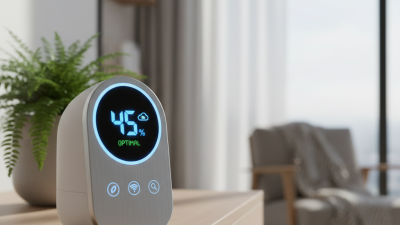
China Top 10 Types of Humidity Sensors for Home Use
China Top 10 Types of Humidity Sensors for Home Use examines how indoor moisture affects comfort, materials, and health. A Humidity Sensor For Home can reveal conditions that walls and furniture cannot show. A damp bedroom may feel cold, smell musty, and develop window condensation overnight. A dry study may irritate skin, eyes, and wooden surfaces.
The U.S. Environmental Protection Agency recommends maintaining indoor relative humidity between 30% and 50%. Its indoor air quality guidance links excessive moisture with mold growth and building damage. ASHRAE Standard 55-2023 also recognizes humidity as an important factor in thermal comfort. These references provide a practical foundation for comparing sensor technologies, including capacitive, resistive, thermal, wireless, and smart-home models. However, recommendations are not universal rules. Climate, ventilation, insulation, and room use can change the best target.
This guide compares ten sensor types used in bedrooms, nurseries, kitchens, basements, and plant rooms. It considers accuracy, response time, calibration, connectivity, battery life, installation, and long-term stability. A sensor beside a bathroom door may report a sharp moisture spike. A device near a heater may report falsely low humidity. Small details matter.
No sensor is perfect. Cheap displays can look convincing while drifting quietly. That weakness deserves attention. The discussion therefore combines manufacturer specifications with established indoor-environment guidance from the EPA, ASHRAE, and the World Health Organization’s housing guidance. Readers can then choose a practical device, not merely the most advertised one.
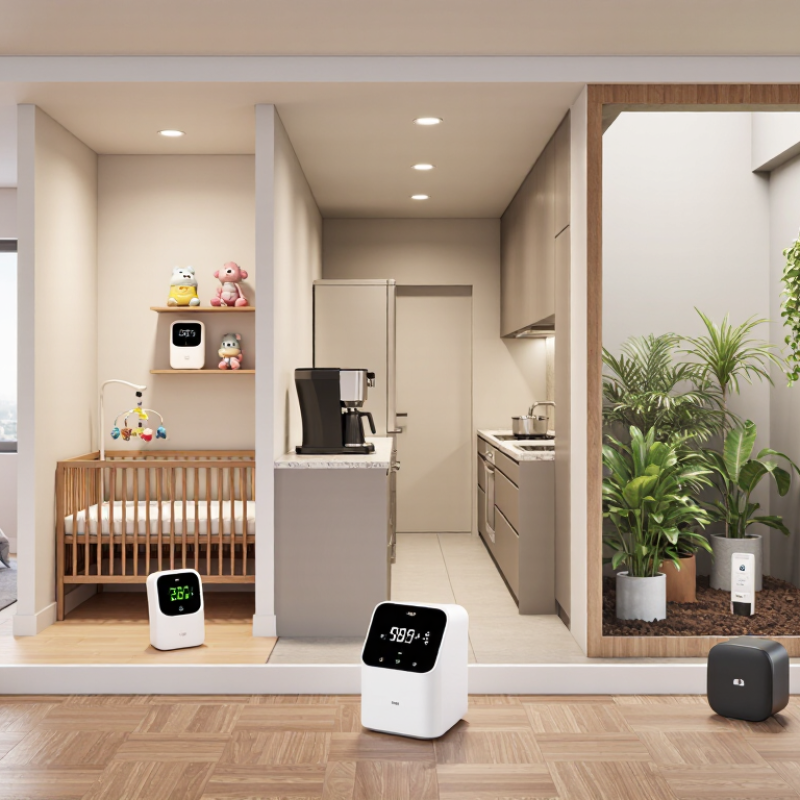
What Humidity Sensors Measure and Why They Matter at Home
China Top 10 Types of Humidity Sensors for Home Use
Humidity sensors measure the amount of water vapor in indoor air. Most home models report relative humidity as a percentage. A reading of 50% means the air holds half of the moisture it could contain at that temperature.
Temperature changes affect this measurement. Warm air can hold more vapor than cold air. Some sensors also calculate dew point, which indicates when moisture may condense on windows, pipes, or walls. This matters in bedrooms, kitchens, bathrooms, storage rooms, and basements.
Different sensor designs serve different home needs. Capacitive sensors are common because they offer stable readings with low energy use. Resistive sensors can be compact and affordable. Thermal conductivity sensors may suit specialized monitoring, but they often need careful installation. Combination devices measure humidity and temperature together, helping users identify condensation risks.
Placement strongly affects accuracy. A sensor near a shower may show a temporary spike, while one beside a heater may read unusually dry. Keep it away from direct sunlight, vents, open windows, and wet surfaces. Check readings against a second device when results seem strange.
No household sensor stays perfect forever. Dust, aging, and repeated condensation can cause drift. I would treat an unexplained reading as a warning, not a fact. A simple comparison, a clean sensor, and regular observation can reveal whether the room is genuinely damp or the instrument is simply imperfect.
How Home Humidity Sensors Are Classified by Sensing Technology
Home humidity sensors are classified mainly by how they detect water vapor. Capacitive sensors measure changes in electrical capacitance when a polymer absorbs moisture. They are common in indoor monitors because they respond quickly and use little power. Resistive sensors detect changes in electrical resistance through a moisture-sensitive material. They can be affordable, but dust and aging may affect accuracy.
Other technologies include thermal conductivity sensors, which compare heat transfer in dry and humid air. Dew-point sensors, including chilled-mirror designs, detect condensation on a cooled surface and offer strong reference accuracy. Psychrometric sensors use wet-bulb and dry-bulb temperatures, although they need airflow and careful maintenance. Optical, quartz-crystal, surface-acoustic-wave, gravimetric, and hybrid temperature-humidity sensors complete the broader ten-type classification. Some are better suited to laboratories than bedrooms.
Tips: For a living room, choose a calibrated capacitive sensor with temperature compensation. Place it near breathing height, away from windows, kitchens, radiators, and direct sunlight. Compare its reading with a second device during the first week. Readings may differ slightly. That is normal, but a large gap deserves investigation. Clean the housing gently, and avoid blocking its ventilation openings. A sensor showing 60% relative humidity may still be misleading if the room temperature changes sharply. I have found stable placement more important than buying the most complex technology. Yet this is not absolute; sensor quality and calibration remain decisive.
China’s Top 10 Types of Humidity Sensors for Household Use
China’s household market offers ten practical humidity-sensor types: capacitive, resistive, thermal-conductivity, chilled-mirror, psychrometric, optical, electrolytic, ceramic, MEMS, and integrated digital sensors. Capacitive models suit bedrooms, nurseries, and living rooms. Resistive units are inexpensive for basic bathroom monitoring. Thermal and chilled-mirror sensors provide stronger accuracy, but usually cost more. MEMS and integrated digital sensors fit compact air-quality monitors and smart home devices. Soil-humidity sensors also help indoor gardeners, although they measure media moisture, not room humidity.
The U.S. Environmental Protection Agency recommends keeping indoor relative humidity near 30% to 50%. ASHRAE Standard 55 also treats humidity as an important comfort factor. In China, apartments often face condensation during humid summers and overly dry air during winter heating. Choose a sensor with stated accuracy, calibration information, and a suitable response range. A 2024 industry outlook from MarketsandMarkets identifies growing demand for miniaturized and connected humidity sensing in consumer electronics. Exact market forecasts vary. That deserves caution.
Tips: Place the sensor away from kitchens, windows, vents, and direct sunlight. Compare readings with a calibrated reference meter before trusting a new device. For bedrooms, ±3% RH accuracy is usually practical. For plant cabinets or archival storage, tighter control may matter. Clean dust from the inlet regularly. Cheap sensors can drift. Even professionals sometimes overlook that.
How to Choose the Right Humidity Sensor for Different Rooms
China Top 10 Types of Humidity Sensors for Home Use
How to Choose the Right Humidity Sensor for Different Rooms
Choosing a humidity sensor starts with the room, not the sales label. Capacitive sensors suit bedrooms and living rooms because they offer stable readings with low power use. Resistive sensors can work in simple monitors, but their readings may drift over time. For bathrooms, choose a fast-response sensor with condensation protection. A remote probe is often better than a wall unit near a hot shower. In basements, consider a wired or digital sensor with data logging. That small record can reveal dampness after rain.
The U.S. Environmental Protection Agency recommends keeping indoor relative humidity between 30% and 50%. ASHRAE guidance also links humidity control with thermal comfort and indoor air quality. These figures are useful, but not perfect for every home. A kitchen sensor should resist steam and temperature changes. A nursery sensor needs clear alerts and stable calibration. For a greenhouse-style sunroom, select a wider measuring range. Chilled-mirror sensors are highly accurate, yet usually unnecessary for ordinary rooms.
Tips: Place the sensor away from windows, vents, heaters, and direct sunlight. Keep it about one to two meters above the floor. Compare two sensors in the same room for 24 hours before trusting one reading. I would also check calibration annually. Cheap devices sometimes look precise while measuring poorly. That is worth questioning.
Sources: U.S. EPA indoor humidity guidance; ASHRAE Handbook—Fundamentals.
Installation, Calibration, and Maintenance of Home Humidity Sensors
Installing a home humidity sensor requires a suitable location, not just an empty wall. Place it about 1.2 to 1.5 meters above the floor. Keep it away from windows, heaters, kitchens, bathrooms, and direct sunlight. Air should move naturally around the sensor. Avoid placing it inside a cabinet or behind curtains. A stable indoor position gives more useful readings.
Calibration should follow the device instructions and local indoor conditions. A simple salt-test method can provide a reference near 75% relative humidity in a sealed container. Do not let salt or water touch the sensor. Compare readings after several hours, when temperature remains steady. My practical mistake was checking too quickly. The number looked convincing, but it had not stabilized. That small error changed my adjustment.
Maintenance is modest but important. Wipe the outer surface with a dry, soft cloth every few months. Never spray cleaner into the sensor openings. Check the battery before treating unusual readings as a humidity problem. Compare two sensors in the same room for several hours, rather than comparing separate locations. Dust, condensation, and aging components can gradually reduce accuracy. Record readings during cold and warm seasons. A home may feel comfortable while hidden corners remain damp. If readings stay abnormal after calibration, inspect ventilation and possible moisture sources before replacing the sensor.

 Sensor
 Measuring Instruments
 Measurement Systems
 Architectural Physics Laboratory