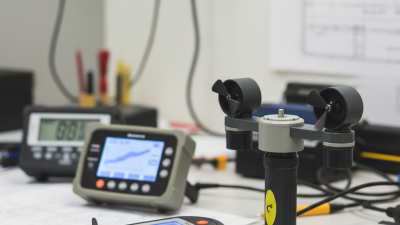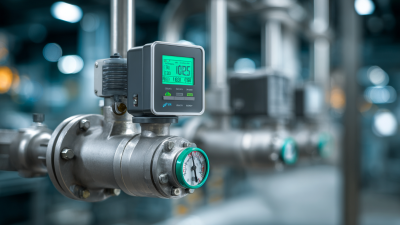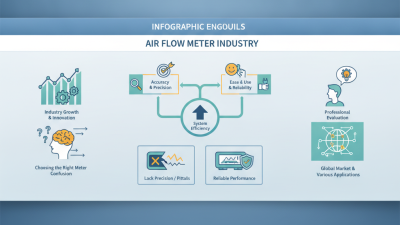
Airflow data affects comfort, process consistency, and equipment performance. A dependable Air Velocity Sensor can help teams detect uneven flow near a ventilation grille, inside a duct, or across a production line. Small differences matter. But a sensor’s accuracy is only part of the decision. Probe shape, measurement range, response time, calibration options, and installation conditions also influence results.
China has a broad field of manufacturers and suppliers, from specialist sensor makers to companies offering complete monitoring systems. “Best” depends on the application. A laboratory may prioritize traceable calibration and low measurement uncertainty, while an HVAC contractor may value a compact probe, clear wiring diagrams, and responsive technical support. Not every product page explains these differences well. That deserves a closer look.
This guide examines how to compare suppliers using practical evidence, not slogans. Buyers can review published specifications, request test documentation, and ask how performance is checked across the stated measurement range. Look for support details, too. Can the supplier explain sensor placement, output compatibility, and maintenance needs? A polished datasheet is useful, but it cannot replace testing under real operating conditions. Some claims may remain difficult to verify without a sample or independent assessment. With that limitation in mind, the following overview helps identify credible options and ask better questions before choosing a supplier.
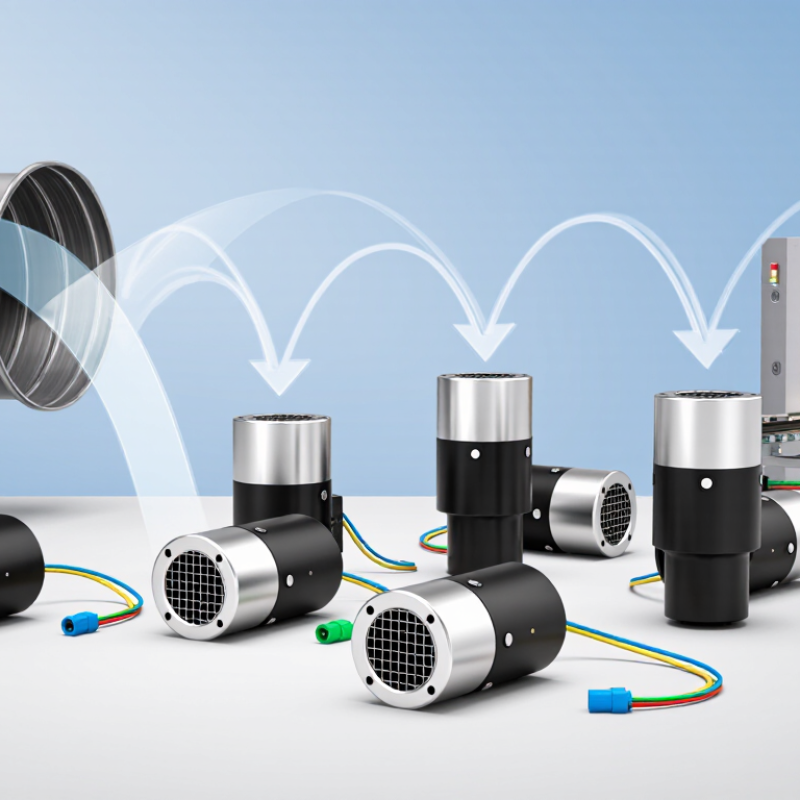
Air velocity sensors measure how quickly air moves through ducts, rooms, and equipment. Common types include hot-wire probes, rotating-vane meters, and differential-pressure sensors. Hot-wire models suit low-speed airflow around supply grilles; vane meters work well in larger ducts. Differential-pressure devices infer velocity from pressure changes, so installation and duct conditions matter.
Their readings support ventilation checks, airflow balancing, filter monitoring, and HVAC control. The World Health Organization’s 2021 Roadmap to improve and ensure good indoor ventilation cites 10 liters per second per person as a benchmark for many non-residential spaces. Sensors help verify delivery, but one reading cannot prove that a room is well ventilated. Turbulence, probe angle, and poor placement can skew results. A neat reading can still mislead.
Tips: Match the sensor’s range to expected air speed, and check calibration records before comparing readings. Take several measurements across the duct, not just at its center. For supplier selection, request documented accuracy, response time, operating-temperature limits, and clear calibration procedures. Then test the device in the actual installation; specifications alone are not enough.
When evaluating air velocity sensor suppliers in China, look beyond a polished catalog. Ask how each sensor is tested across its stated measurement range. Request sample calibration records, test conditions, and information about measurement uncertainty. A reading taken in a steady laboratory airflow may not reflect performance near a fan or inside a narrow duct.
Check whether the supplier can explain sensor response time, accuracy limits, operating temperature, and installation requirements in plain language. Ask for a sample unit and compare its readings with a trusted reference instrument under repeatable conditions. Small details matter. Also review how production batches are checked and how serial numbers connect to test records. Clear answers are a good sign; vague promises are not. I would still allow room for uncertainty, since a brief sample test cannot prove long-term consistency. Ask how the supplier handles defects, technical questions, and replacement parts, and note how quickly its engineers respond. A useful evaluation includes both the device and the support behind it.
Chinese air velocity sensor suppliers typically cover several product families: handheld meters, fixed duct probes, thermal anemometers, vane sensors, and differential-pressure transmitters. Some specialize in compact probes for HVAC commissioning; others offer multi-point arrays for large ducts or combined temperature and humidity measurement.
Range matters. Check the stated velocity span, response time, output options, probe length, and calibration documentation. A sensor that works well in a clean test duct may behave differently near an elbow or damper.
That makes stable airflow measurement relevant to ventilation control, not merely instrument purchasing. Ask suppliers how they verify accuracy across the full measurement range, and whether they provide calibration results with each unit. Modbus and analog outputs can simplify connection to existing controls.
Catalogues may look comprehensive; application notes are sometimes thin. That deserves scrutiny. Compare response to low-velocity readings, dust exposure, and installation orientation, then request a sample report before ordering.
Choosing an air velocity sensor supplier in China requires more than comparing catalog prices. Quality shows up in repeatability, stable readings, and clear test records. Ask how each sensor is checked across its stated airflow range, not only at one convenient point. Request sample calibration data and confirm the accuracy, response time, and operating limits match your application. Small differences matter. A ventilation duct may create turbulence, making a sensor accurate on a bench but inconsistent in use. A trial installation can reveal this.
Certifications deserve careful review. Check that certificates are current, issued to the actual manufacturing site, and relevant to the product or quality process being claimed. An impressive logo is not enough; ask for certificate numbers, scope, and issuing-body details, then verify them independently. Support is equally practical. Before ordering, test response quality with a technical question about wiring, installation orientation, or signal troubleshooting. Useful suppliers provide specific answers, readable manuals, replacement guidance, and realistic lead times. After-sales support matters most when readings drift or a unit fails during commissioning. One caveat: a polished sample may not represent every production batch. Ask how batches are inspected and how corrective actions are documented; some details may remain unclear until you ask.
Suggested weighting for comparing suppliers by quality evidence, certifications, and support.
These suggested weights are an evaluation framework, not supplier-specific results. Review product test data and calibration records, verify that any ISO 9001 or ISO/IEC 17025 certificates are valid and within scope, and confirm the supplier’s technical and after-sales support.
Choosing an air velocity sensor supplier in China starts with the conditions at your measurement point. Is the duct dusty, humid, or narrow? Share the expected velocity range, temperature, duct size, and required output signal. A supplier should explain the sensing principle and provide accuracy figures across that range, not just a single headline number. Ask for calibration records, test methods, response time, and production lead times. A spreadsheet isn’t proof.
The 2024 Global Status Report for Buildings and Construction, published by GlobalABC, estimates that buildings used 34% of global energy in 2022. That scale makes reliable airflow measurement relevant to HVAC efficiency, but a sensor alone cannot guarantee savings. Compare suppliers on repeatability, drift, installation requirements, and support for recalibration. Request sample reports and confirm whether calibration is traceable to recognized standards. If readings will guide balancing, check performance near your actual operating velocity; low-speed accuracy can matter more than the maximum range.
Before ordering, ask for a sample and test it in a representative duct section. Compare its readings with a calibrated reference instrument at several fan speeds. Also verify wiring, enclosure protection, and documentation in English. A low quote may be reasonable, but clarify what it excludes, such as calibration certificates or replacement probes. No checklist catches everything; site conditions can still expose gaps. A responsive supplier should discuss those limits openly.
| Evaluation Dimension | What to Compare | Project Guidance | Evidence to Request |
|---|---|---|---|
| Sensor technology | Thermal anemometers, vane sensors, and differential-pressure or Pitot-based systems use different measurement principles. | Thermal sensors are commonly considered for low-speed air measurements; vane types suit applications where a rotating probe is practical; Pitot-based systems are often used for duct airflow measurements with suitable pressure instrumentation. | Technical datasheet, operating principle, application notes, and installation requirements. |
| Measurement range and accuracy | Specified velocity range, accuracy statement, resolution, and the conditions under which those specifications apply. | Choose a range that covers the expected minimum and maximum airflow. Compare accuracy definitions and test conditions rather than relying on a single headline figure. | Datasheet with units, accuracy formula, reference conditions, and calibration results for the proposed model. |
| Air conditions and environment | Operating temperature, humidity limits, airflow temperature compensation, dust or moisture exposure, and enclosure protection rating where applicable. | Match the sensor and probe materials to the actual air stream and installation location. Confirm whether condensation, contamination, or changing air density could affect performance. | Environmental specifications, material details, and guidance for cleaning or maintenance. |
| Output and integration | Available analog or digital outputs, supply voltage, wiring, communication protocol, and configuration options. | Check compatibility with the project’s PLC, building-management system, data logger, or controller before ordering. | Wiring diagram, protocol details, configuration guide, and confirmation of the requested output options. |
| Calibration and traceability | Calibration method, stated calibration points, certificate availability, and traceability information. | For quality-controlled or regulated applications, define calibration documentation and acceptance criteria before purchase. | Sample calibration certificate and a description of the calibration process and reference equipment. |
| Installation and response | Probe dimensions, mounting method, required straight duct length, response time, and sensitivity to flow direction or turbulence. | Consider duct geometry and available mounting space. Ask how the supplier recommends positioning the sensor to reduce measurement errors from disturbed airflow. | Installation manual, dimensional drawing, and application-specific mounting recommendations. |
| Customization and sampling | Probe length, cable length, connector, housing, output configuration, sample availability, and order minimums. | Confirm that custom configurations do not change the quoted performance, lead time, or calibration documentation. | Written configuration specification, sample policy, and quotation with production lead time. |
| Quality and compliance documents | Quality-system documentation and product-specific declarations or test reports relevant to the destination market and application. | Verify that any claimed certification or compliance document covers the actual model and intended market; requirements vary by product and jurisdiction. | Current certificates, declarations, and model-specific supporting documents. |
| Supplier support and lifecycle | Technical response, troubleshooting, warranty terms, spare-part availability, and product-change notification practices. | Evaluate support against the project’s deployment locations, service expectations, and required product lifetime. | Written warranty and service terms, support contacts, and confirmation of spare-part or replacement availability. |
| Total project cost and delivery | Unit price, tooling or customization charges, calibration costs, packaging, shipping terms, and quoted delivery schedule. | Compare complete, like-for-like quotations and include commissioning, calibration, and maintenance needs in the project budget. | Itemized quotation, lead-time confirmation, payment terms, and shipping or trade-term details. |
Supplier suitability should be assessed against the project specification and verified with model-specific documentation, samples, and agreed acceptance tests.