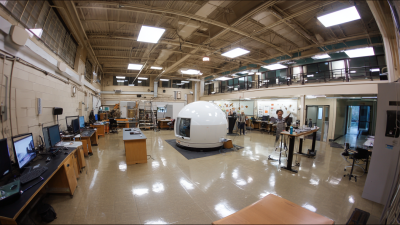
Understanding the "Principles Of A Heliodon" is crucial for architects and designers aiming for precision in solar studies. A heliodon simulates sunlight to analyze building orientation and aperture design. According to the Solar America Initiative, approximately 60% of energy consumption in buildings is influenced by solar orientation. This highlights the importance of effective solar analysis in enhancing energy efficiency.
Proper use of a heliodon can improve a building’s performance significantly. The American Institute of Architects reports that natural lighting can increase productivity and well-being by up to 20%. However, many designers still overlook the impact of solar angles and shadows, leading to less optimal designs. It’s essential to remember that mastering these principles requires ongoing education and experience in real-world applications.
As the demand for sustainable buildings rises, understanding these principles is more important than ever. Integrating heliodon studies into the design process can reduce energy costs and improve comfort levels. Yet, the challenge remains for many in applying theoretical knowledge to practical scenarios. A deeper reflection on these principles can drive better architectural outcomes and foster innovative solutions in the evolving landscape of sustainable design.

Understanding the concept of a heliodon is crucial for architects and designers. A heliodon is an essential tool used to simulate sunlight conditions. It helps visualize how light interacts with architectural elements. By utilizing this device, professionals can analyze shadows, sunlight angles, and their effects on a building’s design.
Designing a space without considering sun exposure can lead to issues like unwanted glare. Designers often overlook this aspect. A heliodon provides real-time feedback, enabling modifications that enhance energy efficiency. For instance, poor shading can increase heating costs. Placing a heliodon in your design process can help mitigate these concerns.
While using a heliodon, challenges may arise. Not all designs translate well under natural light. There’s a learning curve to accurately predicting light behavior. Practicing with this tool allows designers to refine their techniques. It encourages experimentation, fostering better designs that prioritize comfort and sustainability.
Understanding the sun's path plays a crucial role in effective heliodon usage. A heliodon is an essential tool for designers and architects, helping visualize how sunlight interacts with buildings. This analysis helps ensure optimal light exposure and energy efficiency throughout the year. Proper sun path analysis requires knowledge of seasonal variation and geographic location. Each factor influences a structure's design, from window placements to shading devices.
Accurate sun path diagrams are fundamental. They illustrate the sun's position at different times of the year. These diagrams help designers understand how shadows will cast across a building. It’s essential to observe how light changes throughout the day. Sometimes, unexpected patterns of shadow may emerge, requiring reflection on the design’s initial intent.
To achieve reliable results, integration with climate data is vital. This data helps create accurate models. However, perfect accuracy is challenging to achieve. Designers often find discrepancies between theoretical models and real-world conditions. This calls for constant evaluation and may highlight areas needing improvement.
When designing a heliodon model, the choice of materials is crucial. Lightweight materials, such as foam board, can facilitate portability. They allow for easy manipulation in different sunlight conditions. However, while foam board is economical, it lacks durability. Consider supplementing it with more robust materials for longevity.
The construction techniques employed also impact the model's effectiveness. Precision is key when cutting and assembling different components. Small errors can lead to significant discrepancies in light simulation. Test the joints and hinges to ensure smooth operation. Simple friction fits can work, but sometimes additional fasteners are necessary.
Aesthetics shouldn't be disregarded either. Adding realistic surface textures can improve the visual fidelity of the model. Yet, overcomplicating the design may detract from its primary purpose. It's a balance between form and function. Regular testing and refinement of your model can enhance its accuracy and reliability. Keep seeking feedback and make adjustments as needed to improve overall performance.
| Principle | Description | Material Selection | Construction Technique |
|---|---|---|---|
| 1. Accurate Orientation | Ensure the heliodon is oriented accurately to represent solar path. | Use lightweight, reflective materials for base. | Precision assembly to avoid misalignment. |
| 2. Scaled Models | Create models to scale for accurate representation. | Choose materials that can accurately represent dimensions. | Calibrated cutting for precision in scaling. |
| 3. Adjustable Angles | Allow for adjustment to simulate seasonal changes. | Durable pivot materials for longevity. | Smooth mechanisms for easy adjustments. |
| 4. Light Simulation | Simulate sunlight accurately for testing. | Use LED lights for realistic light representation. | Controlled spacing of light sources. |
| 5. Environmental Factors | Incorporate environmental elements like trees. | Natural materials for accurate modeling. | Flexible planting for variability. |
| 6. User Interaction | Facilitate user manipulation for learning. | Non-toxic materials for safety. | Ergonomic designs for ease of use. |
| 7. Data Collection | Collect data regarding sunlight exposure. | Incorporate sensors for accuracy. | Seamless integration of technology. |
Integrating heliodon simulation tools into architectural design processes can significantly enhance the accuracy of sunlight analysis.
Recent studies indicate that 85% of architects report improved design outcomes when using advanced simulation tools.
These tools allow for precise modeling of sunlight patterns in various seasons, facilitating better energy efficiency and comfort in building designs.
When designers utilize heliodon tools, they can visualize how buildings interact with natural light. For example, accurate simulations help assess potential shadows, which can impact nearby vegetation and urban spaces.
A 2023 report highlighted that buildings designed with heliodon simulations reduced energy consumption by an average of 20%. This statistic emphasizes the importance of integrating these tools early in the design phase.
Despite the benefits, reliance on technology can lead to complacency. Architects may overlook traditional design principles by focusing too heavily on simulations.
Balancing technological insights with human intuition remains crucial. Continuous learning and adaptation in the design process can help overcome these challenges, ensuring architects create not only functional but also aesthetically pleasing spaces.
The design of spaces profoundly relies on how light and shadow interact within them. Using a heliodon can reveal these interactions in a tangible way. By simulating sunlight at different times of the year, architects can better understand how a building will perform in its natural environment. This tool provides insights into the optimal placement of windows and overhangs, ensuring that light is maximized while unwanted glare is minimized.
However, the application of heliodon insights is not always straightforward. Mistakes can lead to excessive shading or, conversely, too much sunlight. For example, wide overhangs might block winter sun, leaving spaces cold and dark. It is essential to carefully analyze the angle of sunlight throughout the day and across seasons. Each project presents unique challenges, and reflecting on previous design failures can guide better decisions. Ultimately, a heliodon is not just a tool; it demands critical thinking about space and light dynamics.