Leave Your Message

Top 10 Artificial Sky Suppliers for Global Buyers

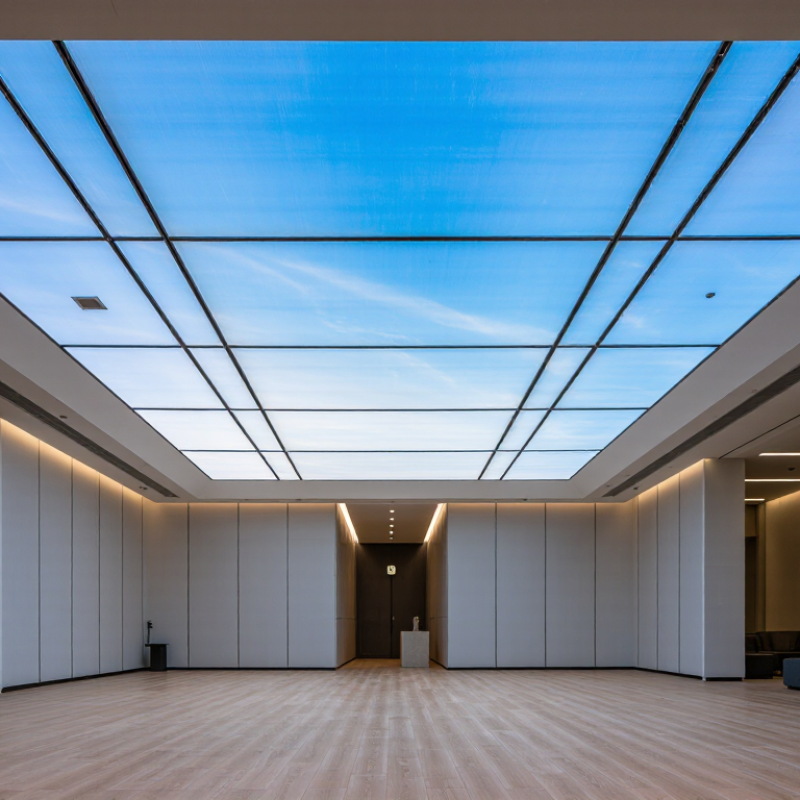
Artificial Sky systems turn blank ceilings into convincing views of daylight, open skies, or distant horizons. For global buyers, the challenge is not simply choosing the brightest panel. Color accuracy, luminance uniformity, glare control, control compatibility, installation depth, and long-term service all shape the result. Details matter. A blue ceiling can still feel artificial when its gradients are uneven or its light clashes with nearby finishes.

The UNEP Global Status Report for Buildings and Construction reports that buildings represented about 34% of global energy demand and 37% of energy- and process-related CO₂ emissions in 2022. Those figures describe the wider building sector, not the Artificial Sky market. Still, they underline why buyers should compare system performance, operating requirements, and maintenance—not appearance alone. Not just brightness. A supplier’s technical documentation and project references deserve close scrutiny.

Lighting researcher Dr. George C. Brainard has described light as “the most powerful synchronizer of the human circadian system.” That insight makes timing, spectrum, and exposure important considerations, while an Artificial Sky should not be treated as a medical intervention. This Top 10 guide examines suppliers through practical criteria: documented specifications, customization, installation support, warranty clarity, and evidence from completed projects. Some product claims can be difficult to compare consistently. That gap matters. Buyers should request measurable data and sample the system in the actual room before committing.
Top 10 Artificial Sky Suppliers for Global Buyers

Artificial Sky Systems: Main Types, Components, and Performance Metrics

Artificial sky systems generally use LED sky panels, backlit translucent ceilings, or large-format display ceilings. LED panels provide a stable, diffuse field; stretched ceilings hide light sources behind a glowing membrane. Display systems can show clouds or changing skies, but image realism depends on viewing angle and content. Typical assemblies include LED arrays, diffusers or light guides, drivers, sensors, and dimming controls. The ceiling may look convincing, yet still feel flat.

Evaluate luminance uniformity, correlated color temperature, color rendering, flicker, glare, and control range. The IES LM-83-12 method defines sDA300/50% as daylight availability at 300 lux for at least 50% of occupied hours. It also defines ASE1000,250 for direct-sun exposure above 1,000 lux for more than 250 hours. These are daylight metrics, not pass-or-fail tests for artificial ceilings, but they offer useful comparison points. CIE S 026/E:2018 defines melanopic equivalent daylight illuminance, which can help describe a system’s light spectrum. Still, a sky ceiling is not daylight.

Tips: Request measured luminance and flicker data, not only renderings. Check the ceiling from seated eye level, and test dimming at dawn-like settings. A little color mismatch can be surprisingly visible.
CIE’s 15 Standard Sky Models and Their Use in Artificial Sky Design

Top 10 Artificial Sky Suppliers for Global Buyers

CIE’s 15 Standard Sky Models and Their Use in Artificial Sky Design

Artificial skies help laboratories reproduce daylight conditions for comparing windows, shading systems, and interior surfaces. CIE S 011/E:2003, also published as ISO 15469:2004, defines 15 standard sky luminance distributions. The models are arranged in three groups: five overcast, five intermediate, and five clear skies. A useful framework.

For designers, the distinction matters. An overcast model tests diffuse light across a room, while clear-sky models capture stronger directional contrasts. CIE’s specification describes how luminance varies across the sky dome, giving suppliers a technical basis for configuring panels and calibration procedures. Buyers should ask for measured luminance maps, sensor accuracy, and repeatability data, not just a claim of “daylight simulation.” Small calibration errors can distort results.

A realistic setup also needs practical checks. Compare readings at several points, including near the horizon and zenith, and document lamp aging and room reflections. These details affect repeatability. The standard offers reference distributions, not a guarantee that every installation behaves identically. That limitation is easy to overlook. CIE’s model is a benchmark; matching it in a physical room still takes careful measurement and occasional adjustment.

Buyer Benchmarks: CCT, CRI, Luminance Uniformity, and Control Options

When buyers compare artificial sky suppliers, published numbers matter only when test conditions are clear. Correlated colour temperature (CCT) should suit the intended scene: neutral 4000–5000 K often works in shared work areas, while daylight-like 5500–6500 K may feel brighter. But cooler is not automatically better. Ask whether CCT is fixed or tunable, and request measurements at each setting. CCT is not enough. For colour-critical interiors, CRI 90 or higher is a useful screening point; ask for R9 data when saturated reds matter. A single CRI figure can hide weaknesses.

Luminance uniformity needs an actual measurement plan. Request readings across a grid, including corners and panel joints, and clarify whether results use minimum-to-average or minimum-to-maximum ratios. Those methods are not interchangeable. Test it in context. View a full-size sample from normal seating distance; small panels can conceal visible seams. Check dimming range, flicker performance, scheduling, and control compatibility before procurement. A smooth demo is not enough. Get a written commissioning procedure and confirm who handles calibration after installation. I may give too much weight to mock-ups, but they can reveal issues polished specification sheets miss. Keep acceptance criteria in the purchase documents, not only in a sales conversation.

Top 10 Artificial Sky Suppliers for Global Buyers

Buyer Benchmarks: CCT, CRI, Luminance Uniformity, and Control Options

The chart compares representative CRI and luminance-uniformity values for ten anonymous specification profiles. These are illustrative procurement benchmarks, not verified supplier ratings. Uniformity is expressed as minimum-to-average luminance; request product-specific photometric reports before comparing offers.

Profile Example CCT range Example control options
Profile A3000–6000 KOn/off, 0–10 V dimming
Profile B2700–6500 KDALI-2, tunable white
Profile C4000–6500 KOn/off, DALI-2
Profile D2700–5000 K0–10 V dimming, tunable white
Profile E3000–6500 KDALI-2, scene control
Profile F3500–6500 KOn/off, 0–10 V dimming
Profile G2700–6500 KDALI-2, tunable white, scenes
Profile H3000–5000 KOn/off, scene control
Profile I2700–6000 K0–10 V dimming, DALI-2
Profile J4000–6500 KDALI-2, tunable white, scenes

Top 10 Artificial Sky Suppliers Compared by Applications and Global Support

Artificial sky suppliers differ less by appearance than by application fit. For clinics, buyers should check stable color rendering, low glare, cleanable surfaces, and control settings that suit examination rooms. Offices need broad, even illumination across desk height, while hotels may prioritize warmer scenes and simple room controls. Transit and retail projects place greater weight on large-area uniformity, installation speed, and replacement access. Small differences matter.

A useful comparison of ten suppliers should record tested luminance, color-temperature range, dimming behavior, ceiling integration, warranty terms, and service coverage by region. Ask for a full-size sample; a small showroom panel can hide seams and reflections. The International Energy Agency’s 2023 buildings analysis reports that buildings account for about 30% of global final energy use and 26% of energy-related emissions. That is not a direct measure of artificial-sky performance, but it makes power demand and controls relevant procurement questions. Request measured system watts per square metre, not just LED efficacy. Also confirm spare-part lead times, commissioning support, and who handles faults after installation. Global support sounds reassuring. Yet local response times often decide whether a failed panel stays dark for days. Some supplier data sheets omit these details, so buyers should treat comparisons as provisional until they verify project references and service commitments.

Top 10 Artificial Sky Suppliers for Global Buyers - Top 10 Artificial Sky Suppliers Compared by Applications and Global Support
No. Anonymous Supplier Profile Typical Artificial-Sky Solution Common Applications Typical Global Support Model Procurement Considerations
1 Architectural LED sky-panel specialist Backlit ceiling panels using LEDs and diffusing layers to create a bright, sky-like appearance. Offices, healthcare interiors, schools, retail spaces, and windowless rooms. May provide remote design assistance and ship components internationally; on-site installation is usually project- and region-dependent. Confirm panel dimensions, light distribution, driver compatibility, replacement-part availability, and local electrical compliance.
2 Stretch-ceiling and luminous-membrane provider Translucent ceiling membranes installed below a light source; printed or illuminated finishes can suggest open sky. Hotels, restaurants, lobbies, wellness spaces, and large interior renovations. Often works through local installers or regional distributors; installation expertise and service coverage vary by market. Check ceiling access, substrate and plenum requirements, fire documentation, cleaning guidance, and installer training.
3 Daylight-simulation system integrator Integrated ceiling systems combining luminaires, optics, controls, and sometimes rendered sky imagery to simulate daylight. Healthcare, offices, education, transport facilities, and other spaces with limited daylight access. Support may include lighting design, controls commissioning, and partner-led installation; confirm service availability in the project country. Request photometric data, control-system details, commissioning scope, and evidence for any health or wellbeing claims.
4 Tunable-white lighting supplier LED sky-ceiling or panel systems with adjustable white-light color temperature and intensity. Workplaces, classrooms, clinics, and interiors where lighting scenes change during the day. International projects may be supported through lighting representatives, controls partners, or remote technical teams. Verify the tunable range, dimming behavior, control protocol, flicker performance, and compatibility with the building system.
5 Large-format LED display integrator High-resolution LED display surfaces that show sky imagery or moving outdoor scenes as part of an architectural ceiling. Entertainment venues, hospitality, retail flagships, public spaces, and immersive environments. Typically requires specialist design and commissioning; international support often depends on local AV integrators and service agreements. Assess viewing distance, pixel pitch, heat and power loads, content workflow, maintenance access, and spare-module logistics.
6 Architectural glazing and skylight contractor Daylight-admitting roof or façade glazing; some projects combine real daylight with interior diffusers or lighting controls to create a sky effect. Atriums, commercial buildings, transport hubs, and projects where actual daylight is feasible. Usually project-based, with engineering and installation coordinated through local construction teams and specialist contractors. Review structural design, thermal and solar performance, waterproofing, glare control, access, and local building codes.
7 Fiber-optic and star-ceiling specialist Fiber-optic points or small light sources embedded in ceilings to create star fields and decorative night-sky effects. Residential feature ceilings, hotels, spas, cinemas, and themed interiors. Components can often be shipped internationally; installation may require a trained local contractor or specialist crew. Check light-source access, fiber routing, desired star density, dimming options, and maintenance responsibilities.
8 Custom printed-lightbox fabricator Custom-sized illuminated panels or lightboxes with printed sky imagery and diffused backlighting. Retail, hospitality, healthcare, exhibitions, and retrofit projects with defined ceiling openings. Can often support remote artwork and specification review; fabrication, shipping, and installation are arranged per project. Ask for color consistency, image resolution requirements, replacement-print options, shipping protection, and warranty terms.
9 Building-controls and lighting integrator Controls and integration for artificial-sky luminaires, including dimming schedules, scene selection, and links to building-management systems. Large offices, campuses, hospitals, hotels, and multi-building portfolios. Regional engineering partners may provide installation and commissioning; remote monitoring depends on the selected system and contract. Confirm supported protocols, cybersecurity requirements, commissioning documentation, and long-term software support.
10 Turnkey interior fit-out contractor Coordinated supply and installation of artificial-sky ceilings as part of a wider interior construction package. Commercial renovations, hospitality projects, healthcare fit-outs, and multi-site interior programs. Cross-border delivery may be managed through local subcontractors; coverage, warranties, and aftercare should be confirmed for each location. Define scope boundaries, responsibility for permits, installation quality checks, handover records, and post-installation service.

Note: These are anonymous supplier categories, not named companies or a verified market ranking. Capabilities and international service coverage vary by provider, product, and project location; confirm specifications and support commitments directly during procurement.

How to Verify Supplier Claims Against Photometric Data and Compliance Standards

When comparing artificial sky suppliers, treat photometric claims as testable evidence, not brochure language. Request an IES or LDT file for the exact panel, diffuser, and operating setting being quoted. Compare reported luminance, uniformity, correlated color temperature, and color rendering with the room’s viewing distance and intended use. Numbers need context. Ask for raw files. A rendered blue ceiling cannot show whether bright patches appear near panel edges. Check measurement conditions, including detector position, ambient light, warm-up time, and calibration date. Where project risk warrants it, ask a qualified lighting professional to compare the file with independent measurements.

Compliance is similarly specific. Ask which electrical safety, electromagnetic compatibility, photobiological, and material requirements apply in the destination market. Request current test reports tied to the exact model. Check report numbers, issuing laboratory, test dates, and exclusions. Certificates alone do not verify every configuration. Confirm that drivers, controls, dimming range, and installation conditions match the tested setup. One awkward detail often gets missed: replacement diffusers may change light output or color. Ask the supplier to document such changes, even if the answer feels inconvenient. It is easy to over-trust a neat spreadsheet. If data is incomplete, record the gap and request further testing before approving a large order.