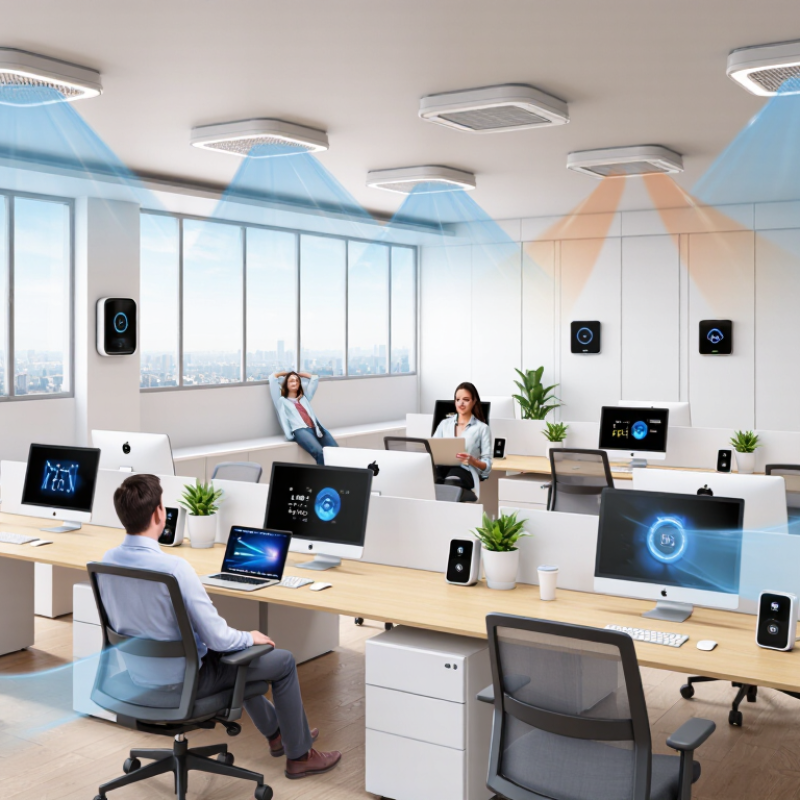
Choosing a Thermal Comfort Measuring System is not simply a matter of buying sensors. It is a decision about evidence, occupant health, energy use, and measurement credibility. The system should capture air temperature, mean radiant temperature, relative humidity, and air speed. It should also record occupant feedback, clothing levels, and activity patterns. A warm office at 28°C may feel acceptable near a moving fan, yet uncomfortable beside a cold glass wall.
The stakes are substantial. The International Energy Agency’s Global Status Report for Buildings and Construction reports that buildings consume about 30% of global final energy. Heating, cooling, and ventilation remain major contributors. Better comfort data can support careful control, but measurement errors can waste energy. Small errors matter. A drifting humidity sensor can change the interpretation of an entire study.
Professor Richard de Dear, a leading thermal comfort researcher, is widely associated with this principle: “Thermal comfort is that condition of mind which expresses satisfaction with the thermal environment.” That statement challenges purely mechanical assessments. ISO 7730 and ASHRAE Standard 55 provide recognized frameworks, including PMV, PPD, and adaptive comfort methods. However, no framework fits every building perfectly. Occupants adapt. Buildings behave differently. People also report comfort inconsistently.
A reliable Thermal Comfort Measuring System therefore needs traceable calibration, suitable sensor placement, synchronized data, and transparent uncertainty reporting. It should show what happened at the workstation, not only in a distant ceiling void. The best choice is rarely the most complicated system. It is the one that produces defensible data, reveals uncomfortable patterns, and supports practical decisions. There is still room for doubt. That is useful.
Define the Purpose and Scope of Thermal Comfort Measurement
How to Choose a Thermal Comfort Measuring System
Define the Purpose and Scope of Thermal Comfort Measurement
A reliable system starts with a clear question. Are you investigating complaints, checking a new building, or comparing work areas? Each purpose needs different measurements, locations, and sampling periods. Comfort assessment usually considers air temperature, humidity, air speed, and radiant temperature. Clothing and activity levels also affect how people feel. Ignoring these human factors can produce tidy data with weak meaning.
Define the scope before selecting instruments. Identify the rooms, occupied hours, seasons, and expected comfort zones. In field work, I record conditions near seated occupants, not only beside walls or equipment. I also note sunlight, doors, fans, and changing workloads. A single afternoon may reveal a problem, but it cannot represent every season. That limitation should remain visible in the report. My early plans were sometimes too broad, which made the results difficult to interpret.
Select the Environmental and Personal Variables to Monitor
How to Choose a Thermal Comfort Measuring System
Select the Environmental and Personal Variables to Monitor
A reliable thermal comfort system should measure more than air temperature. Record air temperature, mean radiant temperature, relative humidity, and air speed. These environmental variables shape how people actually feel. ISO 7730 and ASHRAE Standard 55 also recognize clothing insulation and metabolic activity as essential personal variables. A seated office worker in a shirt needs a different comfort setting from someone moving equipment.
Mean radiant temperature deserves special attention. A cool window can make occupants feel cold, even when the air sensor shows 22°C. Air speed matters too. A gentle 0.2 m/s breeze may feel refreshing, while a stronger draft can create complaints. Published occupant-survey data from the Center for the Built Environment shows that thermal comfort remains one of the most frequently reported indoor-environment concerns. The 2023 Global Status Report for Buildings and Construction also links buildings with about 34% of global energy demand, making accurate monitoring important for both comfort and efficiency. Numbers alone do not explain every complaint.
Tips: Place sensors near occupied zones, not beside vents or windows. Log readings at short intervals. Ask occupants about clothing, activity, and sensation. Check calibration regularly. Some data will look inconsistent. Investigate it before deleting it. One overlooked variable can distort the entire assessment.
Compare Sensors, Instruments, and Measurement Methods
How to Choose a Thermal Comfort Measuring System
A useful system begins with the question: what decision must the data support? For compliance, measure air temperature, mean radiant temperature, humidity, and air speed. Add clothing insulation and metabolic rate when calculating PMV or PPD. ISO 7730 defines these variables for evaluating indoor thermal comfort. Its method predicts dissatisfied occupants, not personal experience. That difference matters.
Compare sensors by accuracy, response time, placement, and calibration records. A globe thermometer can estimate radiant effects, while a separate air-speed sensor reveals drafts near a workstation. A simple temperature logger is cheaper, but it may miss sunlight, vertical gradients, and short discomfort events. Field instruments should follow measurement guidance in ISO 7726. Small details matter. A sensor placed beside a supply diffuser can distort the room’s story.
Compare methods, too. The PMV model offers repeatable results, while direct occupant surveys capture adaptation and expectation. The Global Thermal Comfort Database II contains 107,583 observations from 23 countries and 52 field studies, showing why local feedback should not be ignored (Building and Environment, 2018). In practice, I would combine calibrated instruments with brief surveys. It is less elegant, perhaps. Yet a comfortable reading can still hide complaints. I have seen measurement plans become overly technical and lose the people they were meant to represent.
Assess System Accuracy, Usability, and Data Management
How to Choose a Thermal Comfort Measuring System
A reliable system should measure more than temperature. It should capture humidity, air speed, radiant conditions, and occupant responses. Accuracy begins with calibration records and traceable reference instruments. Ask how often sensors require calibration, and check whether results remain stable across repeated tests. Small placement errors can distort readings near windows, vents, or warm equipment. Test the system in realistic rooms, not only in a controlled laboratory.
Usability matters during busy site assessments. A clear interface reduces setup mistakes and helps technicians notice missing readings. The display should show sensor status, battery condition, and sampling intervals without hiding important warnings. Data export should use common formats, with timestamps, location notes, and unit settings included. Data management is often overlooked. It should not be. Secure storage, access controls, and simple backup procedures protect the evidence behind each conclusion. Poor labels can weaken excellent measurements.
Tips: Create a short field checklist before purchasing. Record sensor height, room conditions, clothing assumptions, and occupant activity. Compare duplicate measurements in one location to identify unexpected variation. Do not trust a neat graph automatically. Real buildings are uneven, and some readings will be inconvenient or incomplete. Review outliers carefully instead of deleting them immediately. A system that saves raw data allows later verification, correction, and independent review. When possible, let several users operate the equipment. Their feedback may reveal usability problems that specifications miss.
How to Choose a Thermal Comfort Measuring System
Assess System Accuracy, Usability, and Data Management
The chart shows commonly used accuracy targets for thermal-environment measurements based on ISO 7726 guidance:
air temperature ±0.5°C, mean radiant temperature ±2°C, relative humidity ±5%, and air velocity ±(0.05 m/s + 5% of the reading).
When selecting a system, also evaluate sensor setup, calibration traceability, deployment time, battery life, export formats,
timestamp consistency, metadata capture, and the ability to manage and audit long-term datasets.
Plan Installation, Calibration, and Ongoing Evaluation
How to Choose a Thermal Comfort Measuring System
Plan installation before purchasing instruments. Thermal comfort depends on air temperature, radiant temperature, humidity, air speed, clothing, and activity. ASHRAE Standard 55 and ISO 7730 recommend evaluating these variables together. Place sensors near the occupied breathing zone, away from windows, supply diffusers, heaters, and direct sunlight. Record room orientation, occupancy patterns, and surface temperatures. Small details matter.
Calibration needs a documented process. Use reference instruments with traceable certificates, and compare readings before deployment. Log calibration dates, uncertainty, response time, and measurement locations.
Check the basics. A practical field check should follow relocation, maintenance, battery replacement, or unusual readings.
The ASHRAE Global Thermal Comfort Database II contains more than 80,000 field observations, showing how valuable real occupant feedback can be beside instrument data. Numbers alone cannot explain why one corner feels cold.
Ongoing evaluation should combine sensor trends with short occupant surveys. Review results across seasons, work schedules, and different zones. The International Energy Agency reported that buildings accounted for about 30% of global final energy demand in 2022, so comfort improvements should not ignore energy use.
A mistake worth admitting: a clean dashboard can still hide poorly positioned sensors. Recheck the installation physically. Compare complaints with measurements, then adjust the monitoring plan instead of forcing every result into one comfort model.

 Sensor
 Measuring Instruments
 Measurement Systems
 Architectural Physics Laboratory