Leave Your Message

China Top Thermal Comfort Measuring Instrument Manufacturers

Choosing a reliable Thermal Comfort Measuring Instrument requires more than comparing prices or sensor counts. China’s leading manufacturers now supply systems for offices, laboratories, hospitals, factories, and public buildings. Their equipment may measure air temperature, relative humidity, air speed, radiant temperature, and personal parameters such as clothing and metabolic rate.

The numbers matter.

Professor P. Ole Fanger, a leading authority in thermal comfort research, described thermal comfort as “that condition of mind which expresses satisfaction with the thermal environment.” This statement remains highly relevant. A precise instrument can record a cold draft near a window, uneven radiant heat beside a glass wall, or stagnant air around a workstation. Yet it cannot fully explain why two occupants respond differently in the same room.

That limitation deserves attention. A dependable Thermal Comfort Measuring Instrument should support recognized methods, including PMV, PPD, operative temperature, and local discomfort assessment. Manufacturers should also provide calibration records, clear software documentation, stable probes, and practical after-sales support. Compliance with suitable ASHRAE and ISO requirements can strengthen confidence, but it should not replace independent verification.

This guide reviews China’s top thermal comfort measuring instrument manufacturers through technical capability, product design, calibration practice, application experience, and customer reliability. It considers real working details, such as probe response time, wireless stability, data export, and field installation. Some product claims may appear impressive. They still require careful testing. The best choice is rarely the instrument with the longest feature list. It is the system that produces credible data under actual conditions and helps professionals make better environmental decisions.
China Top Thermal Comfort Measuring Instrument Manufacturers

Definition and Role of Thermal Comfort Measuring Instruments

China Top Thermal Comfort Measuring Instrument Manufacturers

Definition and Role of Thermal Comfort Measuring Instruments

Thermal comfort measuring instruments assess how people experience indoor environmental conditions. They record air temperature, relative humidity, air speed, and mean radiant temperature. Some systems also calculate operative temperature and predicted comfort indices. These values help engineers compare real conditions with accepted building standards.

A reliable assessment needs more than one sensor. For example, a warm wall can affect comfort even when room air feels normal. A globe thermometer can capture radiant heat near windows, while an anemometer detects uncomfortable drafts. During field inspections, technicians should place instruments near occupied zones, away from vents and direct sunlight. Calibration records matter. So does sensor response time.

These instruments support HVAC design, building commissioning, workplace evaluations, and energy improvements. They can reveal uneven temperatures between a desk and a nearby corridor. They also help verify whether ventilation changes improve comfort without wasting energy. However, measurements cannot fully represent personal experience. Clothing, activity level, age, and expectation influence thermal sensation. A quiet office may feel comfortable to one person and chilly to another.

That limitation deserves attention. I have seen teams trust a single temperature reading too quickly. It looked precise, but it described only one location and one moment. Good practice combines instrument data, repeat measurements, and occupant feedback. Clear methods make the results more credible and useful.

Key Technologies Used in Thermal Comfort Measurement

China Top Thermal Comfort Measuring Instrument Manufacturers

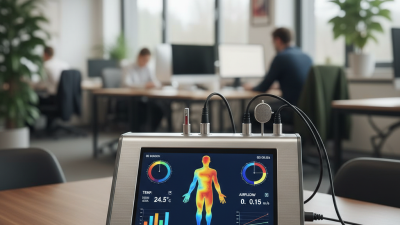
Thermal comfort instruments turn personal sensations into measurable environmental data. Reliable systems combine air temperature, mean radiant temperature, humidity, and air speed sensors. A globe thermometer estimates radiant heat from surrounding surfaces, while an anemometer captures airflow near occupants. Operators should place sensors at ankle, waist, and head height in seated spaces. Small placement errors can distort results.

Modern equipment also uses data logging, wireless communication, and automatic index calculation. Sensors feed software that estimates PMV and PPD under selected clothing and metabolic conditions. Infrared measurement can reveal warm windows, cool floors, or uneven wall temperatures. It is useful, but reflective surfaces may mislead readings. Calibration remains essential. A sensor drifting by 0.5°C can change the comfort interpretation in a quiet office.

Reliable manufacturers should document calibration methods, response time, uncertainty, and operating limits. They should support traceable testing instead of presenting polished numbers without context. Field experience shows that occupants rarely behave like fixed models. People open windows, change posture, or remove a jacket. The instrument cannot explain every reaction. Measurements need site notes, repeated readings, and occupant surveys. That part is often neglected. A practical system is accurate, transparent, serviceable, and honest about imperfect data.

Leading Chinese Manufacturers and Their Product Categories

Chinese thermal comfort instrument manufacturers serve laboratories, factories, offices, and building commissioning teams. Their product categories often reflect different testing needs rather than one universal device.

Portable thermal comfort meters measure air temperature, relative humidity, air speed, and mean radiant temperature. Many models calculate PMV and PPD values for indoor comfort studies.

Globe thermometers help assess radiant heat near windows, machinery, or heated surfaces. Some manufacturers also produce WBGT meters for heat-stress screening in industrial environments.

Another category includes multi-channel data loggers and wireless sensor systems. These tools record conditions over hours or days, revealing temperature swings that a short inspection may miss.

HVAC commissioning teams may choose instruments with probes for supply air, return air, and surface temperature. Laboratory-focused suppliers usually offer higher-resolution sensors and calibration documents.

Field experience shows that probe placement affects results significantly.

A meter beside a doorway can produce misleading readings. Small details matter.

Reliable Chinese manufacturers normally provide calibration options, technical manuals, software support, and clear measurement ranges.

Buyers should check sensor response time, accuracy, battery life, and replacement costs before ordering. Some product pages remain vague about long-term drift, which deserves closer questioning. Field conditions differ. Independent calibration and repeated measurements can expose weaknesses that attractive specifications sometimes hide.

Standards, Accuracy, and Performance Evaluation

China Top Thermal Comfort Measuring Instrument Manufacturers

Reliable thermal comfort instruments must do more than display temperature and humidity. They should support accepted evaluation methods, including ISO 7730 and ASHRAE 55. Chinese manufacturers increasingly develop systems for air temperature, mean radiant temperature, air speed, and relative humidity. These measurements help calculate PMV and PPD in offices, factories, laboratories, and public buildings.

Accuracy depends on sensor quality, placement, response time, and calibration records. A professional supplier should provide traceable calibration certificates and explain measurement uncertainty clearly. During field testing, technicians should avoid placing probes near windows, supply vents, or warm equipment. Small placement errors can change the comfort result. They matter.

Performance evaluation should include repeatability, stability, battery life, data logging, and software reliability. A practical test compares several readings under the same controlled conditions. The instrument should also recover quickly after moving between indoor zones. Clear manuals and responsive technical support indicate stronger professional competence. Certifications alone are not enough.

No instrument is perfect. Sensor drift can appear after extended use, especially in dusty or humid environments. Some published specifications may describe ideal laboratory conditions rather than real buildings. Buyers should question those limits and request sample reports, calibration procedures, and field references. Independent verification remains valuable when comfort data influences design, energy decisions, or occupant complaints.

China Top Thermal Comfort Measuring Instrument Manufacturers - Standards, Accuracy, and Performance Evaluation

Instrument Type Primary Measurements Applicable Standards Typical Measuring Range Typical Accuracy Response Time Performance Evaluation Criteria
Thermal Comfort Meter Air temperature, mean radiant temperature, relative humidity, air velocity, PMV and PPD ISO 7730; ASHRAE 55; EN 16798-1 Temperature: 0–50 °C
Humidity: 5–95% RH
Air velocity: 0.05–5 m/s
Temperature: ±0.3 °C
Humidity: ±3% RH
Air velocity: ±0.05 m/s or ±5%
1–10 seconds, depending on sensor configuration Sensor stability, PMV calculation consistency, repeatability, calibration traceability and conformity with comfort-standard inputs
Globe Thermometer Globe temperature for estimating mean radiant temperature and radiant heat effects ISO 7726; ISO 7730; ASHRAE 55 0–60 °C ±0.2 to ±0.5 °C, depending on sensor and globe construction Approximately 10–20 minutes for a 150 mm globe to approach equilibrium Globe diameter and emissivity, stabilization time, radiation response, installation height and comparison with a reference thermometer
Indoor Air Quality and Comfort Logger Air temperature, relative humidity, carbon dioxide, air velocity and time-stamped comfort data ASHRAE 55; ISO 7726; ISO 16000 series for selected indoor-air measurements Temperature: −10–60 °C
Humidity: 0–100% RH
CO₂: 0–5,000 ppm
Temperature: ±0.4 °C
Humidity: ±3% RH
CO₂: typically ±50 ppm or ±5%
10–60 seconds, depending on logging interval and sensor type Long-term drift, battery endurance, data continuity, time synchronization, memory capacity and field calibration performance
Anemometer for Comfort Studies Low-speed indoor air movement, directional air velocity and turbulence-related measurements ISO 7726; ASHRAE 55 0.05–10 m/s, with low-speed capability preferred for occupied zones ±0.02 m/s or ±5% of reading, whichever is greater 0.5–5 seconds Low-velocity sensitivity, directional response, turbulence measurement capability, probe positioning and calibration at representative air speeds
Black Globe Heat Stress Meter Natural wet-bulb temperature, globe temperature, dry-bulb temperature, WBGT and heat-stress indices ISO 7243; ISO 7726; ASTM E1980 Temperature: 0–50 °C
WBGT calculation: indoor and outdoor environments
Temperature: approximately ±0.5 °C
WBGT: typically ±1.0 °C
5–20 minutes for stable globe and natural wet-bulb readings Compliance with globe and wick specifications, equilibrium time, solar-radiation suitability, wet-bulb maintenance and index calculation accuracy
Radiant Temperature Sensor Surface temperature and directional radiant-temperature differences ISO 7726; ISO 7730 −20–120 °C, depending on sensor design ±0.5 °C to ±1.0 °C 1–30 seconds, depending on contact or infrared measurement method Emissivity correction, viewing angle, response speed, surface reflectivity and agreement with calibrated reference surfaces
Multi-Point Thermal Comfort Monitoring System Simultaneous measurements at head, abdomen and ankle levels, including temperature, humidity and air velocity ISO 7726; ISO 7730; ASHRAE 55 Temperature: 0–50 °C
Humidity: 5–95% RH
Air velocity: 0.05–5 m/s
Temperature: ±0.3 °C
Humidity: ±3% RH
Air velocity: ±0.05 m/s or ±5%
1–10 seconds per channel Channel matching, spatial uniformity, synchronized sampling, sensor interchangeability, data export quality and uncertainty analysis

Note: Performance figures are representative specification ranges for professional thermal-comfort instruments. Actual values depend on sensor configuration, calibration method, environmental conditions and measurement procedures.

Applications Across Buildings, Industry, and Environmental Research

China’s top thermal comfort measuring instrument manufacturers support practical studies in buildings, industry, and environmental research. Their systems commonly measure air temperature, relative humidity, air speed, and globe temperature. These values help calculate operative temperature, PMV, and PPD under recognized comfort methods. The details matter.

In offices, schools, hospitals, and homes, technicians place sensors near occupied zones rather than beside vents or windows. A small height difference can change the result. Instruments with stable probes, clear data logging, and traceable calibration improve confidence during inspections. Field teams also check drafts, radiant heat from glass, and uneven temperatures between desks. Wireless monitoring saves time, but signal loss can still damage a survey.

Industrial applications are less predictable. Manufacturing floors, control rooms, warehouses, and protective clothing tests may involve strong radiant heat or sudden airflow. Reliable instruments should record rapid changes and withstand dust, vibration, and repeated transport. Environmental researchers use them in streets, parks, campuses, and outdoor shelters. They compare shaded and exposed locations, often beside pavement or building walls. However, a single measurement rarely represents a whole site. This is where careful sampling matters, and even experienced teams may need to revise their layout after reviewing the first dataset. Good manufacturers provide calibration support, practical software, and technical guidance without replacing professional judgment.

Thermal comfort assessments typically combine air temperature, relative humidity, air speed, and radiant-temperature measurements. Industrial studies may additionally use globe temperature or WBGT, while environmental research often adds solar radiation and ground or surface temperature. The values represent the number of representative measurement variables commonly used in each application area; they are not mandatory compliance requirements.