What is the Best Air Velocity Measuring Device for Accurate Results?
Choosing the right Air Velocity Measuring Device is crucial for accurate assessments in various applications. These devices play a pivotal role in HVAC systems, environmental monitoring, and industrial processes. The accuracy of air velocity measurements can significantly impact energy efficiency and air quality.
When it comes to selecting an appropriate device, factors like sensitivity, range, and calibration come into play. Some devices are easy to use, while others may require technical expertise. You might find that certain brands excel in specific conditions while falling short in others. This inconsistency can lead to frustration or inaccuracies in your measurements.
Understanding your unique needs is essential. For example, a portable device may work well for field measurements, while a stationary unit could provide better long-term monitoring. Reflecting on past experiences with different devices can help inform your decision. Ultimately, the best choice will not only depend on specifications but also on real-world performance and reliability in diverse situations.
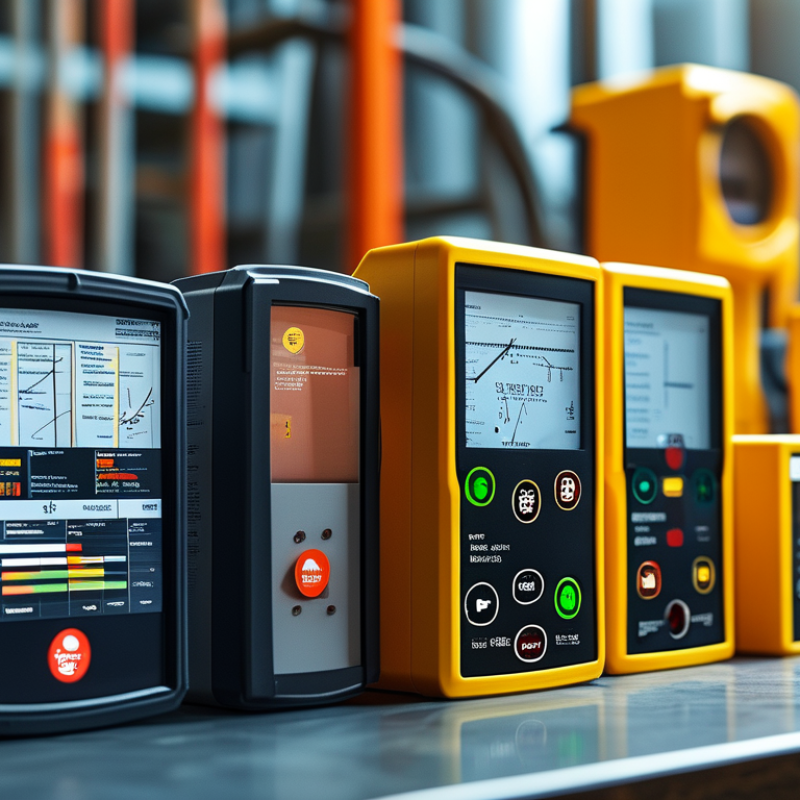
Overview of Air Velocity Measurement Devices
Accurate air velocity measurements are essential in many fields, from HVAC systems to environmental monitoring. Various devices are available, each designed for specific requirements. Pitot tubes, hot-wire anemometers, and vane anemometers are some popular options. Each device has unique features that can affect measurement accuracy.
Pitot tubes are widely used in industrial applications. They measure dynamic pressure, translating that into air velocity. Their design makes them suitable for high-speed airflow environments. However, they may struggle with turbulence. Hot-wire anemometers offer a different approach. They use a heated wire to gauge air speed through temperature changes. This method provides quick measurements but can be sensitive to moisture. Vane anemometers use blades to capture airflow, providing consistent readings but may not be ideal for low-speed scenarios.
Choosing the right device depends on specific needs. Consider factors like the airspeed range and the environment where measurements will take place. Each device has strengths and weaknesses, highlighting the need for careful evaluation. Continuous improvements in technology bring better accuracy, but no method is flawless. Understanding these intricacies is vital for reliable results in air velocity measurements.
Air Velocity Measurement Devices Comparison
Factors Influencing Air Velocity Measurement Accuracy
Air velocity measurement accuracy is influenced by several key factors. One major element is the device calibration. Regular calibration ensures that the readings stay reliable. According to a report by the American Society of Heating, Refrigerating and Air-Conditioning Engineers (ASHRAE), improperly calibrated devices can lead to errors of up to 10% in velocity readings. This inconsistency can significantly affect air quality assessments and HVAC system efficiency.
Another significant factor is the placement of measurement devices. Positioning them in turbulent zones can yield misleading results. A study published by the National Institute of Standards and Technology (NIST) emphasizes the importance of selecting measurement sites away from obstructions and airflow disturbances. One recommended practice is to measure air velocity at sites with uniform flow. Research indicates that in controlled conditions, accurate placement can improve measurement precision by as much as 15%.
Environmental conditions also play a critical role. Temperature and humidity can affect the density of air, which, in turn, impacts velocity readings. Data from the International Journal of Environmental Research reveals that changes in temperature can lead to a variance of around 5% in velocity calculations. Understanding these factors is essential for obtaining accurate results in air velocity measurement.
Comparison of Different Types of Air Velocity Measuring Devices
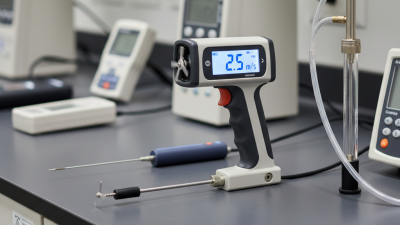
When selecting an air velocity measuring device, understanding various options is essential. Anemometers are the most common. They measure wind speed and direction. There are several types, including thermal, vane, and pitot tube anemometers. Each has its accuracy levels and application areas. For example, thermal anemometers are typically more sensitive and can detect smaller airflow changes.
[Image]
Vane anemometers offer durability and ease of use. However, they might not measure low velocities accurately. Pitot tubes are excellent for high-velocity situations but need proper installation. According to a study by the American Society of Heating, Refrigerating and Air-Conditioning Engineers (ASHRAE), recommending specific devices for particular environments ensures precise measurements. Their data suggests that as many as 30% of measurements can vary based on the equipment used.
Consider ambient conditions too. Humidity and temperature affect readings. A reliable air velocity device should account for these factors. Studies indicate that neglecting environmental variables can lead to measurement inaccuracies up to 20%. Hence, as you choose, reflect on the device’s capability to adapt to specific conditions and its overall accuracy.
Applications of Accurate Air Velocity Measurement in Various Industries
Accurate air velocity measurement is crucial in various industries. In HVAC, for instance, precise airflow data ensures systems operate efficiently. Engineers rely on accurate readings to maintain comfort in buildings. A small error in measurement can lead to energy loss and increased costs.
In the manufacturing sector, the measurement of air velocity is vital for safety. Dust and hazardous materials can accumulate in the air. Workers need to know airflow patterns to minimize exposure. Reliable data helps in designing better ventilation systems, creating safer working environments.
The environmental sector also benefits from accurate air velocity measurements. Monitoring emissions from factories requires precise instruments. The reliability of data can significantly impact regulatory compliance. However, challenges persist, such as variations in atmospheric conditions. Continuous evaluation of measurement tools is necessary to ensure ongoing accuracy.
Guidelines for Choosing the Best Device for Specific Needs
When selecting an air velocity measuring device, it is crucial to consider specific needs for accurate results. Various factors affect choices, such as precision, measurement range, and environmental conditions. A 2022 industry report from the American Society of Heating, Refrigerating and Air-Conditioning Engineers (ASHRAE) emphasizes the significant impact of accurate airflow measurements on energy efficiency in HVAC systems. Poor measurements can lead to energy waste of up to 30%.
Understanding the application is vital. For example, handheld anemometers are convenient for outdoor settings, while fixed installation devices suit HVAC systems. A study by the International Energy Agency (IEA) highlights that fixed devices often provide readings with an accuracy of ±0.5 m/s. That level of precision is necessary for optimizing system performance. However, portable devices may lack this accuracy but are suitable for quick checks.
Moreover, environmental factors such as temperature and humidity can influence measurements. A report from the National Institute of Standards and Technology (NIST) suggests these elements can skew readings by 20%. Users must calibrate devices regularly to minimize these discrepancies. Selecting the right device requires a blend of technical knowledge and application understanding. Reliable measurements depend on careful consideration of these factors.
What is the Best Air Velocity Measuring Device for Accurate Results?
| Device Type |
Accuracy (± m/s) |
Measurement Range (m/s) |
Response Time (s) |
Recommended Use |
| Hot Wire Anemometer |
±0.1 |
0.1 - 20 |
< 1 |
HVAC, Laboratory |
| Pitot Tube |
±0.5 |
0.5 - 50 |
1 - 2 |
Aerospace, Wind Tunnels |
| Vane Anemometer |
±0.2 |
0.5 - 30 |
< 1 |
Indoor Air Flow Measurement |
| Digital Anemometer |
±0.3 |
0.2 - 25 |
< 1 |
General Purpose |
| Thermal Anemometer |
±0.1 |
0.3 - 10 |
< 1 |
Research, HVAC Testing |

 Sensor
 Measuring Instruments
 Measurement Systems
 Architectural Physics Laboratory