Top 10 Wind Speed Sensors for Accurate Weather Monitoring and Analysis
In the realm of meteorological studies and weather monitoring, the importance of accurate data cannot be overstated. Among the various instruments utilized for this purpose, the Wind Speed Sensor stands out as a critical tool for capturing vital information about wind patterns and speeds. Understanding wind dynamics is essential for a myriad of applications, from agricultural planning and construction safety to environmental research and natural disaster management.
This article aims to explore the top 10 wind speed sensors available today, focusing on their features, accuracy, and usability. By carefully selecting the right wind speed sensor, users can enhance their data collection efforts, leading to better forecasting and analysis. As we navigate through the intricacies of choosing the ideal sensor, readers will gain insights into the technological advancements and capabilities that distinguish the best options on the market, ultimately empowering them to make informed decisions for their weather monitoring needs.
Overview of Wind Speed Sensors and Their Importance in Weather Monitoring
Wind speed sensors play a crucial role in weather monitoring, providing accurate data essential for forecasting and climate analysis. These devices measure wind velocity, which can influence various sectors, from agriculture to aviation. According to the National Oceanic and Atmospheric Administration (NOAA), wind speed data is fundamental for understanding weather patterns and predicting severe weather events, such as storms or tornadoes. Inaccurate readings can lead to unforeseen consequences, impacting safety and decision-making processes across industries.
When selecting wind speed sensors, it's vital to consider factors such as measurement accuracy, response time, and durability. A report from the American Meteorological Society indicates that high-quality sensors can improve data accuracy by up to 30% compared to lower-end models. This precision is especially important in research settings where even slight variations can alter data interpretation and weather models.
Tip: Regular calibration and maintenance of wind speed sensors are essential to ensure reliability over time. It is recommended to inspect sensors every six months to maintain their effectiveness. Additionally, placing sensors in open areas away from obstructions can yield more accurate readings, as obstacles can cause wind turbulence that distorts the measurements. Investing in quality sensors and following best practices for installation and upkeep can significantly enhance the reliability of weather monitoring efforts.
Types of Wind Speed Sensors: Anemometers, Ultrasonic, and More
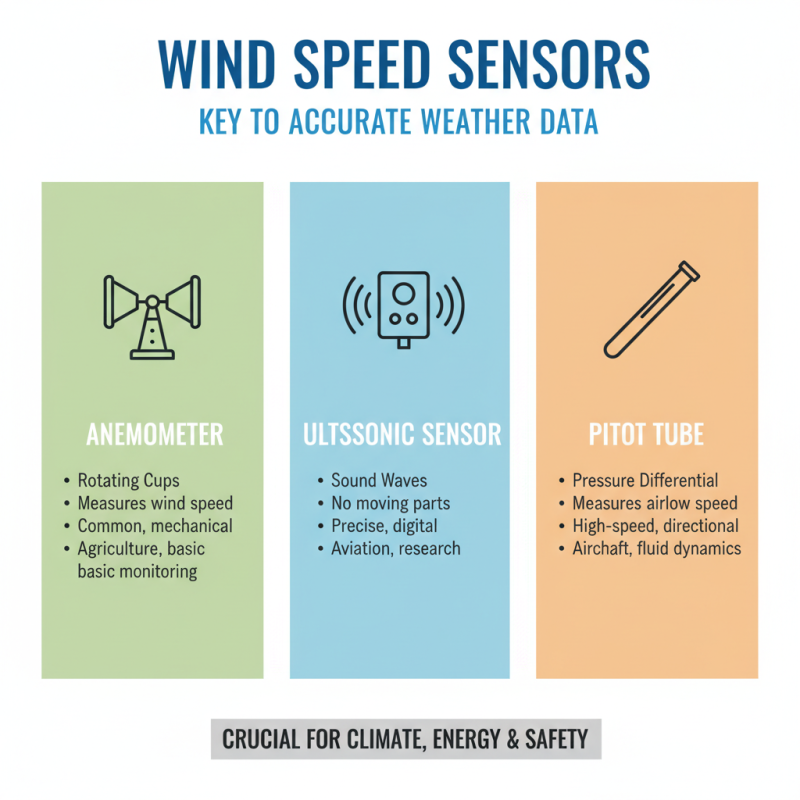
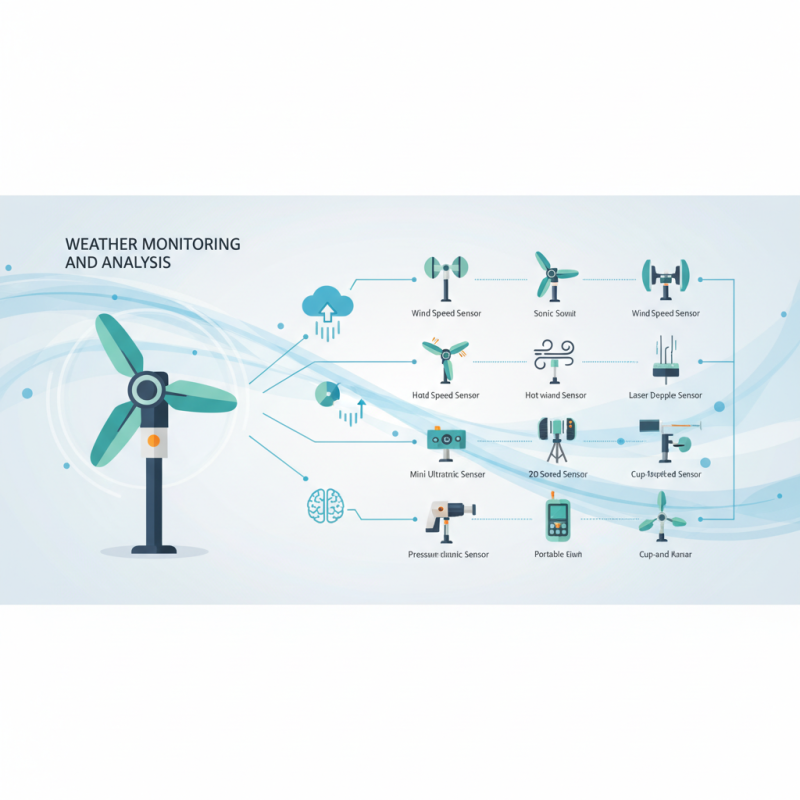
Wind speed sensors play a vital role in accurate weather monitoring and analysis, especially with the increasing importance of climate data in various sectors, including agriculture, aviation, and renewable energy. The primary types of wind speed sensors include anemometers, ultrasonic sensors, and pitot tubes, each serving unique purposes and exhibiting different levels of accuracy based on an application’s specific needs.
Anemometers are among the most traditional wind speed sensors, utilizing mechanical components such as cups or blades that rotate in response to wind flow. According to the World Meteorological Organization (WMO), these sensors can provide reliable data for speeds up to 75 m/s, making them suitable for both urban and rural environments. However, their mechanical parts may wear over time, affecting long-term accuracy. On the other hand, ultrasonic wind sensors operate by sending sound waves between transducers. They measure the time it takes for sound to travel between them, allowing for high precision, even in extreme conditions. Data from the National Oceanic and Atmospheric Administration (NOAA) shows that ultrasonic sensors can capture wind velocities accurately within 0.1 m/s, making them ideal for applications demanding high accuracy, such as in turbine wind assessments.
Pitot tubes, commonly used in aerospace and meteorological studies, measure dynamic pressure to provide wind speed readings based on Bernoulli's principle. They offer a unique advantage in high-speed environments, tracking rapid changes in airflow crucial for aircraft operations and environmental studies. Research indicates that employing a combination of these technologies can optimize data accuracy and reliability, essential for advanced weather prediction models and climate research.
Key Features to Consider When Choosing Wind Speed Sensors
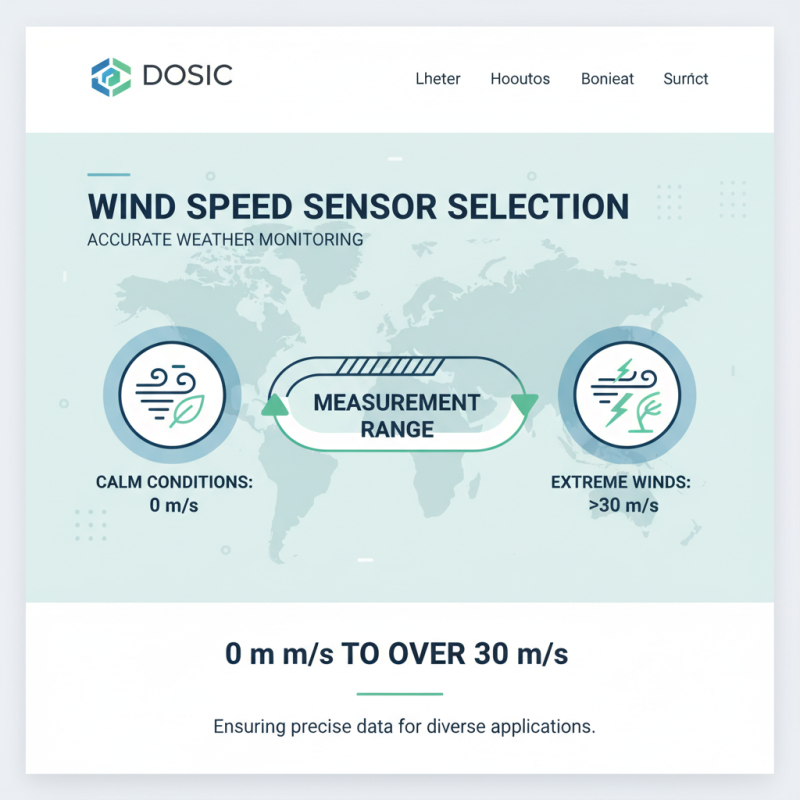
When choosing wind speed sensors for accurate weather monitoring and analysis, there are several key features to consider. One of the most critical aspects is the sensor's measurement range. According to a recent industry report, effective wind speed sensors should be able to measure from calm conditions of 0 m/s to extreme winds exceeding 30 m/s, accommodating the varying conditions experienced across different geographic locations. This flexibility ensures that users, from meteorologists to agriculturalists, can maintain precise data regardless of local weather fluctuations.
Another essential feature is the sensor's response time and accuracy. Studies indicate that sensors with a response time of less than 1 second are ideal for capturing rapid changes in wind conditions. Additionally, accuracy is paramount; sensors should have an accuracy threshold of ±0.5 m/s to deliver reliable data for analyses. This level of precision is especially important in applications such as wind energy generation, where optimal turbine performance is directly correlated to accurate wind speed data, impacting operational efficiency and energy output. Lastly, durability and resistance to environmental factors such as corrosion and extreme temperatures are vital to ensure long-term performance and data integrity, making these sensors reliable tools for various meteorological applications.
Top 10 Wind Speed Sensors for Accurate Weather Monitoring
Accurate weather monitoring is increasingly vital for various sectors including agriculture, aviation, and climate research. Wind speed sensors play a crucial role in this observation process, providing precise measurements that help in forecasting weather patterns and assessing environmental conditions. The best sensors combine advanced technology with user-friendly features, enabling both professionals and enthusiasts to collect reliable data efficiently.
When selecting a wind speed sensor, factors such as measurement range, sensitivity, and durability come into play. High-quality sensors should be able to withstand harsh weather conditions while maintaining accuracy in their readings. Moreover, ease of installation and data retrieval can significantly impact the user experience. Sensors equipped with wireless capabilities allow for seamless data transmission, facilitating real-time monitoring and analysis. As technology continues to evolve, the development of innovative designs and improved functionalities promises to enhance the reliability and efficiency of wind speed monitoring systems.
Top 10 Wind Speed Sensors for Accurate Weather Monitoring
| Sensor Model |
Measurement Range (m/s) |
Accuracy (%) |
Response Time (s) |
Power Supply (V) |
Weight (g) |
| Model A |
0-30 |
±2 |
0.5 |
5 |
150 |
| Model B |
0-25 |
±3 |
0.7 |
12 |
200 |
| Model C |
0-20 |
±1.5 |
0.4 |
5 |
120 |
| Model D |
0-15 |
±5 |
1.0 |
9 |
180 |
| Model E |
0-40 |
±2.5 |
0.6 |
24 |
250 |
| Model F |
0-10 |
±1 |
0.3 |
5 |
90 |
| Model G |
0-35 |
±2 |
0.8 |
12 |
210 |
| Model H |
0-30 |
±3 |
0.5 |
9 |
160 |
| Model I |
0-20 |
±2 |
0.4 |
5 |
130 |
| Model J |
0-50 |
±1 |
0.9 |
15 |
270 |
Applications of Wind Speed Data in Weather Analysis and Research
Wind speed data plays a crucial role in weather analysis and research, enhancing our understanding of atmospheric dynamics and enhancing forecasting accuracy. Accurate wind speed measurement can influence a range of applications, from agriculture to aviation. For instance, a 2020 study published in the Journal of Applied Meteorology found that precise wind speed information can increase the accuracy of predictive models by 25%, which is particularly valuable for storm tracking and disaster preparedness. This is vital as extreme weather events become more frequent due to climate change, necessitating robust monitoring systems.
Moreover, wind speed data is integral to renewable energy assessments, particularly in evaluating the viability of wind farms. According to the Global Wind Energy Council's 2021 report, countries are increasingly relying on accurate wind measurements to optimize turbine placement and maximize energy output. The report states that a mere 1 m/s error in wind speed estimation can lead to significant financial losses in energy generation, highlighting the need for reliable sensors. By improving data collection methods and accurately interpreting wind speed, researchers and meteorologists can better predict weather patterns and transition to more sustainable energy sources.
Top 10 Wind Speed Sensors for Accurate Weather Monitoring
This bar chart displays the average wind speed measurements (in m/s) taken from ten different wind speed sensors. The data illustrates the variation in performance among various sensors, useful for researchers and meteorologists in selecting the best tools for accurate weather analysis.

 Sensor
 Measuring Instruments
 Measurement Systems
 Architectural Physics Laboratory