Top 10 Heat Flux Sensors Buyers Should Consider Now
In today's fast-paced technological landscape, the demand for accurate measurements of heat transfer is surging. Heat Flux Sensors play a crucial role in various industries, including aerospace, automotive, and HVAC. These sensors provide essential data for performance analysis, system optimization, and energy efficiency. Professionals must choose wisely when selecting these instruments.
Understanding the market options can be overwhelming. Numerous types of Heat Flux Sensors exist, each with unique features and applications. Some may excel in specific temperature ranges, while others offer faster response times. Buyers need to evaluate their specific needs carefully. Diligent research can help them avoid costly mistakes.
Ultimately, investing in the right Heat Flux Sensors enhances project outcomes. Users can benefit from improved accuracy. Yet, the variety of choices necessitates careful consideration. Exploring manufacturer reputations and product reviews is important. Proper deliberation leads to informed decisions that foster reliability and success in the chosen applications.
Overview of Heat Flux Sensors and Their Applications
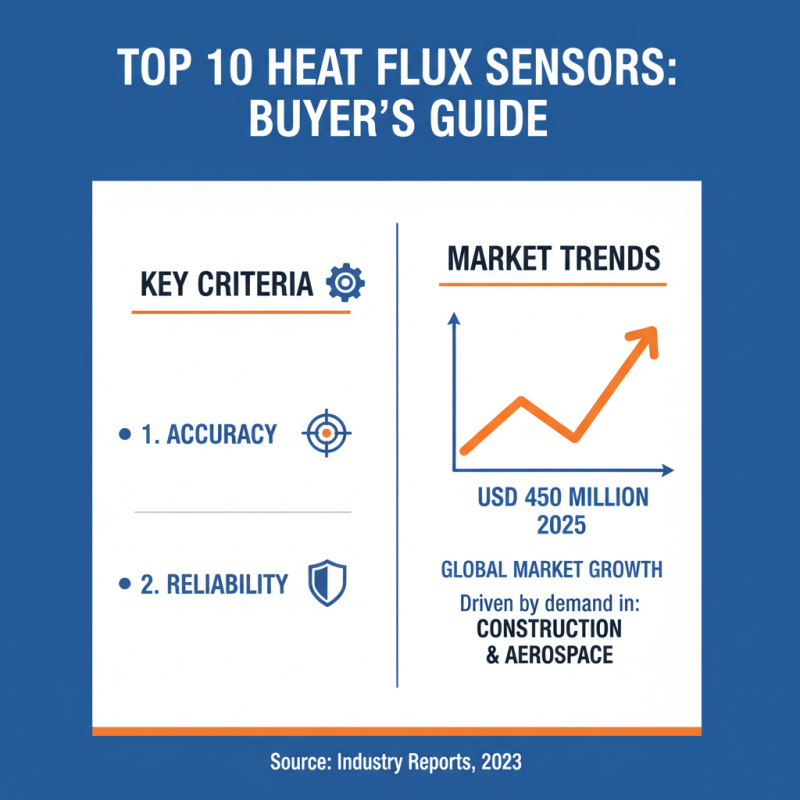
Heat flux sensors play a critical role in various industries, measuring energy transfer. These sensors provide insights into heat flow in materials, crucial for sectors like construction, manufacturing, and energy management. A report by Research and Markets indicates the heat flux sensor market is projected to grow at a CAGR of 6.5% through 2025. This growth reflects increasing demand for energy efficiency and material testing.
Applications of heat flux sensors are wide-ranging. In building energy assessments, they help identify insulation quality. In manufacturing, they ensure quality control in processes involving high temperatures. The aerospace sector also utilizes these sensors for thermal management in engines. High accuracy and reliability in measurements are essential here, as errors can lead to significant cost implications.
Despite advancements, challenges remain. Many sensors still grapple with calibration issues under extreme conditions. Environmental factors can also introduce variability in readings. A comprehensive understanding of these limitations can guide purchasers in choosing the right sensor. Proper integration and maintenance are equally important for optimal performance. Buyers need to weigh specifications against application needs carefully.
Factors to Consider When Choosing a Heat Flux Sensor
When selecting a heat flux sensor, several critical factors must be considered.
Accuracy is paramount; high-quality sensors typically feature an accuracy rating within ±5%.
A study by the International Thermoelectric Society emphasizes the correlation between sensor precision and the reliability of thermal measurements.
This means that slight variations in heat flux readings can lead to significant discrepancies in thermal management systems.
Next, the sensor’s response time plays a vital role. Many applications require immediate feedback on thermal changes.
Sensors with a response time of less than 1 second are preferable for dynamic environments.
Additionally, consider the operating range and environment. For instance, sensors used in industrial settings may need to withstand extreme temperatures and corrosive substances.
As per the latest industry reports, sensors rated for 500°C can provide reliable data in high-heat applications.
Another aspect to reflect on is the installation process. Some sensors require extensive setup, while others can be installed quickly.
Ease of installation can save time and reduce operational downtime, which is crucial in fast-paced workplaces.
Balancing all these factors ensures optimized performance and cost-effectiveness, ultimately affecting the long-term success of thermal management practices.
Comparative Analysis of Key Features in Heat Flux Sensors
When selecting heat flux sensors, buyers should focus on key features.
Precision is crucial. Sensors must provide accurate measurements under various conditions.
Consider the range of temperatures they can handle. A robust sensor should perform well in extreme environments.
Another important aspect is response time.
Fast response times enhance real-time data collection.
This feature is vital for applications where immediate feedback is required.
Be aware that some sensors may not respond quickly enough for dynamic systems.
Calibration also matters. Not all sensors maintain accuracy over time.
Regular calibration can ensure reliability, but it demands time and resources.
Assess whether the sensors offer easy calibration options.
Ultimately, the right balance between precision, response time, and maintenance will lead to successful applications.
Future Trends in Heat Flux Sensing Technology
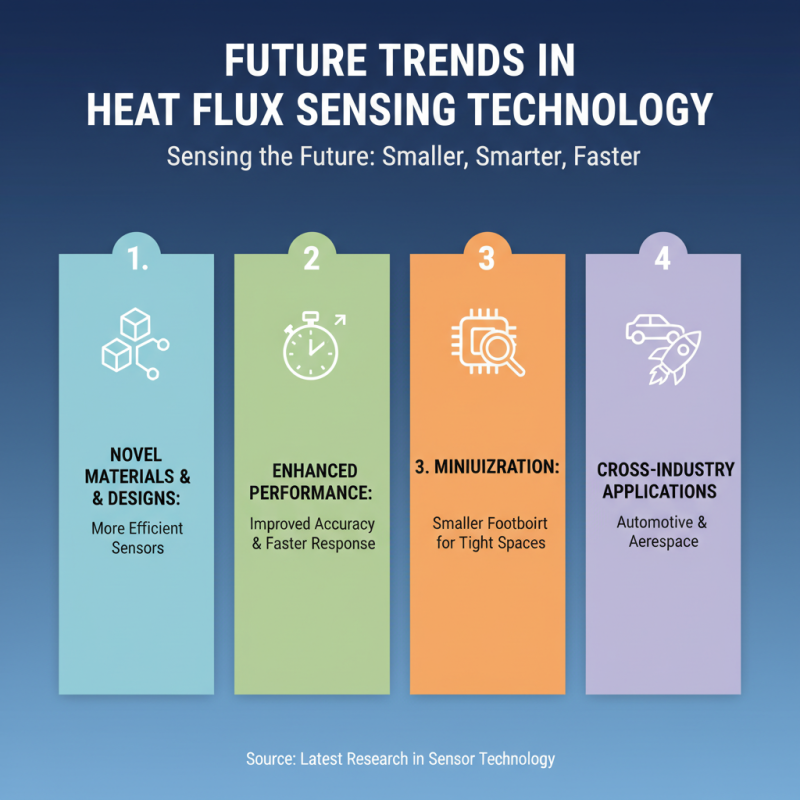
The field of heat flux sensing technology is evolving rapidly. New materials and designs are paving the way for more efficient sensors. These advancements allow for improved accuracy and faster response times. Researchers are focusing on miniaturization, enabling sensors to fit into tighter spaces. This is crucial for applications in various industries, including automotive and aerospace.
Emerging technologies like wireless communication are also making waves. These systems can transmit data in real time without needing a physical connection. This feature enhances usability in remote or hazardous locations. However, security risks arise, necessitating ongoing development in secure data transmission.
Another trend is the integration of machine learning with heat flux sensors. By analyzing vast amounts of data, machine learning algorithms can identify patterns and predict failures. This innovation could lead to predictive maintenance, reducing down-time in critical systems. Nonetheless, the reliability of these algorithms presents challenges that must be addressed.

 Sensor
 Measuring Instruments
 Measurement Systems
 Architectural Physics Laboratory