What is a Multi-Channel Anemometer and How Does It Work?
In the evolving landscape of environmental monitoring, the Multi-Channel Anemometer plays a pivotal role. This advanced instrument measures wind speed and direction across multiple channels simultaneously. According to a report by the International Society for Atmospheric Research, the demand for precise wind measurement tools has surged by 30% over the last five years. This increase reflects a growing awareness of the importance of accurate data for sectors like renewable energy and meteorology.
Dr. Emily Carter, a leading expert in atmospheric sciences, highlights the significance of this technology. She stated, "The Multi-Channel Anemometer is crucial for understanding complex wind patterns." This technology allows researchers to collect data in real-time, offering insights that single-channel devices cannot provide. However, some challenges remain. The complexity of data interpretation can be daunting. It's essential for users to be trained adequately to avoid miscalculations.
As industries push for greater efficiency, the Multi-Channel Anemometer emerges as a vital tool. Yet, the reliance on sophisticated technology raises questions about accessibility and user proficiency. Continuous innovations are necessary, but so is the reflection on how to use these tools effectively.

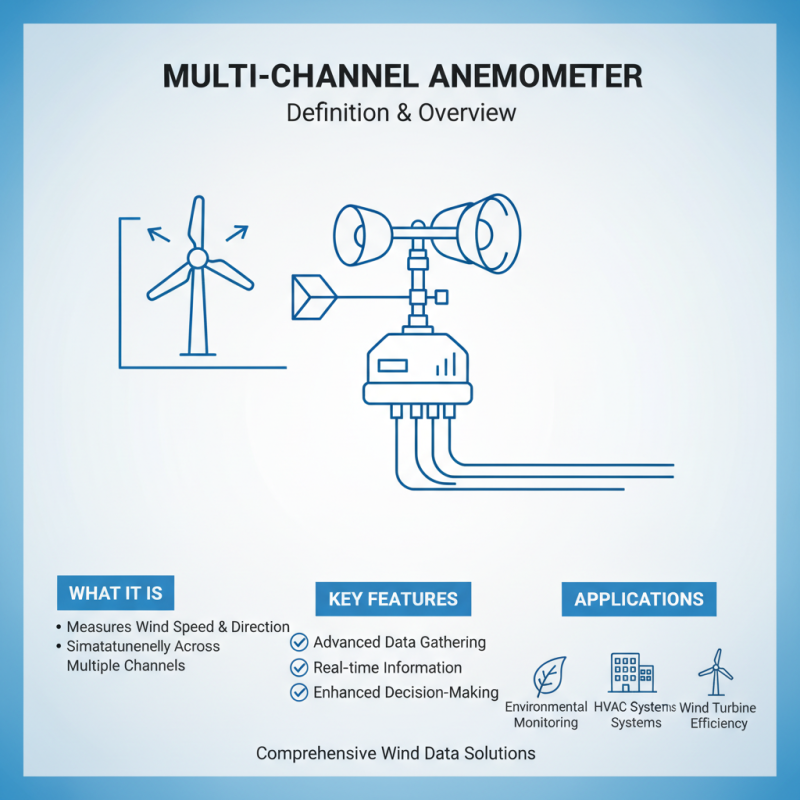
What is a Multi-Channel Anemometer? Definition and Overview
A multi-channel anemometer is an advanced device used to measure wind speed and direction across multiple channels simultaneously. It is designed to gather comprehensive data in various applications, including environmental monitoring, HVAC systems, and wind turbine efficiency assessments. These instruments can provide real-time information, enhancing decision-making processes in industries reliant on accurate wind measurements.
According to industry reports, multi-channel anemometers can improve measurement efficiency by up to 40% compared to single-channel devices. They are equipped with various sensors that capture a plethora of data points. This function is particularly critical in research settings, where data accuracy is paramount. However, complexities in data interpretation may arise, leading to potential misunderstandings if not properly analyzed.
Tips: When selecting a multi-channel anemometer, consider the specific environmental conditions it will face. Ensure it can withstand temperature fluctuations and humidity levels. Regular calibration is vital for maintaining accuracy. A well-calibrated device can significantly reduce measurement errors and enhance data reliability. Always consult user manuals for maintenance best practices.
Key Components of a Multi-Channel Anemometer and Their Functions
Multi-channel anemometers are crucial for measuring wind speed across various points. They consist of multiple sensors that capture real-time data. Each sensor provides precise measurements, essential for applications in meteorology and environmental monitoring.
Key components include the anemometer rotor, which spins in the wind. The rotational speed correlates directly to wind velocity. Another component is the data logger, which stores data from each sensor. This feature allows for the analysis of wind patterns over time. According to industry reports, accurate wind speed measurements can benefit renewable energy forecasting, improving efficiency by 15% in some cases.
Additionally, the calibration system is vital for the accuracy of multi-channel anemometers. Without proper calibration, the results can skew significantly. It’s reported that errors in wind measurement can reach up to 20% in poorly calibrated devices. Users need to regularly maintain and check these systems. Attention to these details is often overlooked, yet critical for reliable data. Therefore, understanding these components is key to leveraging the full potential of a multi-channel anemometer.
What is a Multi-Channel Anemometer and How Does It Work? - Key Components of a Multi-Channel Anemometer and Their Functions
| Component |
Function |
Measurement Range |
Accuracy |
| Sensing Element |
Detects wind speed and direction. |
0 to 30 m/s |
±2% |
| Data Logger |
Records measurements over time. |
N/A |
N/A |
| Display Unit |
Shows real-time wind speed and direction. |
N/A |
N/A |
| Power Supply |
Provides electrical power to the device. |
Battery/AC |
N/A |
| Multi-Channel Interface |
Communicates data across multiple channels. |
N/A |
N/A |
Working Principles: How Multi-Channel Anemometers Measure Airflow
Multi-channel anemometers are sophisticated tools designed to measure airflow in various settings. They utilize several sensors to capture airspeed across multiple channels simultaneously. This allows for a more comprehensive analysis of airflow patterns. Each channel corresponds to a different section of the environment, providing detailed insights into air movement. These instruments can be intricate, yet their basic working principle remains straightforward.
The core of a multi-channel anemometer lies in its use of pitot tubes or hot-wire sensors. A pitot tube measures pressure differences, converting them to velocity data. Hot-wire sensors gauge temperature changes in wire elements exposed to airflow. Both methods enable accurate measurements. However, users need to ensure proper calibration to maintain precision. In outdoor environments, unexpected factors like turbulence can distort readings.
It's essential to recognize that interpreting data from these devices can be challenging. Inconsistent airflow or external variables may lead to surprising results. Operators should be cautious about overanalyzing quick data fluctuations. Taking time to observe trends rather than reacting to immediate results can lead to more meaningful conclusions. Understanding the limitations of measurement tools is key to effective use. This awareness enhances reliability and informs better decision-making.
Airflow Measurements Using a Multi-Channel Anemometer
This bar chart illustrates the airflow measurements captured by a multi-channel anemometer across five different channels. Each channel represents a separate measurement point, providing a detailed view of airflow variation.
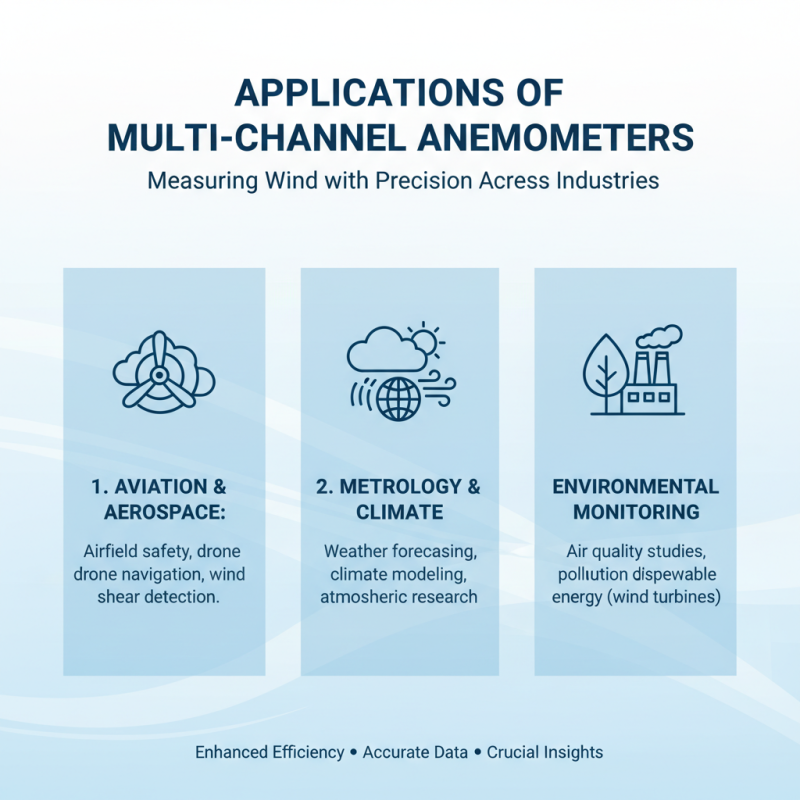
Applications of Multi-Channel Anemometers in Various Industries
Multi-channel anemometers are vital tools in various industries. These devices measure wind speed and direction at multiple points. This capability enhances efficiency and data accuracy, which is crucial for applications in aviation, meteorology, and environmental monitoring.
In the energy sector, these instruments play a crucial role. They help in assessing wind farm sites. Engineers collect data before installation. Understanding local wind patterns ensures optimal turbine placement. In shipping, multi-channel anemometers enhance navigation safety. They provide real-time wind data to vessels. Accurate readings can prevent dangerous situations at sea.
In research, these anemometers aid climate studies. Scientists gather data across multiple locations. This data is important for modeling weather patterns. However, users sometimes face calibration issues. Maintaining accuracy can be challenging. Regular checks are necessary to ensure reliability. The complexity can be daunting for new users, requiring practice to master.
Comparative Analysis: Multi-Channel vs. Traditional Anemometers
Multi-channel anemometers are gaining attention for their efficiency and precision. Unlike traditional models that measure wind speed at a single point, multi-channel devices gather data from several locations simultaneously. This allows for detailed analysis and a better understanding of wind dynamics. According to a recent industry report, multi-channel systems can enhance data collection efficiency by up to 50%.
The comparison between multi-channel and traditional anemometers indicates significant differences. Traditional anemometers may miss variations in airflow due to their singular measurement point. In contrast, multi-channel systems provide a more comprehensive view. However, these advanced devices can be complex. Installation may require specialized skills. Data interpretation can also become overwhelming for users not well-versed in the technology.
Additionally, the cost of multi-channel anemometers can be a deterrent for some industries. While they offer greater detail and insight, the initial investment is higher. A report from the Energy Studies journal noted that adoption rates are improving. Yet, many organizations still rely on traditional models due to budget constraints. As technology continues to evolve, the balance between cost and precision remains a critical consideration for users in various fields.

 Sensor
 Measuring Instruments
 Measurement Systems
 Architectural Physics Laboratory