Why Measuring Comfort Levels Matters for Optimal Wellbeing?
In today's fast-paced world, understanding and "Measuring Comfort Levels" becomes essential for optimal wellbeing. Research shows that environments significantly affect mental and physical health. For example, the World Health Organization states that comfortable environments can reduce stress by up to 30%.
Dr. Emily Hart, a leading expert in psychological comfort, highlights this importance: "Attention to comfort levels can dramatically enhance overall life quality." Her insights underline a growing interest in comfort measurement within various industries.
However, many organizations still underestimate the value of this metric. Despite knowing its significance, they fail to implement effective strategies to measure comfort. This oversight can lead to unrecognized stressors. Clients and employees may suffer in silence, which can affect productivity and satisfaction. As we explore "Measuring Comfort Levels," we must reflect on these gaps and strive for more proactive approaches.
Understanding the Concept of Comfort Levels in Daily Life
Comfort levels play a crucial role in daily life. They impact our mental health and physical wellbeing. A recent study by the Global Wellness Institute highlighted that comfort influences productivity by over 25%. This statistic illustrates that when individuals feel comfortable, they are more engaged and effective in their tasks. However, comfort is often overlooked in fast-paced environments.
Factors contributing to comfort levels include physical space, emotional wellbeing, and socio-environmental elements. For instance, a well-lit office can enhance comfort for workers, leading to improved morale. The World Health Organization states that comfort in various settings can reduce stress and anxiety. Yet, many still ignore ergonomics. This oversight can lead to discomfort, affecting efficiency and overall health.
On the emotional side, comfort must be nurtured intentionally. Social connections and supportive environments foster comfort, as reported in the Journal of Environmental Psychology. These aspects can empower individuals. Nevertheless, it is essential to acknowledge that comfort is subjective. What feels comfortable for one may not feel the same for another. Thus, reflecting on personal comfort needs is vital for an optimal life.
Why Measuring Comfort Levels Matters for Optimal Wellbeing?
| Comfort Level Dimension |
Importance |
Measured Level (1-10) |
Suggestions for Improvement |
| Physical Comfort |
Directly affects health and productivity |
7 |
Adjust seating posture; ergonomic furniture |
| Emotional Comfort |
Affects mood and stress levels |
6 |
Mindfulness practices; supportive social interactions |
| Environmental Comfort |
Influences concentration and creativity |
8 |
Improve lighting; regulate noise levels |
| Social Comfort |
Enhances collaboration and teamwork |
5 |
Encourage open communication; team-building activities |
| Mental Comfort |
Supports mental clarity and decision making |
9 |
Limit distractions; practice prioritization techniques |
The Psychological Impact of Comfort on Wellbeing
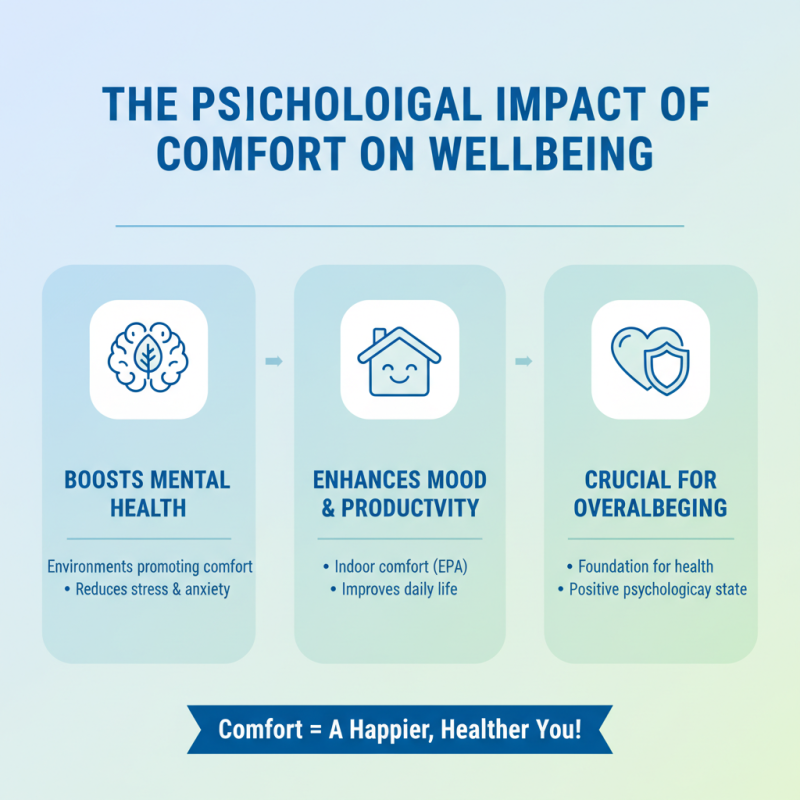
Comfort plays a crucial role in our overall wellbeing. Studies show that environments promoting comfort can boost mental health. A report from the Environmental Protection Agency highlights that indoor comfort affects mood and productivity significantly. Poor comfort levels can lead to stress and anxiety, impacting daily life.
Creating a comfortable atmosphere is essential. Consider the temperature, lighting, and noise levels in your space. Research indicates that a temperature range of 20-22°C is optimal for focus and relaxation. Small changes can yield big results in improving your comfort levels.
Tip: Personalize your space with items that bring joy. Pictures, plants, or soft fabrics can enhance your emotional comfort. Take time to notice how different elements impact your mood. Reflect on what comfort means to you and how you can cultivate it daily.
Factors Influencing Comfort Levels in Various Environments
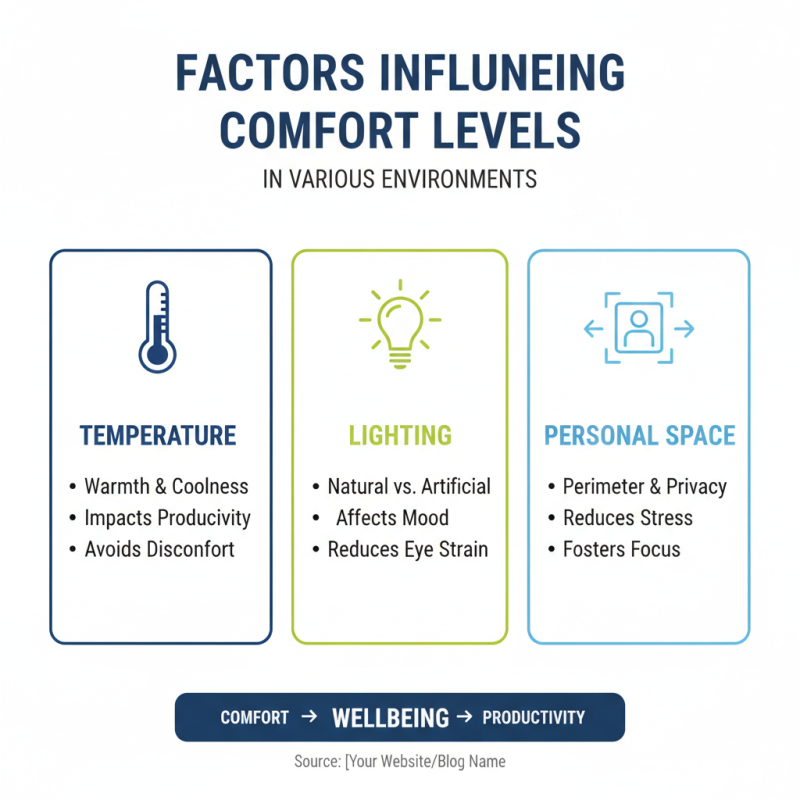
Comfort levels significantly influence our wellbeing in various environments. From the workplace to home, multiple factors shape how we feel. Temperature, lighting, and personal space each play crucial roles. A warm, well-lit room can foster productivity. Conversely, uncomfortable settings may cause stress and distraction.
Environmental noise also impacts comfort. An office buzzing with chatter may hinder focus. In contrast, a quiet space often enhances creativity. Personal factors, like individual preferences, cannot be overlooked. Some people thrive in minimalistic setups; others prefer a cluttered, cozy atmosphere.
It’s essential to recognize these differences. What feels comfortable to one might be overwhelming to another. Regular assessment of comfort levels can lead to immediate improvements in mental and physical health. Identifying triggers of discomfort helps create environments conducive to happiness.
Methods for Measuring Comfort Levels Effectively
Measuring comfort levels plays a crucial role in enhancing overall wellbeing. Understanding how to gauge comfort helps tailor environments to individual needs. Various methods effectively capture these levels, providing insights into physical and emotional states.
Surveys and questionnaires are straightforward tools. They allow individuals to express feelings about their surroundings. Creating specific questions can yield insightful data. For instance, asking about temperature preferences can help in designing comfortable spaces. Observational methods are also vital. Watching body language and facial expressions offers non-verbal cues about comfort.
Tips for measuring comfort: Use a combination of quantitative and qualitative methods. This dual approach provides a more comprehensive picture. Regularly revisit the metrics to adjust strategies accordingly. Engage participants in discussions about their comfort. Their feedback can drive improvements and foster a sense of inclusion.
Remember, comfort is subjective. What works for one may not suit another. Continuous evaluation is required to ensure that comfort levels are met consistently. Reflection on methods used can lead to better understanding and adjustment over time.
Comfort Levels and Wellbeing Metrics
This chart illustrates the importance of measuring various comfort levels, such as physical, emotional, and environmental comfort, in relation to optimal wellbeing. The data reflects survey responses from a sample population assessing their comfort levels in different domains.
Strategies for Enhancing Comfort for Improved Wellbeing
Creating a comfortable environment is essential for wellbeing. When we feel at ease, both mentally and physically, our overall health improves. Small adjustments can lead to significant changes, making our daily lives more enjoyable.
Here are some tips to enhance comfort:
- Pay attention to your surroundings. Declutter your space to create a calming environment. Clutter can cause stress and distraction, hindering your comfort.
- Focus on temperature. Adjusting your home's temperature can significantly affect your comfort. A space that's too hot or too cold can be distracting and uncomfortable.
- Incorporate natural elements. Plants not only beautify your space but also improve air quality. Studies show that having greenery around can reduce stress levels.
Reflect on your daily habits. Are there aspects of your routine that add discomfort? Perhaps you sit for long hours. Maybe your workspace lacks adequate support.
Addressing these concerns can enhance your comfort levels.
Incorporate mindfulness. Taking short breaks to breathe or stretch can improve your mental state. Regular pauses can reduce tension, leading to a more comfortable, productive day.

 Sensor
 Measuring Instruments
 Measurement Systems
 Architectural Physics Laboratory