How to Measure Comfort Levels Effectively in 2026?
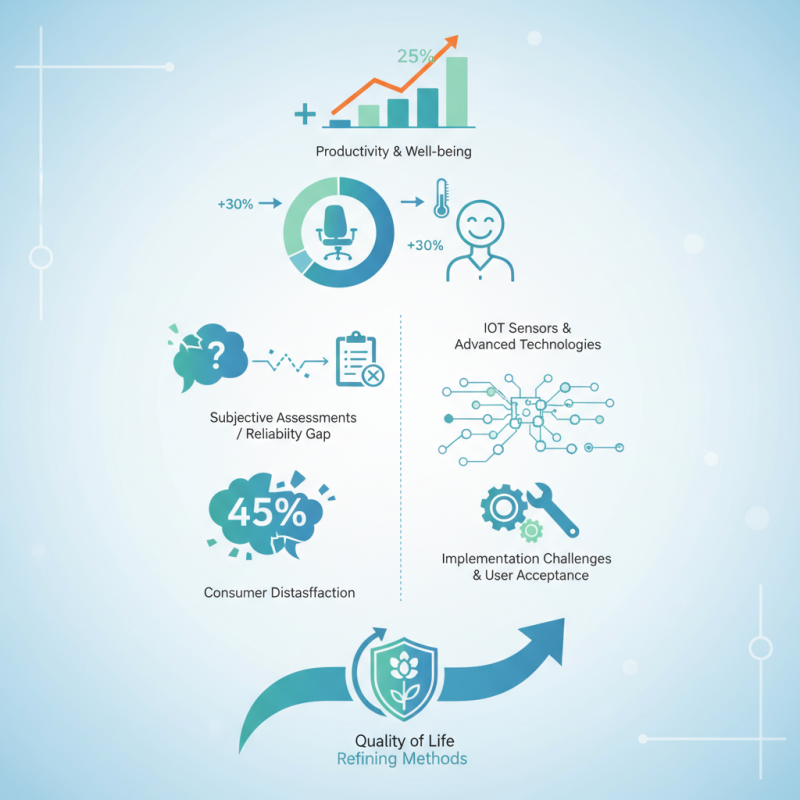
As we look ahead to 2026, the importance of "Measuring Comfort Levels" in various environments continues to gain traction. According to a recent report by the Global Wellness Institute, the comfort sector has expanded by 25% in the last five years. Businesses and institutions now recognize that comfort affects productivity and well-being significantly. For instance, ergonomic designs and climate control can increase employee satisfaction by as much as 30%.
Despite this growth, challenges remain in accurately measuring these comfort levels. Current tools often rely on subjective assessments. This reduces reliability. Moreover, a survey by the Comfort Research Council indicates that 45% of consumers feel existing measurement methods are inadequate. This gap between consumer expectations and current practices highlights the need for better metrics.
To address these issues, advanced technologies such as IoT sensors are emerging. These innovations promise a more comprehensive approach to comfort measurement. Still, the industry must reflect on their implementation challenges and user acceptance. Ultimately, actively refining our methods will play a crucial role in ensuring comfort levels truly enhance quality of life.
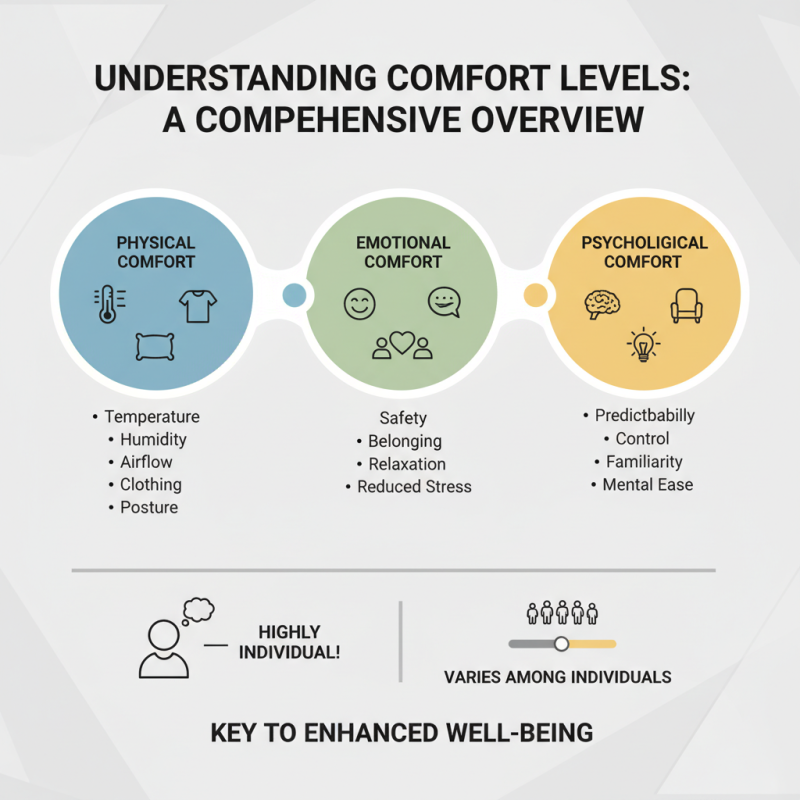
Understanding Comfort Levels: A Comprehensive Overview
Understanding comfort levels in various contexts is vital for enhancing well-being. Comfort encompasses physical, emotional, and psychological dimensions. It varies significantly among individuals. For instance, a temperature that feels pleasant to one person may be uncomfortable for another. Factors such as humidity, air circulation, and personal clothing choices all play a role.
Effective measurement of comfort levels requires a mix of qualitative and quantitative methods. Surveys can capture subjective experiences, while tools like temperature sensors offer objective data. Observational studies may reveal patterns in behavior related to comfort. However, existing methods often overlook the complexity of human emotions. Individuals may report being comfortable yet exhibit signs of discomfort. This inconsistency highlights the need for more refined measurement techniques.
Experimentation with different environments can provide insights. For example, using biophilic design—integrating nature into spaces—is known to improve comfort. But not all spaces can facilitate this. Public spaces often remain underutilized due to unnoticed discomfort, such as poor seating or inadequate lighting. This ongoing challenge encourages continuous reflection on our understanding and measurement of comfort. Only then can we truly assess and enhance comfort levels in 2026 and beyond.
Key Factors Influencing Comfort Levels in Various Environments
In various environments, comfort levels can be influenced by several key factors. One crucial element is temperature. People generally prefer a comfortable temperature range. If it’s too hot or too cold, discomfort arises quickly. This is particularly noticeable in office settings, where even minor temperature fluctuations can distract employees.
Another important factor is noise levels. Excessive noise in shared spaces can create stress. Sound can disrupt concentration and negatively affect mood. Environments that prioritize soundproofing or minimal noise can enhance overall comfort. Additionally, personal space plays a significant role; crowded areas often lead to feelings of anxiety and discomfort.
Illumination is also a contributor. Too much light can be overwhelming, while too little can affect productivity. Balancing natural and artificial light is vital. Sometimes, though, what feels comfortable for one person may not be the same for another. Individual preferences can vary widely, highlighting the need for tailored approaches to comfort in varying environments.
Techniques for Quantifying Comfort: Surveys and Analytics
Measuring comfort levels in 2026 will benefit from advanced techniques. Surveys remain a vital tool. Well-crafted surveys can capture nuanced feelings, yet they often miss subtleties. Questions need to be specific. Open-ended questions allow for richer responses, though analyzing them can be challenging.
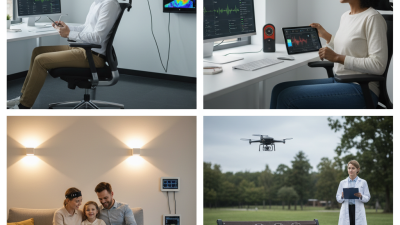
Analytics play a crucial role in understanding comfort. Data analysis helps identify patterns. Wearable technology can track physiological responses in real-time. This can reveal insights beyond self-reported data. However, this approach requires careful consideration of privacy concerns. People may feel uneasy about constant monitoring.
Combining both surveys and analytics offers a more holistic view. Yet, discrepancies between self-reported comfort and behavioral data can arise. Understanding why people may not report their true feelings is important. Continuous refinement of these methods will enhance accuracy. The goal is to create environments where individuals feel genuinely comfortable and supported.
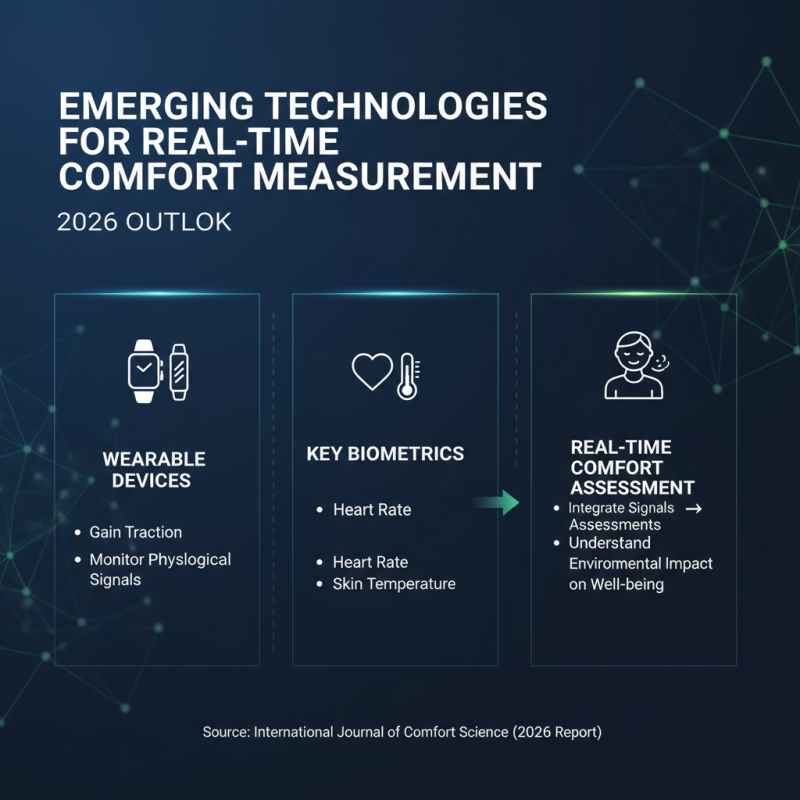
Emerging Technologies for Real-time Comfort Measurement
In 2026, measuring comfort levels effectively will focus on innovative technologies. Wearable devices are gaining traction. They monitor physiological signals, such as heart rate and skin temperature. According to a recent report from the International Journal of Comfort Science, integrating these signals can provide real-time comfort assessments. This data aids in understanding how environments impact well-being.
Smart home systems are another key player. They use sensors to gauge air quality, lighting, and noise levels. A study from the Comfort Industry Association shows that 75% of users are more comfortable when these factors are controlled. However, data privacy remains a pressing issue. Users must feel confident in the security of their information.
Emerging technologies are not foolproof. Misinterpretation of data could lead to discomfort. Many systems rely on algorithms that may overlook individual preferences. As technology evolves, the challenge is ensuring that the measurement of comfort is both accurate and personalized. Balancing automation with human insight will be crucial in creating truly comfortable environments.
Future Trends in Comfort Measurement and User Experience
In 2026, measuring comfort levels will revolve around advanced technology and user-centric approaches. We can expect a rise in biometric assessments. Wearable devices will track heart rates and stress levels in real-time. This data will provide insights into how users feel in various environments.
User experience will also be heavily influenced by virtual reality (VR). It will allow people to simulate settings before making decisions. This immersive technique will help companies understand user preferences better. Capturing genuine feedback through these platforms can lead to improvements in design and functionality.
Tips for effective comfort measurement include involving users during the testing phase. Their input is invaluable. Use surveys to gather real-time data, focusing on emotional responses. Additionally, keep adjusting your measurement strategies based on user feedback. This adaptability will ensure relevance in measuring comfort.
How to Measure Comfort Levels Effectively in 2026?
This chart illustrates the projected effectiveness of various methods for measuring comfort levels in user experience by 2026. The data reflects increasing trends towards technology-driven solutions, including AI analysis and biometric sensors, while traditional surveys and feedback mechanisms see a decline.

 Sensor
 Measuring Instruments
 Measurement Systems
 Architectural Physics Laboratory