What is Heliodon Architecture and How Does it Work?
Heliodon Architecture is a fascinating approach to sustainable design, focusing on sunlight and shadow. Experts in this field emphasize its importance for energy efficiency and comfort. Dr. Emily Hayes, a leading authority, states, "Understanding how sunlight interacts with architecture can transform our living spaces."
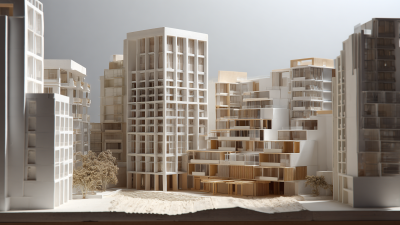
This method involves using tools, like a heliodon, to simulate sunlight patterns. Architects can analyze how light influences building design, ultimately informing decisions that enhance environmental performance. By observing sunlight dynamics, designers create spaces that feel warmer and more inviting.
However, not every project benefits entirely from Heliodon Architecture. While it helps optimize energy use, some designs may over-rely on natural light, leading to glare or overheating. It's essential to balance light with user comfort. Overall, Heliodon Architecture offers promising insights, though it demands careful application and reflection to achieve the best results.
Definition of Heliodon Architecture and Its Importance
Heliodon architecture is an innovative design approach that emphasizes the sun’s path in building design. By understanding sunlight’s movement and its effects, architects can create spaces that maximize natural light and thermal comfort. This methodology is crucial for energy efficiency, reducing reliance on artificial lighting.
The significance of heliodon architecture extends beyond aesthetics. It can significantly lower energy consumption. Properly positioned windows and overhangs can lead to better air circulation. With thoughtful design, buildings can become more self-sustaining. However, it’s not always straightforward. Not every site has ideal conditions for such strategies. Shadowing from surrounding structures may limit effectiveness.
Moreover, this design philosophy encourages critical thinking about our relationship with nature. It challenges architects to consider weather patterns and ecological impacts. While heliodon architecture offers clear benefits, it also demands a keen understanding of local conditions. Balancing beauty and efficiency requires ongoing reflection and adaptation. Each project brings unique challenges that must be addressed.
Heliodon Architecture and Solar Analysis
This chart illustrates the monthly solar radiation received in a typical year for a specific location. Understanding solar exposure is fundamental in Heliodon architecture for optimizing building design for energy efficiency and occupant comfort.
Principles of Heliodon Architecture in Design
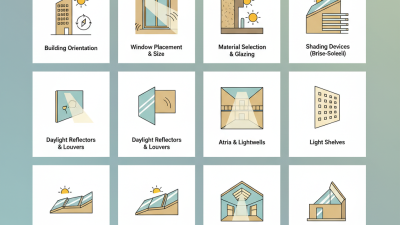
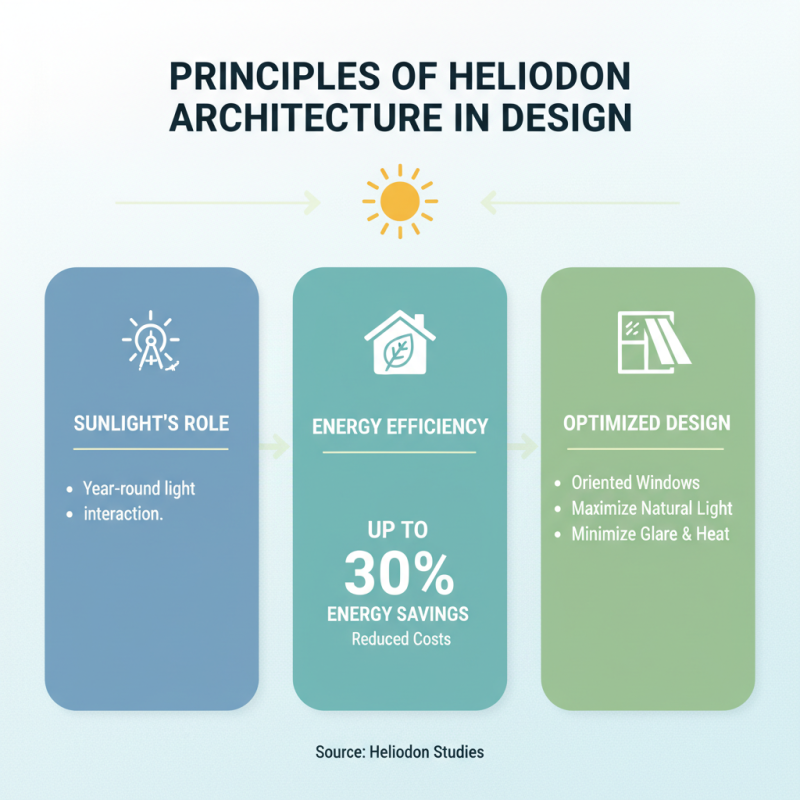
Heliodon architecture focuses on sunlight’s role in building design. This principle emphasizes how light interacts with structures throughout the year. Studies show that buildings designed with sunlight in mind can reduce energy costs by up to 30%. Properly oriented windows maximize natural light while minimizing glare and heat gain.
Integrating heliodon principles involves considering the sun's path. Designers often use software simulating sunlight exposure. This helps create spaces that benefit from natural heating in winter and shading in summer. Reports indicate that efficient daylighting can enhance worker productivity by 15%. Yet, many architects overlook seasonal variations.
Designers must assess local climates. Not every area benefits equally from solar strategies. For instance, urban heat islands can distort expected outcomes. Balancing aesthetics, functionality, and ecological impact is challenging. The key lies in iterative design, willing to adapt and learn from initial results.
Components and Tools Used in Heliodon Analysis
Heliodon architecture focuses on the interaction of sunlight with building design. It's vital for maximizing natural light and energy efficiency. Understanding this requires specialized tools and components for analysis.
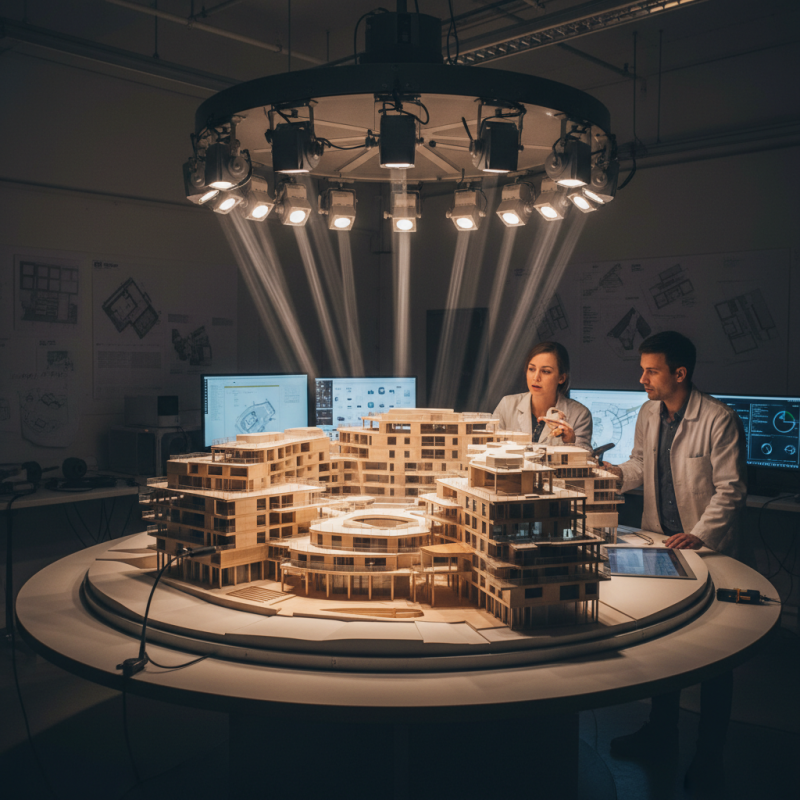
One key component is the heliodon itself, a device that simulates the sun's movement. It allows architects to visualize shadow patterns throughout the year. Studies show that buildings optimized for sunlight can reduce energy costs by up to 30%. Accurate modeling can highlight areas of potential solar gain or loss.
Software tools like BIM and solar analysis programs are also essential. They provide precise data on how light interacts with structures. Reports indicate that 75% of architects use these tools to improve design efficiency. Despite advancements, challenges remain in predicting real-world conditions. Factors like weather variations can affect outcomes. Continuous reflection on methodologies is necessary for enhancing accuracy.
Step-by-Step Process of Conducting Heliodon Studies
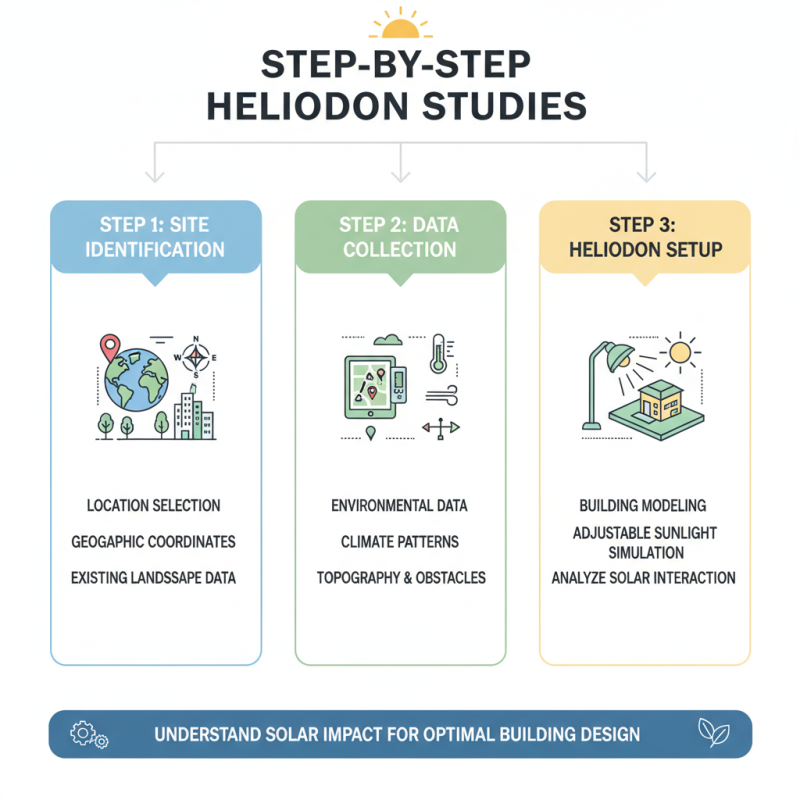
Heliodon studies are crucial for understanding how sunlight interacts with buildings. The process typically starts with identifying the location of the site. Collect detailed environmental data, including geographic coordinates and existing landscape features. This information helps when setting up the heliodon model.
Next, create a scale model of the building. Use simple materials to represent the structure. Ensure the model accurately reflects dimensions. After constructing the model, place it in the heliodon setting. This apparatus mimics the sun's path, shining light on the model. Observe how shadows shift throughout the day. Analyze these patterns to see potential issues with light and heat.
Afterward, gather your observations. Identify areas where sunlight may be excessive or lacking. This analysis can guide design modifications. Reflect on how aspects like window placement influence energy consumption. Understanding these dynamics is essential but not always straightforward. Some designs may still struggle with light balance despite careful planning. It is a continuous learning process. Each study fine-tunes the understanding of building orientation and its effects on space utilization.
Benefits of Heliodon Architecture in Sustainable Design
Heliodon architecture significantly enhances sustainable design practices. It utilizes solar path analysis to optimize building orientation. By understanding the sun's movement, architects can create energy-efficient structures. Research indicates that proper orientation can reduce energy consumption by up to 30%. This approach leads to less reliance on artificial lighting and heating.
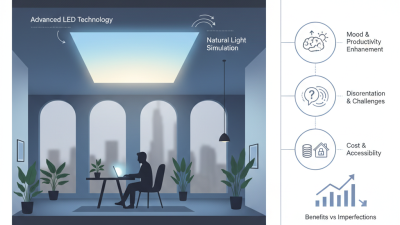
Natural light plays a crucial role in occupant wellness. Studies show that buildings with adequate daylighting can improve productivity by around 15%. Additionally, using heliodon principles helps minimize heat gain and loss. This can result in lower utility bills and a reduced carbon footprint. The goal is not purely aesthetic; practicality drives these designs.
However, implementing heliodon architecture is not without challenges. Not every site allows for ideal sun exposure. Some buildings may face shadowing issues from surrounding structures. Architects must often compromise, leading to less-than-optimal solutions. Continuous evaluation and adaptation are essential for success in sustainable design.

 Sensor
 Measuring Instruments
 Measurement Systems
 Architectural Physics Laboratory