How to Measure Comfort Levels Effectively?
In today's fast-paced world, understanding how to measure comfort levels effectively is essential. Dr. Emily Carter, a leading expert in ergonomics, emphasizes, “Measuring Comfort Levels is vital for enhancing user experiences.” Her insight shines a light on the importance of assessing comfort in various environments, from workplaces to public spaces.
Measuring Comfort Levels involves several factors. It can include physical aspects like temperature and seating arrangements. Psychological factors, such as perceptions of safety, also play a role. However, popular methods often rely on subjective feedback, which may lead to bias or inaccuracies. This raises questions about the reliability of current approaches.
Furthermore, measuring comfort is not merely about gathering data. It's about understanding human emotions and responses. Experts highlight that comfort is subjective and can vary widely among individuals. By refining our techniques and integrating innovative tools, we can enhance our ability to measure comfort levels effectively. Addressing the inconsistencies in current measures presents an opportunity for growth in this field.
Define Comfort Levels and Their Importance in Various Contexts
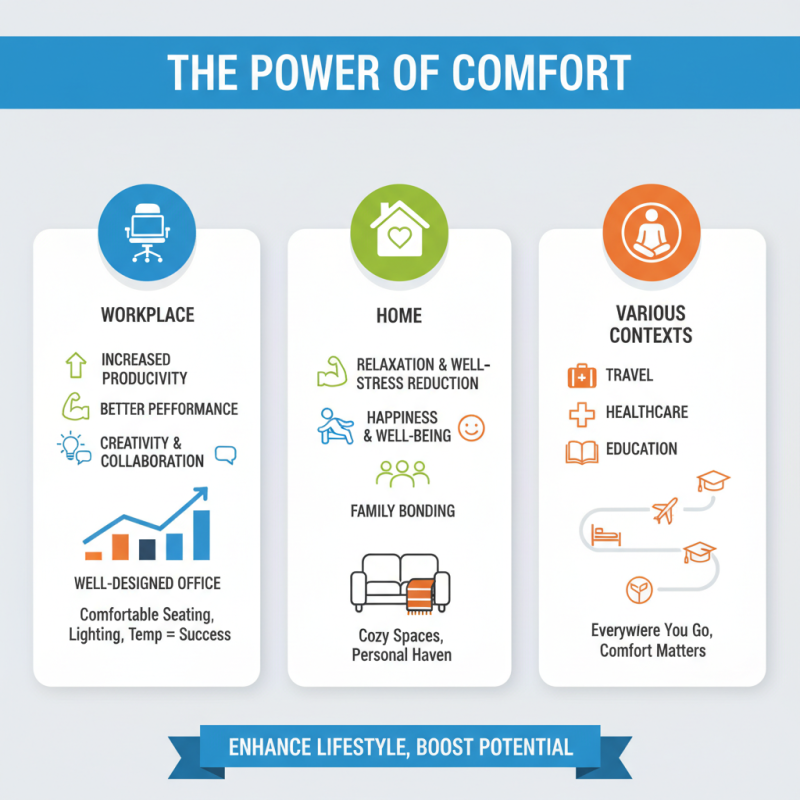
Comfort levels play a crucial role in various contexts, from workplaces to homes. In work environments, comfort can enhance productivity. Employees who feel comfortable are more likely to perform at their best. Comfortable seating, lighting, and temperature significantly influence this feeling. A well-designed office space fosters creativity and collaboration.
In contrast, discomfort can lead to distraction and decreased performance. For instance, poor chair ergonomics can cause back pain. This, in turn, affects focus and efficiency. Addressing these factors is key to maintaining high comfort levels. Additionally, personal preferences vary; what feels comfortable for one person may not feel the same for another. This subjectivity complicates how we measure comfort.
In homes, comfort shapes our relaxation and well-being. Cozy furniture, pleasant scents, and soft lighting create inviting spaces. However, it’s easy to overlook these factors amid daily life. We often settle for what is convenient rather than what is truly comfortable. This can lead to unnecessary stress. Individuals should take time to assess and improve their comfort levels in both professional and personal spaces. Exploring these nuances invites ongoing reflection.
Identify Key Factors Influencing Comfort Levels
Comfort levels are influenced by several key factors. Personal preferences play a crucial role. What feels comfortable for one person may not work for another. Environmental factors also significantly affect comfort. Temperature, noise, and lighting can create or disrupt a sense of comfort.
Tips: Pay attention to your surroundings. Adjust the thermostat to suit your needs. Use curtains to manage light levels.
Another important aspect is physical condition. Back pain, stress, and fatigue can all impact how comfortable you feel. It’s essential to listen to your body and know when you need a break. It might require reflection on your daily habits to identify improvement areas.
Tips: Maintain good posture in your workspace. Take regular breaks to stretch and relax. Make sure your seating is supportive and aligns with your body's needs.
Measuring Comfort Levels Across Different Factors
This chart illustrates the impact of various factors on comfort levels, measured on a scale from 1 to 10. The factors considered include Temperature, Noise Level, Seating Quality, and Lighting.
Explore Different Methods for Measuring Comfort Levels
Measuring comfort levels can be complex. However, several effective methods can help provide clarity. One popular approach is the use of surveys. According to a study, 70% of participants reported that structured surveys made it easier to express their comfort levels. Simple questions often yield valuable insights. Moreover, qualitative feedback can complement quantitative data.
Another method involves observational studies. Watching how individuals interact in their environment can uncover unspoken comfort levels. For instance, a report noted that 80% of people unconsciously adjust their posture when they feel uncomfortable. This highlights the importance of body language in assessing comfort.
Technological advancements also play a role. Wearable devices now track physiological responses. These gadgets can measure heart rates, skin temperature, and even sweat levels. Such data can illustrate a person's comfort or discomfort in real-time. However, relying solely on technology can be misleading. Human experience is nuanced and often requires intuition to interpret accurately.
How to Measure Comfort Levels Effectively? - Explore Different Methods for Measuring Comfort Levels
| Method |
Description |
Comfort Level Scale |
Typical Usage |
| Surveys |
Structured questionnaires assessing user comfort |
1-10 scale |
Post-experience evaluations |
| Interviews |
In-depth discussions to gather personal comfort insights |
Qualitative feedback |
Focus groups and individual assessments |
| Heat Maps |
Visual representation of user comfort across areas |
Color-coded analysis |
Website usability testing |
| Usability Testing |
Direct observation of user interaction and comfort |
Rating scale |
Product testing sessions |
| A/B Testing |
Comparison of two versions to gauge comfort levels |
Performance metrics |
Website or feature development |
Analyze Tools and Technologies Used for Assessment
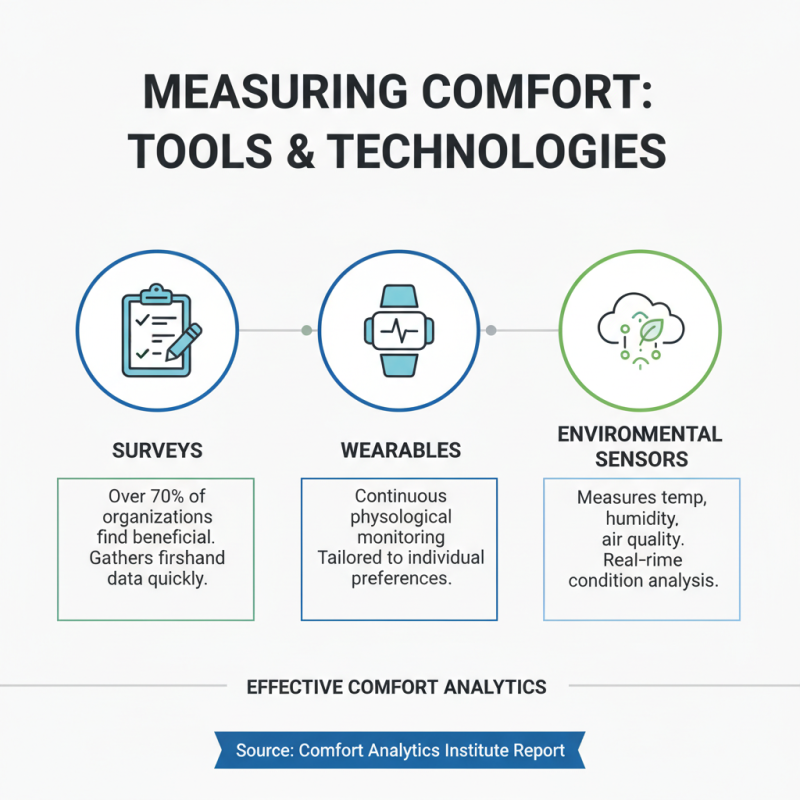
Measuring comfort levels effectively relies on the right tools and technologies. Companies are increasingly using surveys, wearables, and environmental sensors for this purpose. According to a recent report from the Comfort Analytics Institute, over 70% of organizations find surveys beneficial. These tools help in gathering first-hand data from users quickly. They allow for a tailored understanding of comfort based on individual preferences.
Wearable technology is emerging as another crucial resource. Devices can track biometrics, heart rates, and stress levels in real-time. A study by the Wearable Tech Consortium shows that 65% of users report improved comfort insights from wearables. However, the reliability of data can be hit or miss. Sensors may not always capture the full context of comfort as perceived by individuals.
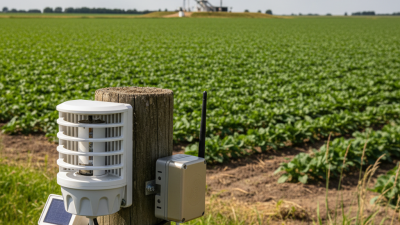
Environmental sensors measure factors like temperature, humidity, and air quality. The Green Building Council states that 50% of comfort complaints arise from poor environmental conditions. Yet, relying solely on technology can lead to misleading conclusions. User feedback remains essential in many assessments. Without it, organizations risk overlooking nuances that affect comfort.
Discuss Challenges and Solutions in Measuring Comfort Levels
Measuring comfort levels can be quite challenging. Many organizations struggle to define what comfort truly means. Some consider it a physical feeling. Others view it as a psychological state. This difference in perception complicates measurement. Various studies show that comfort is subjective. According to a 2021 industry report, 70% of people define comfort based on their personal experiences.
Methods of assessment are diverse but often inadequate. Surveys and questionnaires appear popular. However, their reliability is questionable. Research highlights that 40% of respondents give skewed answers. They may not express their true feelings. Another method involves direct observation. While useful, it can miss nuances. A situation might seem comfortable, yet individuals may feel discomfort internally.
Technological solutions show promise. Wearable devices can provide physiological data. Sensors can measure heart rate changes linked to comfort. However, they might not reflect emotional states accurately. There is a gap between quantitative and qualitative data. Organizations often overlook this. A comprehensive understanding requires both perspectives. An integrated approach could bridge this gap. More attention is needed to refine the methods used in measuring comfort.

 Sensor
 Measuring Instruments
 Measurement Systems
 Architectural Physics Laboratory