2026 How to Choose the Best Thermal Comfort Measuring Instrument?
Finding the right Thermal Comfort Measuring Instrument can significantly impact building design and occupancy satisfaction. In a world increasingly focused on creating optimal living conditions, selecting the right tool is paramount.
Temperature, humidity, and air movement affect how we feel in our spaces. A reliable instrument can capture these variables in real-time. However, many options exist, and navigating through them isn't easy. What features matter most? Accuracy, ease of use, and data analysis capabilities should drive your selection.
Consider your specific needs. Are you measuring comfort for residential or commercial spaces? Will the instrument support long-term studies? These details can help narrow your choices. An ideal Thermal Comfort Measuring Instrument should provide clear insights, yet identifying the best one requires thoughtful reflection.
Types of Thermal Comfort Instruments and Their Applications
When it comes to measuring thermal comfort, several types of instruments are available. Each instrument serves a specific purpose. For instance, handheld thermal meters allow for quick assessments of local air temperature and humidity. These are useful for spot checking in various environments, from offices to outdoor settings.
Another common type is the data logger. This device captures and records temperature and humidity over time. It provides a comprehensive view of conditions in a given space. However, data from these instruments can sometimes be overwhelming. It requires careful analysis to derive meaningful insights.
Infrared thermometers are also notable, as they measure surface temperatures without direct contact. This can be beneficial in industrial or building maintenance situations. Yet, they may not reflect the overall thermal comfort of an area. The need for multiple instruments to paint a complete picture can be a challenge. Balancing precision and practicality is crucial in selecting the right tools for thermal comfort assessment.
2026 How to Choose the Best Thermal Comfort Measuring Instrument?
| Instrument Type |
Measurement Parameters |
Applications |
Accuracy |
Cost Range |
| Thermohygrometer |
Temperature, Humidity |
HVAC, Indoor Air Quality Assessment |
±0.5°C, ±2% RH |
$50 - $200 |
| Anemometer |
Air Velocity |
Ventilation System Testing |
±0.1 m/s |
$100 - $500 |
| Infrared Thermometer |
Surface Temperature |
Building Inspections, Energy Audits |
±2°C |
$25 - $300 |
| PTC Sensor |
Temperature, Humidity, Airflow |
Research, Indoor Climate Studies |
±0.3°C |
$200 - $800 |
| Data Logger |
Temperature, Humidity over Time |
Long-Term Monitoring, Research |
±0.5°C, ±3% RH |
$50 - $500 |
Key Features to Consider When Choosing Thermal Comfort Tools
When selecting a thermal comfort measuring instrument, several key features should be evaluated based on your specific needs. Start with accuracy. This is vital for reliable readings. Instruments should show real-time temperature and humidity levels. Look for devices that can detect variations quickly. Consider the size and portability. Lightweight instruments are easier to use in multiple locations.
Another important feature is data logging capability. Instruments that store historical data allow for trend analysis. Being able to review past measurements can help identify patterns. User interface matters too. A clear display and intuitive controls enhance usability. If the device is difficult to operate, it can lead to frustration.
Additionally, battery life is significant. A device that frequently requires charging can disrupt your workflow. Think about connectivity options as well. Some tools can connect to smartphones or computers. This allows for easy data sharing. Evaluate the overall build quality, too. Instruments must be durable, especially in field settings. Reflect on your priorities. What features are most crucial for your environment? This reflection can guide your decision-making process.
Key Features to Consider When Choosing Thermal Comfort Tools
Accuracy and Calibration: Ensuring Reliable Measurements
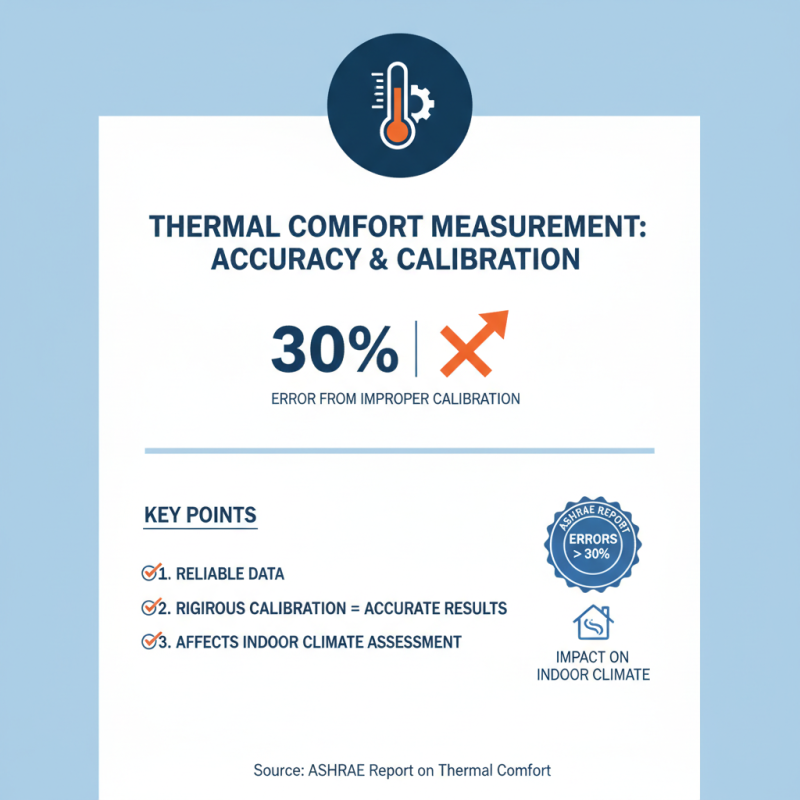
Accuracy and calibration play crucial roles in thermal comfort measurements. Reliable data can only be achieved through rigorous calibration processes. According to a report by the American Society of Heating, Refrigerating and Air-Conditioning Engineers (ASHRAE), improper calibration can lead to errors exceeding 30%. Such inaccuracies can significantly affect assessments of indoor climate.
Another study highlights that up to 25% of thermal comfort instruments fail to provide consistent data over time. Regular calibration is essential to combat this issue. Devices must be tested against standards to ensure they produce credible outcomes. Many professionals overlook this, leading to potential misinterpretations of comfort levels.
The environment also impacts measurement accuracy. Factors like humidity and air pressure can distort results. Instruments should be designed to account for these variables. Users must be diligent, checking their equipment frequently. Inconsistent measurement practices may arise from neglect, emphasizing the need for ongoing vigilance in maintenance and calibration.
Budget Considerations: Finding Cost-Effective Solutions
Choosing a thermal comfort measuring instrument can be a daunting task, especially when budget constraints come into play. Many professionals look for devices that balance quality and affordability. A recent industry report shows that up to 40% of businesses waste money on overpriced instruments. It's crucial to ensure that you get the right features without overspending.
Tips: Research the minimum viable features for your needs. Don’t jump at the first option. Compare specifications and prices across different markets. Look for devices that provide essential readings such as temperature and humidity together. An all-in-one instrument might offer better value.
When assessing cost-effective solutions, remember that cheaper isn’t always better. Instruments that fail to provide accurate data can lead to poor decisions. A study found that using low-quality tools can result in energy losses of up to 30%. The initial savings can turn into greater costs later. Invest time in proper evaluation; it could save you money in the long run.
Tips: Consider user reviews and rated accuracy. Test out the instrument if possible. Quality should always align with your budget. Don’t rush. Analyze your specific needs and choose wisely. Quality thermal comfort measurement is an investment in both comfort and efficiency.
User Friendliness: Importance of Usability in Instruments
User-friendliness is crucial when choosing thermal comfort measuring instruments. An instrument that is easy to use significantly enhances the overall experience for the user. According to a recent report by the International Energy Agency, 70% of users prefer instruments that require minimal training. This preference indicates a strong demand for intuitive designs in thermal comfort measurement.
Simplicity should not compromise functionality. Many instruments fail to provide clear feedback, leaving users frustrated. If an instrument is complex, it can lead to inaccurate measurements. The same report shows that 40% of users reported errors due to complicated settings. This highlights the need for straightforward interfaces that guide users through the process.
Accessibility also plays a role in usability. Instruments designed for diverse environments should cater to all potential users. A study by the American Society of Heating, Refrigerating and Air-Conditioning Engineers suggests that 65% of users appreciate features like adjustable display brightness or physical buttons over touchscreens. Users often prefer tactile feedback in challenging conditions. Recognizing these factors can lead to better choices in thermal comfort measuring instruments.

 Sensor
 Measuring Instruments
 Measurement Systems
 Architectural Physics Laboratory