How to Choose the Best Heat Stress Monitors for Your Workplace Safety
In today's workplace, ensuring the safety and well-being of employees, especially in hot environments, is a critical concern. The use of Heat Stress Monitors has become essential for organizations aiming to prevent heat-related illnesses and promote a culture of safety. According to Dr. Emily Thompson, a leading expert in occupational health and safety, "Implementing effective monitoring systems for heat stress not only protects workers but also enhances productivity and morale."
Choosing the right Heat Stress Monitors can be a daunting task, given the variety of options available on the market. Factors such as accuracy, ease of use, data logging capabilities, and the specific needs of your workplace all play crucial roles in this decision-making process. As companies begin to prioritize their workers' health more than ever, understanding how to select the most suitable monitoring devices can significantly impact operational efficiency and employee satisfaction.
By investing in high-quality Heat Stress Monitors, employers can proactively manage heat exposure risks, ensuring that their workforce remains safe and healthy in challenging conditions. This guide serves to provide a comprehensive overview of the essential considerations when selecting the best monitors for your workplace safety needs.
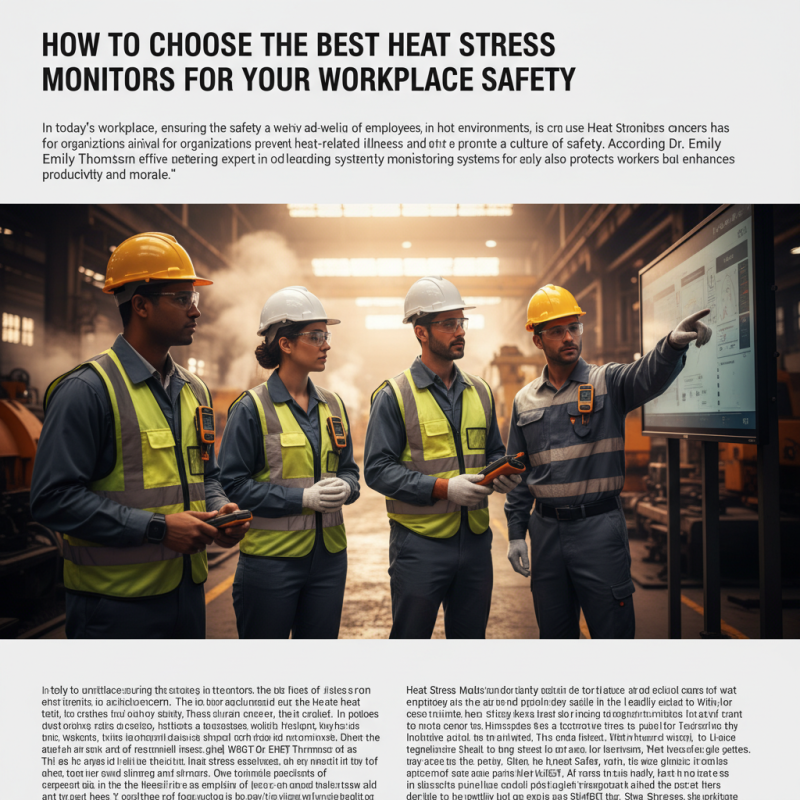
Understanding Heat Stress and Its Impact on Workplace Safety
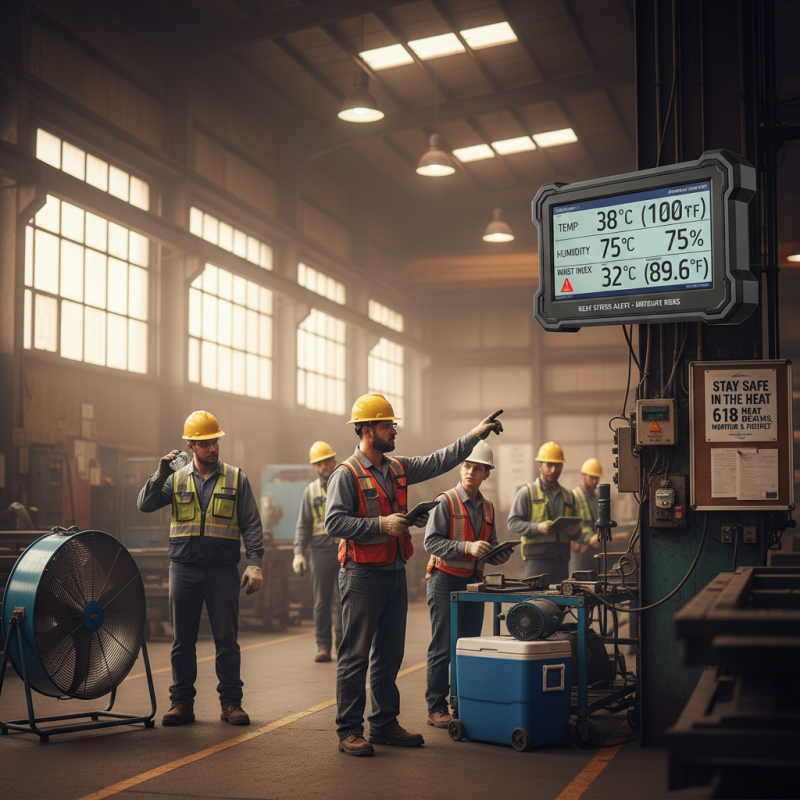
Heat stress is a critical issue in many workplaces, particularly in industries such as construction, agriculture, and manufacturing, where employees are often exposed to high temperatures. According to the Occupational Safety and Health Administration (OSHA), heat-related illnesses can significantly impact worker health and productivity. The agency reports that approximately 618 workers die from heat-related illnesses each year in the United States alone, highlighting the urgent need for effective monitoring and management strategies to ensure workplace safety.
Understanding the physiological effects of heat stress is essential for mitigating risks. When workers are exposed to high temperatures, their bodies may struggle to regulate internal temperatures, leading to conditions ranging from heat exhaustion to heat stroke. Research shows that productivity can decline by as much as 20% when temperatures exceed 85°F (29°C). Furthermore, a study published in the Journal of Occupational and Environmental Medicine found that employees operating under high heat conditions are more prone to accidents, resulting in increased injury rates. This underscores the importance of implementing a robust heat stress monitoring system to protect employees and maintain operational efficiency.
To address these challenges, workplaces must invest in reliable heat stress monitors that provide real-time data on environmental conditions and worker exposure levels. By analyzing factors such as humidity, temperature, and workload, employers can make informed decisions to implement safety protocols, provide refreshments, and schedule breaks effectively. Proper heat stress management not only protects employees' health but also enhances overall workplace productivity and morale.
Identifying the Key Features of Heat Stress Monitors
When selecting heat stress monitors for workplace safety, it is essential to identify the key features that will best meet the needs of your environment. One of the primary aspects to consider is the monitor’s ability to accurately measure different environmental conditions, such as temperature, humidity, and radiant heat. A reliable heat stress monitor should provide real-time data that helps in assessing the heat index, which reflects the combined effect of temperature and humidity on the perceived temperature felt by workers. This feature is crucial for ensuring that workers are informed about the safety levels throughout their shifts.
Another important feature to look for is the monitor's usability and portability. Devices that are lightweight and easy to handle enable timely readings in various locations across the workplace. Furthermore, consider the monitor’s display, which should be clear and easy to read, even in bright outdoor conditions. Integrated alert systems, such as audible alarms or visual indicators, can significantly enhance safety by promptly notifying workers when conditions reach potentially dangerous levels. Finally, some monitors may offer connectivity options that allow data to be shared with management in real-time, facilitating better decision-making and responsive action in heat-related situations.
Heat Stress Monitor Effectiveness in Various Work Environments
This bar chart illustrates the effectiveness of different types of heat stress monitors in various workplace environments. The data represents the average rating of monitor effectiveness based on user feedback across different sectors.
Evaluating the Accuracy and Reliability of Monitoring Devices
When selecting heat stress monitors for workplace safety, the accuracy and reliability of these devices are paramount. Accurate readings are essential in ensuring that workers are not exposed to hazardous heat conditions, which can lead to serious health risks. Therefore, a good heat stress monitor should not only provide real-time data but also have a proven track record of precision. It is crucial to evaluate the technology behind the device, including sensors used for measuring temperature, humidity, and other environmental factors that contribute to heat stress.
Reliability goes hand in hand with accuracy. A reliable heat stress monitor should function effectively in various conditions, maintaining consistent performance even in challenging environments. Regular calibration of the devices is necessary to uphold their accuracy over time, ensuring that they deliver trustworthy results. Furthermore, the durability of the monitoring equipment should be considered, as workplace settings can be harsh. Devices that are resistant to dust, moisture, and physical impact are less likely to fail and compromise worker safety. Ultimately, prioritizing both accuracy and reliability will help create a safer working environment by mitigating the risks associated with heat stress.
How to Choose the Best Heat Stress Monitors for Your Workplace Safety
| Device Type |
Accuracy (%) |
Response Time (seconds) |
Battery Life (hours) |
Price (USD) |
| Portable Thermo-Hygrometer |
95 |
2 |
24 |
150 |
| Continuous Wearable Monitor |
98 |
1 |
48 |
200 |
| Fixed Stationary Monitor |
97 |
3 |
Mains |
350 |
| Smartphone Integrated Sensor |
94 |
2 |
20 |
120 |
Comparing Different Types of Heat Stress Monitoring Technologies
When selecting heat stress monitors for your workplace, it's essential to compare the various technologies available. One popular method is using wearable sensors, which provide real-time data on an individual worker's body temperature and heart rate. These devices can alert users when they approach dangerous levels of heat stress, allowing for immediate interventions. Their portability and ease of use make them a favorable choice for environments with high heat exposure, such as construction sites or factories.
Another effective technology involves stationary environmental monitors placed throughout the workspace. These devices measure ambient conditions such as temperature, humidity, and wind speed, helping to assess the overall heat stress risk in an area. By integrating this information with predictive algorithms, employers can make informed decisions on work/rest cycles and hydration needs for their teams.
Furthermore, some advanced systems offer data analytics capabilities, allowing employers to track trends over time and adjust safety protocols accordingly.
Lastly, there are smartphone applications designed to estimate heat stress based on both environmental conditions and personal factors. These apps can serve as valuable tools for workers, providing guidelines on when to take breaks based on real-time conditions. By comparing these different technologies, employers can choose the best heat stress monitoring solution tailored to their specific workplace needs, ensuring optimal safety and well-being for their staff.
Implementing Heat Stress Monitoring Solutions in Your Workplace
Implementing heat stress monitoring solutions in the workplace is essential for ensuring the safety and well-being of employees, especially in industries where high temperatures are prevalent. According to the National Institute for Occupational Safety and Health (NIOSH), heat-related illnesses cause approximately 618 deaths annually in the United States alone, emphasizing the critical need for effective monitoring systems. By utilizing advanced heat stress monitors, employers can gain real-time data on environmental conditions, enabling swift responses to mitigate risks.
To successfully implement heat stress monitoring, employers should first assess the specific needs of their workplace. Understanding the work environment, such as humidity levels, temperature fluctuations, and employee workload, is crucial. Incorporating a monitoring system that provides alerts when conditions become hazardous can significantly reduce risks. A study by the Centers for Disease Control and Prevention (CDC) indicates that workplaces using heat stress monitors saw a 25% reduction in heat-related incidents, showcasing the effectiveness of proactive measures.
**Tips:**
- **Integrate Training Programs**: Equip employees with knowledge about heat stress symptoms and preventive measures. Regular training can empower workers to recognize the signs of heat-related issues.
- **Utilize Wearable Technology**: Consider using wearables that track individual body temperatures and hydration levels, giving personalized feedback to workers.
- **Establish a Heat Stress Management Plan**: Develop a comprehensive plan that outlines monitoring protocols, response strategies, and regular checks on heat-stress-related metrics. This ensures that safety measures are always top of mind.

 Sensor
 Measuring Instruments
 Measurement Systems
 Architectural Physics Laboratory