How to Choose the Best Outdoor Temperature and Humidity Sensor for Your Needs
In the ever-evolving world of environmental monitoring, selecting the right Temperature and Humidity Sensor Outdoor is essential for various applications ranging from agriculture to meteorology. According to a report by MarketsandMarkets, the global market for temperature and humidity sensors is projected to reach over $2.5 billion by 2025, driven by increasing demand for precision in climate monitoring. As accurate measurements of temperature and humidity become increasingly critical, understanding the features and specifications of these sensors is paramount for both industry professionals and hobbyists alike.
Dr. Emily Thompson, an expert in environmental sensing technologies, emphasizes the importance of tailored solutions: "Choosing the right Temperature and Humidity Sensor Outdoor can significantly impact the reliability of your data. It’s not just about picking a device; it’s about selecting the one that fits your specific environmental conditions and monitoring needs." With a range of factors to consider, including sensor type, accuracy, range, and connectivity, stakeholders must navigate an array of options to find a solution that aligns with their operational goals.
Ultimately, the right Temperature and Humidity Sensor Outdoor can enhance decision-making and improve outcomes across various sectors. As technology advances, staying informed about the latest developments in sensor technology will empower users to make selections that not only meet but exceed their requirements.
Understanding the Role of Outdoor Temperature and Humidity Sensors
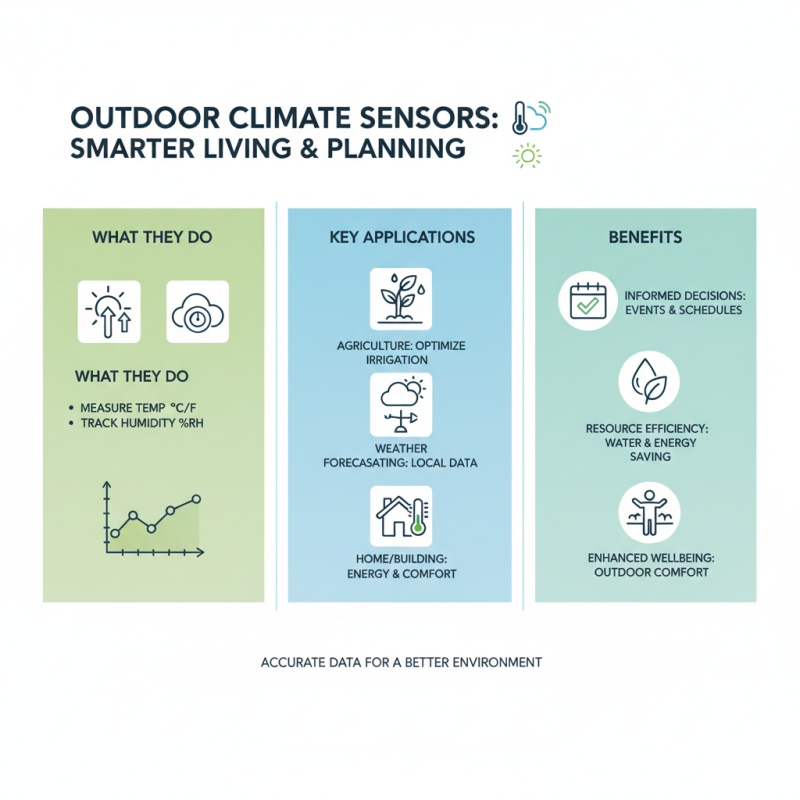
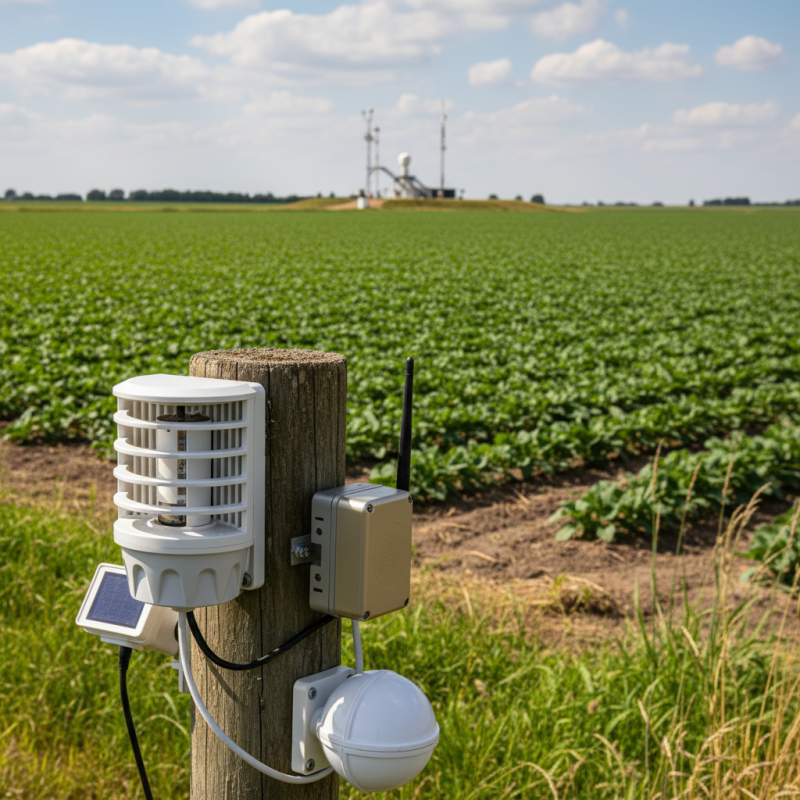
Outdoor temperature and humidity sensors play a crucial role in providing accurate climate data that can assist in various applications. Whether for agricultural monitoring, weather forecasting, or enhancing outdoor comfort, these sensors help users understand the environmental conditions that affect their activities. By measuring temperature and humidity levels, they collect data that can be used to make informed decisions regarding irrigation schedules, outdoor events planning, and even energy management in buildings.
Choosing the right outdoor temperature and humidity sensor is fundamental to maximizing its effectiveness. Users should look for sensors that offer real-time data and high accuracy, ensuring that the readings reflect current conditions. Additionally, features such as durability and resistance to various weather conditions are important, as they influence the longevity and reliability of the sensor. Understanding these aspects will empower users to select a sensor that not only meets their specific needs but also enhances their ability to interact dynamically with the environment.
Key Features to Consider When Selecting a Sensor for Outdoor Use
When selecting an outdoor temperature and humidity sensor, several key features should be considered to ensure optimal performance for your specific needs. First and foremost, accuracy is paramount; look for sensors that offer precise readings across a wide range of temperatures and humidity levels. Additionally, the response time of the sensor is critical, especially in fluctuating weather conditions. A sensor that provides quick and reliable updates will enable you to monitor changes effectively.
Another essential feature to consider is the durability of the sensor. Since it will be exposed to various environmental factors, choose a sensor designed to withstand harsh weather conditions, such as rain, snow, and extreme temperatures. Water resistance ratings (IP ratings) and UV protection can significantly extend the lifespan of the device. Lastly, connectivity options can enhance usability; whether you prefer a sensor that operates via Bluetooth, Wi-Fi, or a standalone device, make sure it integrates smoothly with your existing systems for easy data access and monitoring.
Comparative Analysis: Analog vs Digital Temperature and Humidity Sensors
When choosing an outdoor temperature and humidity sensor, one of the key considerations is the type of technology it employs—primarily, whether it is analog or digital. Analog sensors provide continuous readings and are often simpler in design. They typically use a bimetallic strip or thermistor that changes resistance based on temperature fluctuations, allowing for a straightforward visual representation through a dial or scale. While they can be more affordable, analog sensors may not deliver the level of accuracy or sensitivity that more advanced applications require, and their mechanical nature can suffer from wear and tear over time.
In contrast, digital temperature and humidity sensors leverage advanced electronics to provide precise readings. These sensors often incorporate microcontrollers that convert analog signals into digital data, enabling features such as data logging, remote monitoring, and integration with smart home systems. Digital sensors generally offer higher accuracy and can adapt better to varying environmental conditions. They also usually include self-calibration capabilities, reducing the need for frequent manual adjustments. Consequently, while digital sensors may come at a higher cost, their reliability and advanced functionalities make them a compelling choice for users seeking performance and versatility in outdoor environments.
How to Choose the Best Outdoor Temperature and Humidity Sensor for Your Needs - Comparative Analysis: Analog vs Digital Temperature and Humidity Sensors
| Feature |
Analog Sensors |
Digital Sensors |
| Accuracy |
±2°C, ±5% RH |
±0.5°C, ±2% RH |
| Response Time |
Slow (seconds) |
Fast (milliseconds) |
| Power Consumption |
Higher |
Lower |
| Durability |
Moderate |
High |
| Cost |
Low |
Higher |
| Maintenance Required |
Regular |
Minimal |
| Environmental Sensitivity |
Higher sensitivity |
Lower sensitivity |
Importance of Calibration and Accuracy in Environmental Sensors
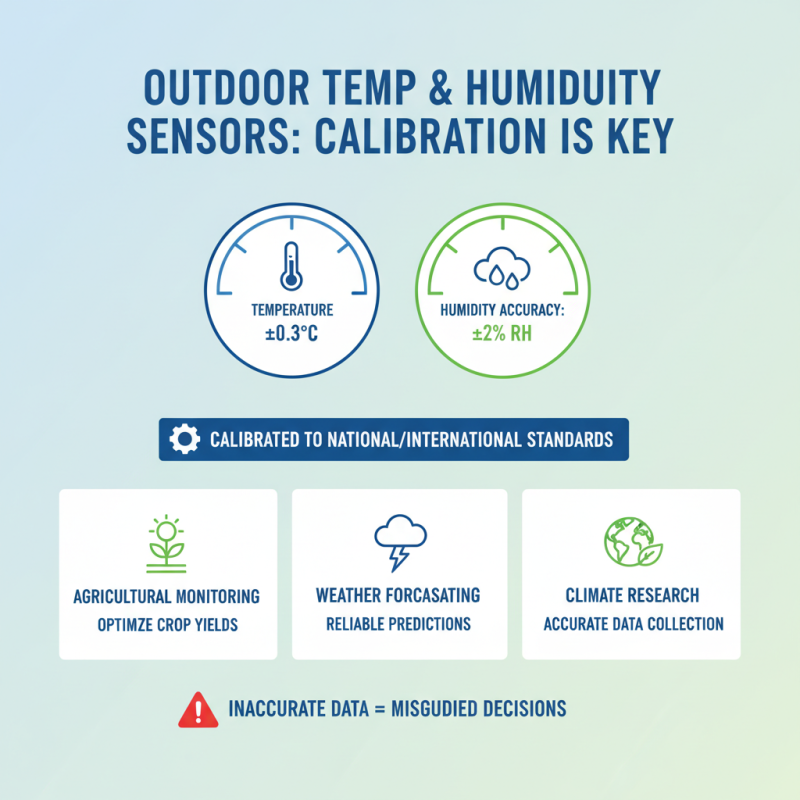
Calibration and accuracy are critical components in the selection of outdoor temperature and humidity sensors. Environmental sensors play a significant role in various applications, such as agricultural monitoring, weather forecasting, and climate research. According to industry reports, sensors that are calibrated to national or international standards can achieve an accuracy of ±0.3°C and ±2% relative humidity, which is essential for reliable data collection. Inaccurate measurements can lead to misguided decisions, particularly in sensitive fields like agriculture, where crop yields may hinge on precise humidity and temperature data.
Furthermore, regular calibration of sensors is essential to maintain their accuracy over time. A study published in the Journal of Environmental Monitoring highlighted that sensors that were not recalibrated every six months showed deviations in temperature readings of up to 1°C and humidity measurements varying by as much as 5%. This underscores the importance of routine checks and the need for users to understand their sensors' calibration process to ensure data integrity. By selecting calibrated sensors with proven accuracy, users can enhance their decision-making capabilities and improve outcomes in their projects.
Cost-Effectiveness and ROI of Investing in Quality Sensors
When considering the cost-effectiveness and return on investment (ROI) of outdoor temperature and humidity sensors, it's essential to recognize their impact on various sectors. According to a report by the Allied Market Research, the global environmental monitoring market, which includes temperature and humidity sensors, is projected to reach $20.5 billion by 2027, growing at a CAGR of 7.6%. This growth underscores the increasing demand for reliable monitoring solutions that enhance operational efficiency and resource management.
Investing in quality sensors can lead to significant cost savings in the long run. Research indicates that accurate environmental monitoring can reduce energy consumption by up to 30% in agricultural settings, enabling better crop management and reducing waste. Additionally, businesses that employ advanced sensors for climate control report an average ROI of 300% through improved product quality and reduced spoilage in storage facilities. Given these figures, the upfront investment in high-quality sensors is often quickly recouped, making them not just a necessity but also a financially sound decision for businesses focused on sustainability and efficiency.
Cost-Effectiveness of Outdoor Temperature and Humidity Sensors

 Sensor
 Measuring Instruments
 Measurement Systems
 Architectural Physics Laboratory