Best Outdoor Temperature and Humidity Sensors for Accurate Monitoring?
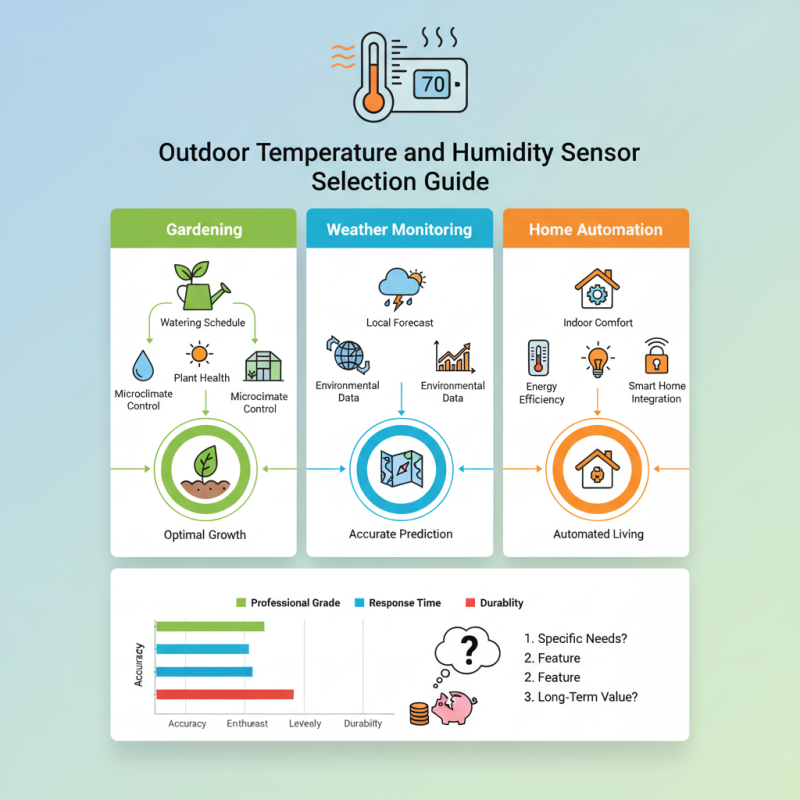
Accurate monitoring of outdoor conditions is essential for various applications. A reliable Temperature and Humidity Sensor Outdoor can provide critical data for gardening, weather forecasting, and home automation. Understanding how these sensors work helps users choose the right model.
Many sensors in the market offer different features and price points. Some are more accurate than others, and this can be a deciding factor. Factors like response time and durability under extreme weather conditions should also be considered. A user may feel overwhelmed by options. Choosing based solely on price could lead to dissatisfaction.
Real-life applications of these sensors can show their value. For example, gardeners benefit from knowing when to water plants. Moreover, homeowners can use these devices to maintain ideal indoor conditions. This can improve comfort and reduce energy expenses. The right Temperature and Humidity Sensor Outdoor is a valuable investment. However, think critically about what you need.
Best Outdoor Temperature and Humidity Sensors: An Overview
Accurate monitoring of outdoor temperature and humidity is crucial for various applications. Many sectors, including agriculture and weather forecasting, rely on precise data. According to a report by the Amenican Meteorological Society, accurate sensors can improve forecasting by up to 30%. This highlights the need for reliable devices that can withstand outdoor conditions.
Choosing the right sensor involves understanding key specifications. Generally, quality sensors should feature a high measurement range and low response time. A study published in the Journal of Atmospheric and Oceanic Technology emphasizes that response times under five minutes are ideal for effective monitoring. Besides technical aspects, location and installation practices significantly influence data accuracy. Many users neglect to consider how surrounding structures or trees might obstruct readings.
Environmental conditions can present challenges too. Sensors should be durable, especially in extreme weather. Exposure to sunlight can affect readings, as can humidity variations. Some reports indicate that sensors failing to account for these factors can show an error margin of nearly 15%. Continuous calibration is a critical step often overlooked by users, which can lead to unreliable data and flawed decision-making.
Key Features to Consider in Outdoor Temperature and Humidity Sensors
When selecting outdoor temperature and humidity sensors, several key features are essential. Accuracy is the top priority. Reliable sensors provide precise readings, ensuring you can trust the data. Look for devices that utilize high-quality materials. Weatherproof designs are crucial. They protect sensors from rain and dust, enhancing longevity.
Another important aspect is connectivity. Some sensors offer wireless options, allowing data to be accessed remotely. This feature can be invaluable for monitoring conditions in real-time. Additionally, consider battery life. A longer-lasting battery reduces maintenance, allowing for uninterrupted monitoring. Some sensors may need frequent replacements, a hassle in outdoor settings.
User-friendly interfaces matter too. Readable displays help in quickly understanding measurements. Some models even come with mobile apps that visualize data trends. This can be quite helpful. Review the warranty offered. A robust warranty indicates the manufacturer's confidence in their product. Both accuracy and durability deserve attention in your choice.
Best Outdoor Temperature and Humidity Sensors for Accurate Monitoring
| Sensor Model |
Temperature Range (°C) |
Humidity Range (%) |
Accuracy |
Connectivity |
| Model A |
-20 to 50 |
0 to 100 |
±0.5°C, ±3% |
Wi-Fi |
| Model B |
-10 to 60 |
10 to 90 |
±1°C, ±2% |
Bluetooth |
| Model C |
-30 to 70 |
5 to 95 |
±0.2°C, ±1% |
Zigbee |
| Model D |
-40 to 60 |
0 to 100 |
±0.3°C, ±2% |
LoRaWAN |
Top Rated Outdoor Temperature and Humidity Sensors Reviewed
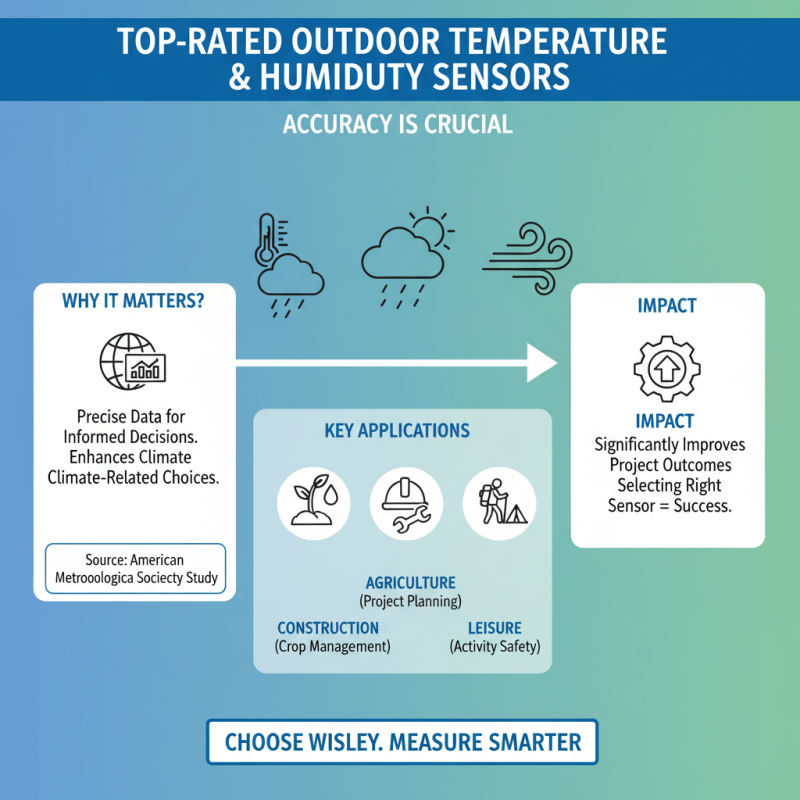
When it comes to choosing outdoor temperature and humidity sensors, accuracy is crucial. A study from the American Meteorological Society indicates that precise measurements can enhance climate-related decision-making. These devices provide essential data for agriculture, construction, and leisure activities. Therefore, selecting the right sensor can significantly impact project outcomes.
Many sensors offer reliable performance, but there are still concerns regarding their durability and battery life. According to a report from the International Society of Automation, about 30% of outdoor sensors failed to deliver consistent readings after a year of use. Proper maintenance and occasional recalibration are necessary to ensure long-term functionality. Users must consider these factors when investing in monitoring solutions.
Despite advancements, not all sensors perform equally in various environments. Some struggle with extreme temperatures or high humidity levels. Environmental conditions can affect sensor accuracy, resulting in misleading data. Regularly reviewing performance and staying informed on technological updates is vital for users. Embracing these challenges can lead to better-informed choices in outdoor monitoring.
Installation and Maintenance Tips for Accurate Monitoring
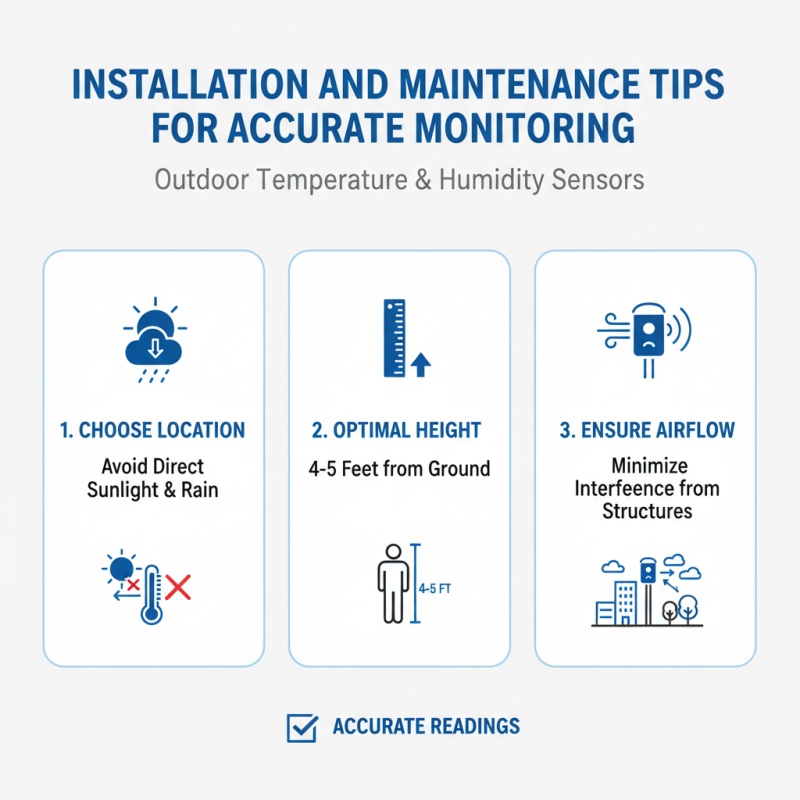
Installing outdoor temperature and humidity sensors requires careful planning. Choose a location that avoids direct sunlight and rain. This prevents overheating and inaccurate readings. Ideally, install the sensor at a height of four to five feet. This placement captures air flow accurately while minimizing interference from nearby structures.
Regular maintenance is essential for optimal performance. Dust and debris can accumulate on the sensors. Check them monthly and clean with a soft, dry cloth. Replace batteries as needed, especially before the seasons change. Sensors can drift over time, leading to incorrect data. Calibrate your devices annually to ensure they remain precise.
Monitoring environmental conditions helps in many ways. Good data can inform gardening, weather forecasting, and more. However, do not rely solely on one sensor. Multiple readings from different sensors provide more reliable information. Evaluate your setup periodically for accuracy. Remember to adapt as needed; environmental conditions change unpredictably.
Understanding the Importance of Accurate Temperature and Humidity Data
Accurate temperature and humidity data is essential for many applications. Whether you are monitoring a greenhouse, managing a wine cellar, or ensuring comfort in living spaces, reliable readings matter. Fluctuating temperatures can affect plant growth or the quality of stored items. Humidity levels are equally crucial; too much moisture can lead to mold, while too little can cause dehydration.
Sensors play a vital role in collecting this information. They must be precise, responsive, and easy to interpret. Poor-quality sensors may deliver inconsistent data, leading to poor decision-making. For instance, if a sensor inaccurately reports high humidity, it may result in unnecessary ventilation, wasting energy and money. Conversely, underreporting humidity could lead to severe damage.
Selecting the right sensor involves understanding various factors. Calibration is one of them. An improperly calibrated sensor can distort readings. Installation location and conditions matter, too; sensors in sunny spots may overheat. A keen understanding of these variables enhances monitoring accuracy. This complexity highlights the need for reliable, well-reviewed sensors to avoid pitfalls in sensitive environments. Accuracy in data is not merely a technical detail; it is foundational for effective management.
Accurate outdoor temperature and humidity sensors are crucial for reliable weather data monitoring. This chart compares sensors based on temperature accuracy in degrees Celsius and humidity accuracy as percentage relative humidity (%RH). Sensors with lower accuracy values provide more precise measurements, essential for environmental studies and smart home applications.

 Sensor
 Measuring Instruments
 Measurement Systems
 Architectural Physics Laboratory