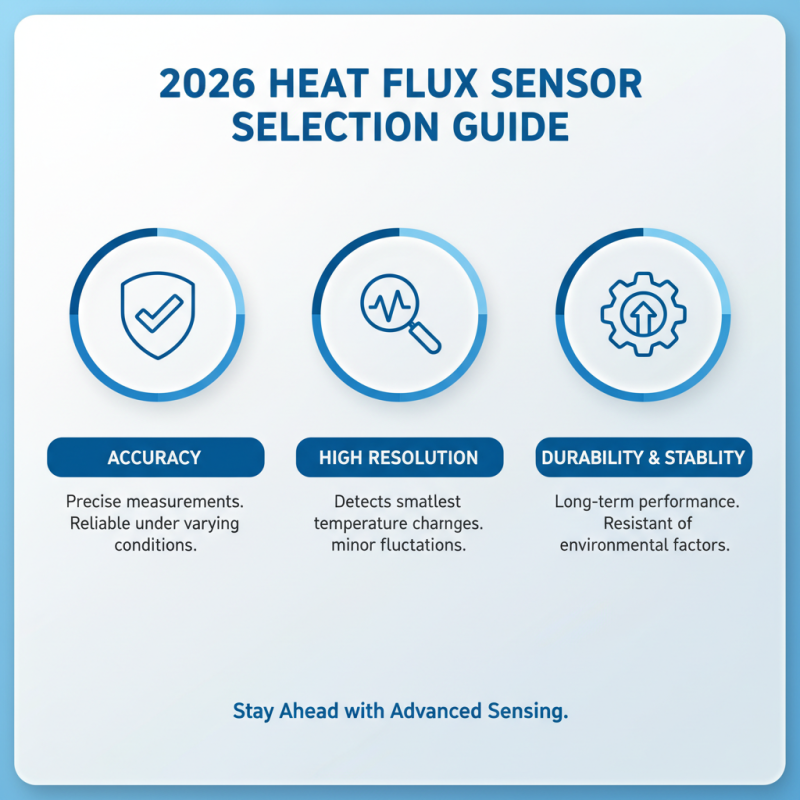
What are the Best Heat Flux Sensors for 2026?
In the ever-evolving field of thermal management, understanding the best Heat Flux Sensors for 2026 is critical. Dr. Emily Larson, a leading expert in sensor technology, emphasizes, “Precision in heat flux measurements drives innovation.” This insight highlights the growing importance of accurate data in various applications, from energy efficiency to industrial processes.
As the demand for reliable Heat Flux Sensors increases, advancements in materials and designs are crucial. Sensors must withstand harsh environments and provide real-time feedback. Emerging technologies, such as nanomaterials, could enhance sensitivity. However, the challenge remains to balance cost-effectiveness with high performance.
Moreover, not all sensors are created equal. Some may falter under specific conditions, raising questions about their reliability. It's essential to reflect on the long-term impact of using subpar sensors. Integrating robust Heat Flux Sensors is vital for future developments. The evolving landscape promises exciting opportunities, yet it demands careful evaluation to avoid potential pitfalls.

Understanding Heat Flux Sensors and Their Importance
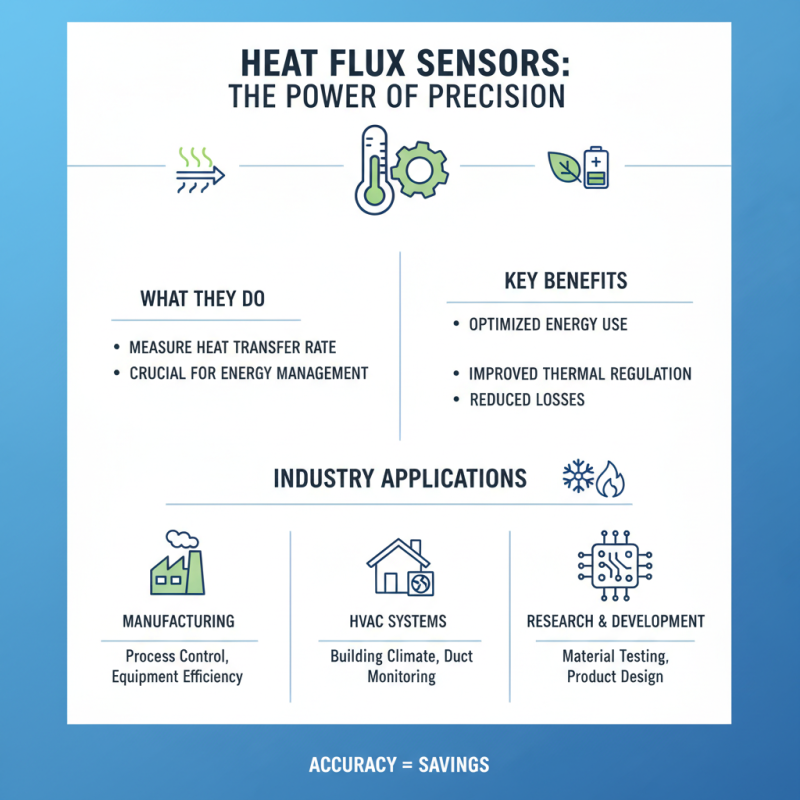
Heat flux sensors play a pivotal role in various industries. They measure the rate of heat transfer through surfaces. This capability is crucial for energy management and thermal regulation. Many settings benefit from accurate heat measurement, including manufacturing and HVAC systems. A tiny discrepancy in readings can lead to significant energy losses.
Understanding how these sensors work is essential. They utilize different technologies, including thermopiles and thin-film sensors. Each has unique advantages and limitations. For instance, thermopiles are known for their reliability. However, they may require calibration after prolonged use. Moreover, environmental factors can influence their accuracy. It's important to consider these elements when choosing a sensor.
The importance of heat flux sensors extends into everyday applications. For example, they enhance the performance of energy-efficient buildings. By optimizing heat transfer, they contribute to sustainability goals. Yet, many industries still overlook their full potential. Misunderstandings about their capabilities can lead to insufficient data collection. This gap means opportunities for improvement are often missed.
Top Heat Flux Sensor Technologies: A Comparative Overview
Heat flux sensors are vital in various applications, particularly in energy management and thermal analysis. In 2026, many technologies will compete to provide accurate measurements. Some include thin-film sensors, thermopiles, and microelectromechanical systems (MEMS). These sensors vary in sensitivity and response times, impacting their performance.
Thin-film sensors are often preferred for their compact size. They can be integrated into surfaces easily. However, they may struggle in extreme conditions. Thermopiles are robust and can work over a wide range of temperatures. Their simplicity is appealing, but they can lack precision in small-scale measurements.
MEMS devices offer excellent sensitivity but come with higher costs. Their miniature size allows for innovative applications, yet their reliability can be inconsistent. It's essential to balance needs with the advantages and drawbacks of each type. As the industry evolves, understanding these nuances will be critical for selecting the best sensor for specific applications.
Leading Manufacturers of Heat Flux Sensors in 2026
As we look forward to 2026, the developments in heat flux sensors are noteworthy. The industry is experiencing significant growth, driven by advancements in technology. According to recent reports, the global market for heat flux sensors is expected to exceed $1 billion by 2026, with a compound annual growth rate (CAGR) of over 8%.
Leading manufacturers are focusing on precision and reliability. They invest in research to enhance sensor accuracy and response time. Many sensors now utilize advanced materials and designs, improving their durability and efficiency. Users can expect sensors that can accurately measure heat transfer in various applications, from industrial processes to climate studies.
Tips: When selecting a heat flux sensor, consider the environment where it will be used. Different materials perform better under specific conditions. Ensure you evaluate the sensor's calibration requirements as well. Regular maintenance can help sustain its accuracy over time.
Additionally, some emerging companies are entering the market with innovative solutions. However, it is essential to assess the credibility of these newcomers. The industry can benefit from fresh ideas, but experience is invaluable. Users should scrutinize any product claims closely. Not all new products meet the necessary standards.
What are the Best Heat Flux Sensors for 2026?
| Sensor Type |
Temperature Range (°C) |
Sensitivity (mV/W/m²) |
Response Time (ms) |
Application Area |
| Thin Film Heat Flux Sensor |
-50 to 150 |
0.5 |
2 |
Building Insulation |
| Capacitive Heat Flux Sensor |
0 to 100 |
1.0 |
5 |
Industrial Processes |
| Thermal Heat Flux Sensor |
-20 to 120 |
0.2 |
10 |
Energy Monitoring |
| Piezoelectric Heat Flux Sensor |
-10 to 80 |
0.8 |
1 |
Laboratory Research |
| Laser Doppler Heat Flux Sensor |
-40 to 300 |
1.5 |
0.5 |
Aerospace Testing |
Future Trends in Heat Flux Sensors and Their Applications
As we look towards 2026, heat flux sensors are evolving rapidly. Innovations in technology are enhancing their capabilities across various industries. These sensors will play critical roles in environmental monitoring, renewable energy, and building management.
One major trend is the integration of IoT with heat flux sensors. This allows real-time data collection and analysis. The data helps to optimize energy consumption, improving efficiency. However, we still lack universal standards for data sharing. This inconsistency complicates cross-device interoperability.
Tips: Consider the environment where the sensor will be used. Different materials may affect accuracy. Small changes can lead to significant errors in readings. Explore sensors that offer better calibration mechanisms.
Another prospective trend is the miniaturization of heat flux sensors. Smaller sensors will enable more applications, like in wearable technology. Yet, tiny sensors may sacrifice some sensitivity. This balance needs careful consideration moving forward.
Tips: When choosing a sensor, think about size and application. Sometimes bigger isn’t better. Test various models to find the best fit. Responsiveness is key in applications like medical technology.
The future of heat flux sensors is promising. As industries evolve, sensors must adapt. The path is filled with challenges that require ongoing reflection and improvement.

 Sensor
 Measuring Instruments
 Measurement Systems
 Architectural Physics Laboratory