What is Artificial Sky and How Does it Work?
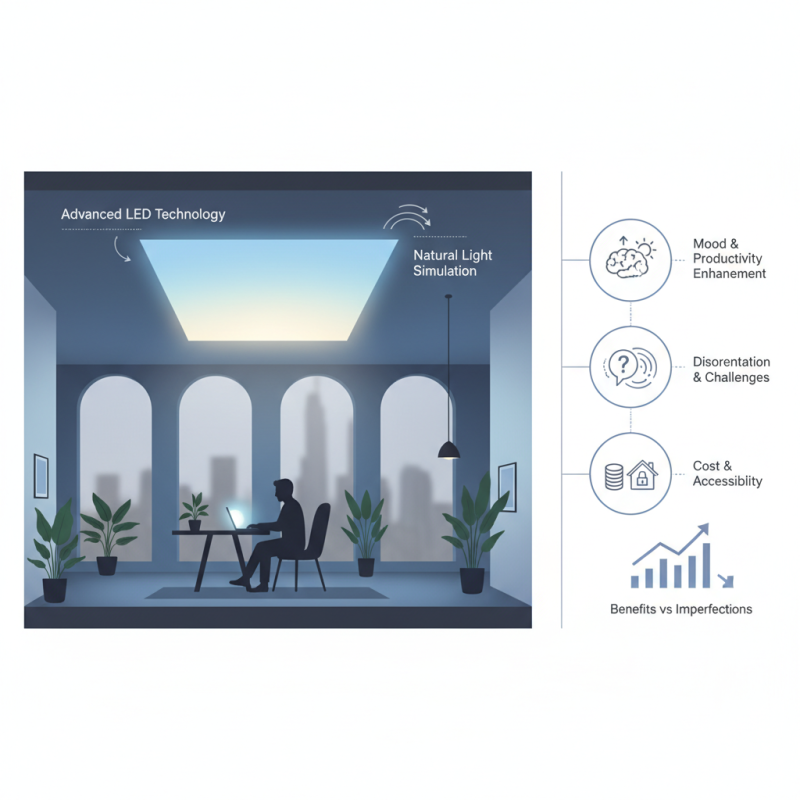
Artificial Sky is a fascinating innovation transforming how we perceive indoor environments. Leading expert Dr. Emily Carter states, "Artificial Sky revolutionizes natural light simulation." This technology creates a realistic sky indoors, enhancing mood and productivity.
Imagine stepping into a room bathed in gentle blue light, mimicking the day's subtle changes. Artificial Sky systems use advanced LED technology to replicate natural sunlight. They can boost energy levels and reduce stress. Yet, there are challenges. Some users may find the artificial environment disorienting.
Moreover, the balance between aesthetics and functionality raises questions. Are these systems accessible to all? Each installation carries costs that may limit widespread use. As we explore the benefits of Artificial Sky, we must consider these imperfections.
What is an Artificial Sky?
Artificial sky refers to an innovative concept that simulates natural sky conditions within enclosed environments. This technology integrates lighting, visual projections, and sound to create a unique atmosphere. Reports indicate that the artificial sky market is projected to exceed $2.3 billion by 2025, driven by increased demand in architectural and entertainment applications.
The design of an artificial sky includes various elements. It often features adjustable lighting systems that emulate sunlight, cloud formations, and even starry nights. For instance, a recent study found that environments with artificial skies can improve mood, enhance productivity, and provide a sense of relaxation.
However, the effectiveness of these systems can vary. Some users report feeling disoriented if the transitions between states are not well-executed.
Creating an effective artificial sky presents challenges. The technological intricacies can be complex, which may lead to inconsistent experiences. Additionally, understanding how different demographics react to various environments is crucial. According to research, preferences for artificial settings can differ significantly among age groups. Continuous testing and feedback are essential to refine these systems.
Historical Development of Artificial Sky Technologies
The concept of artificial sky has evolved significantly over the past few decades. Initially, the focus was on creating illuminated environments that mimic natural sunlight. Research reports indicate that indoor environments with artificial sunlight can improve mood and productivity by about 20%. This burgeoning field, however, encountered challenges. Achieving color fidelity and brightness levels that resemble the real sky proved difficult.
The 1990s marked a turning point in artificial sky technologies. This period saw the introduction of advanced LED and projection systems. These innovations allowed for more realistic representations of sky conditions. A study from the International Society of Indoor Environmental Quality stated that environments with well-integrated artificial sky solutions lead to a 15% reduction in stress levels among occupants. However, the implementation is not without flaws. Many users report over-saturation of colors, making the experience feel artificial rather than authentic.
As the technology progresses, sustainability remains a critical concern. Reports show that energy consumption for artificial lighting can increase building costs significantly. In fact, up to 30% of energy expenses in commercial buildings are attributed to lighting. This has sparked a debate about balancing aesthetics with sustainability in design. The path forward requires reflection on efficiency versus the immersive experience provided by these artificial sky solutions.
Key Components and Materials of Artificial Sky Systems
Artificial sky systems create an immersive environment that replicates natural skies. They often use a combination of various components to achieve this effect. These can include projectors, LED screens, and specialized lighting. Each element plays a role in simulating sunlight, clouds, and atmosphere. For instance, projectors can cast vivid images of the sky, which change throughout the day.
Materials used in these systems are critical to their effectiveness. White diffusing panels help scatter light, mimicking the diffusion of sunlight. Paints with high reflectivity are also essential. They enhance brightness and create a more realistic appearance. However, the challenge lies in finding the right balance. Some materials may create glare or appear unnatural. Experimentation is often necessary to refine the look and feel. Even with advanced technology, imperfections can arise, leading to an artificial appearance that can detract from the intended effect. As a result, designers must continuously adapt and rethink their approaches.
What is Artificial Sky and How Does it Work? - Key Components and Materials of Artificial Sky Systems
| Component |
Material |
Function |
Application Areas |
| LED Lights |
Silicone Encased LEDs |
Create dynamic lighting that mimics natural daylight |
Indoor agriculture, urban development |
| Projection System |
LCD/LED Projectors |
Display images and videos of the sky |
Museums, theaters, immersive experiences |
| Optical Diffusers |
Acrylic or Polycarbonate Sheets |
Disperse light evenly to create a natural feel |
Retail spaces, hospitals, offices |
| Control Systems |
Software and Sensors |
Manage light intensity and color temperature |
Smart buildings, energy management |
| Structural Framework |
Lightweight Aluminum or Steel |
Support for installation of components |
Exhibitions, commercial buildings |
How Artificial Sky Mimics Natural Light and Weather
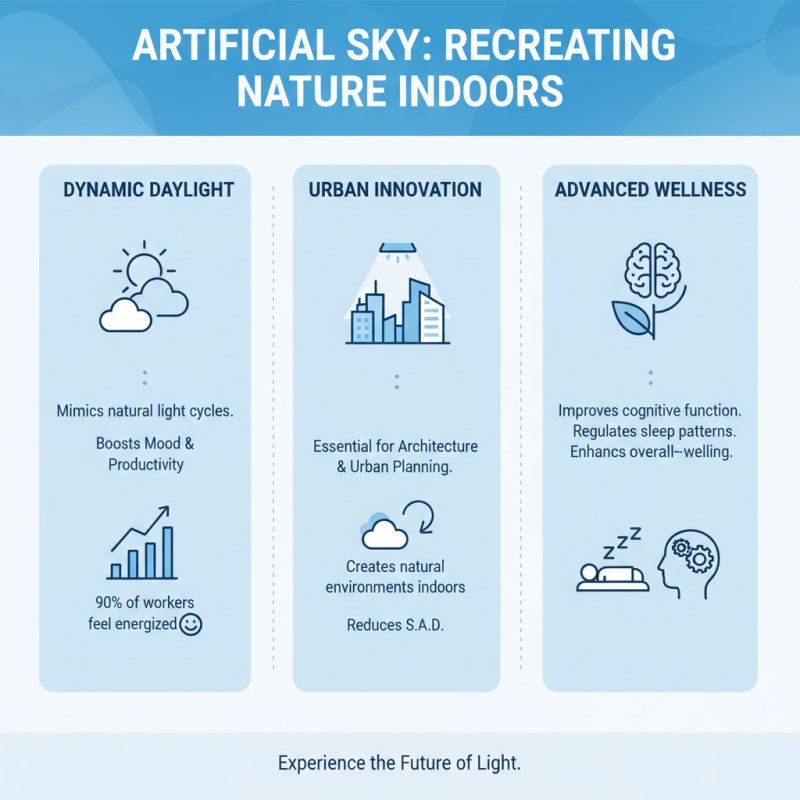
Artificial Sky technology offers remarkable ways to recreate natural light and weather indoors. This innovation is essential in various fields, especially architecture and urban planning. By mimicking daylight patterns, it can improve mood and productivity. Some studies indicate that 90% of workers feel more energized in environments with natural-like lighting.
Artificial Sky systems utilize advanced lighting and projection technologies. These systems change color temperature and intensity, simulating the effects of sunlight throughout the day. For instance, the transition from cool morning light to warm evening hues can influence circadian rhythms positively. Research from the Lighting Research Center suggests that proper lighting can reduce eye strain by up to 30%. This reduction enhances comfort in workspaces, making them more effective.
However, challenges remain in creating truly dynamic and responsive environments. Many designs still cannot accurately replicate weather elements like cloud cover or timeliness. Some users report feelings of artificiality despite the advancements. More research is needed to optimize these technologies further. As we advance, balancing innovation with authenticity becomes crucial for user experience.
Applications and Benefits of Artificial Sky in Modern Design
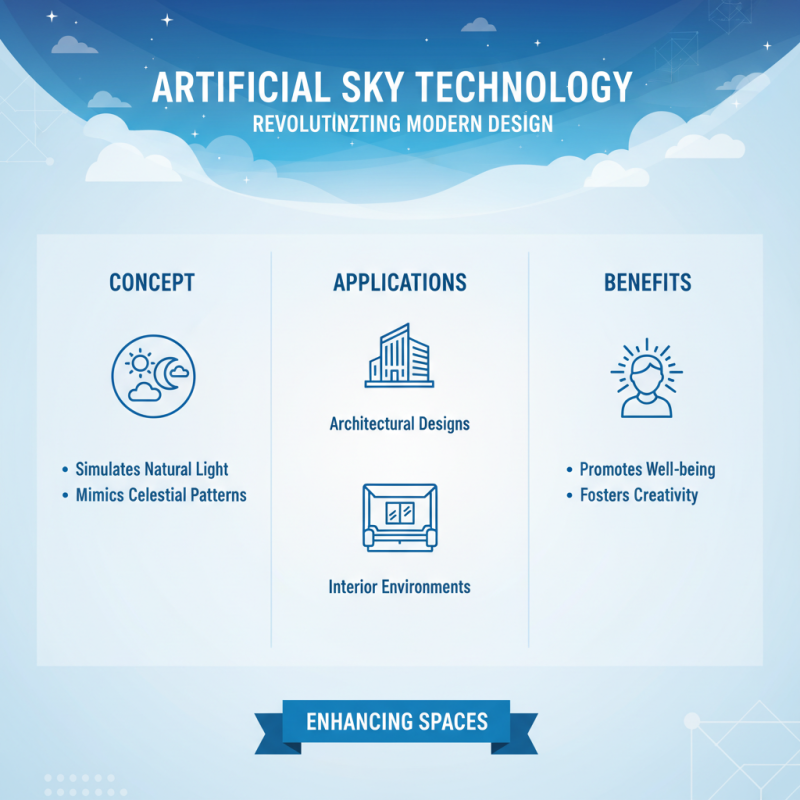
Artificial sky technology is revolutionizing modern design. It creates the illusion of a natural sky, enhancing spaces in various ways. This innovative concept has multiple applications, from architectural designs to interior environments. By simulating natural light and celestial patterns, it promotes well-being and creativity.
One significant application is in workspaces. Artificial skies can boost productivity. Employees who work under simulated daylight feel more energized. A well-lit environment reduces fatigue and increases focus. Additionally, it can provide relaxation zones. These spaces, with a calming sky, are ideal for breaks.
**Tip:** Consider using softer colors in your artificial sky design. This can help create tranquility.
Residential applications are also noteworthy. Artificial skies in homes often create a cozy atmosphere. Families can enjoy the beauty of a sunset at any time. However, it requires careful planning. The positioning of lights must simulate realistic scenarios to avoid causing discomfort.
**Tip:** Test various light temperatures to find the perfect fit. Ensure it enhances your space effectively.

 Sensor
 Measuring Instruments
 Measurement Systems
 Architectural Physics Laboratory